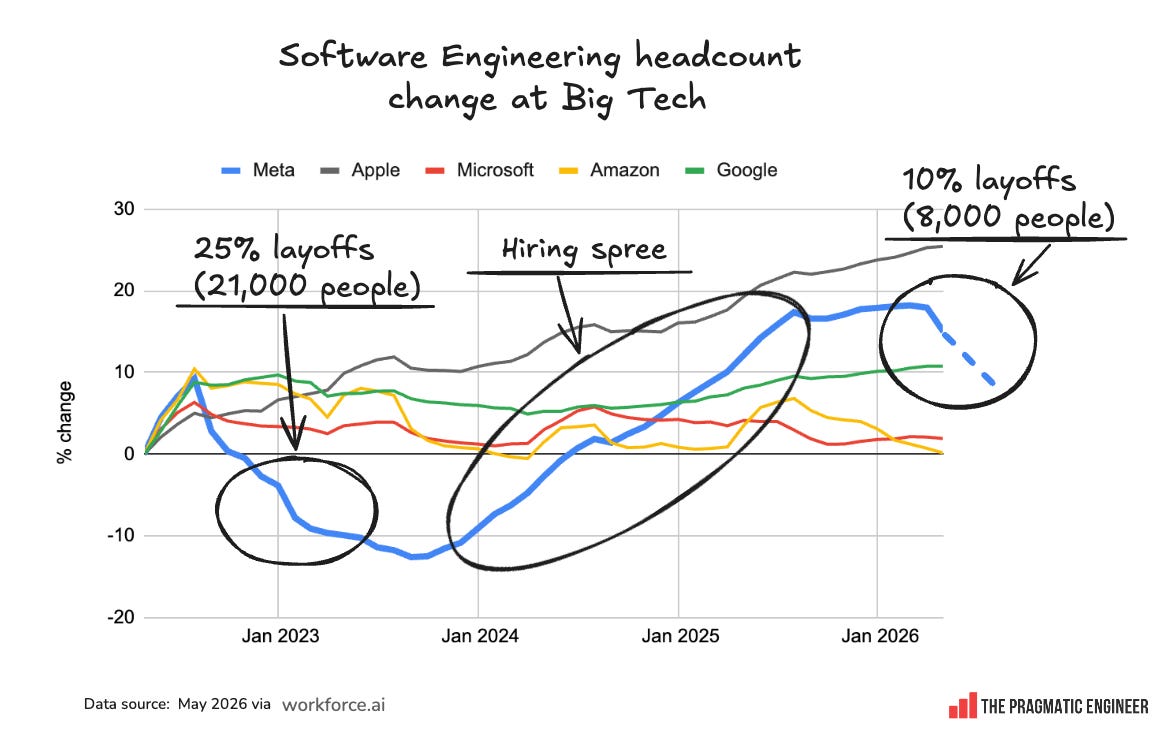
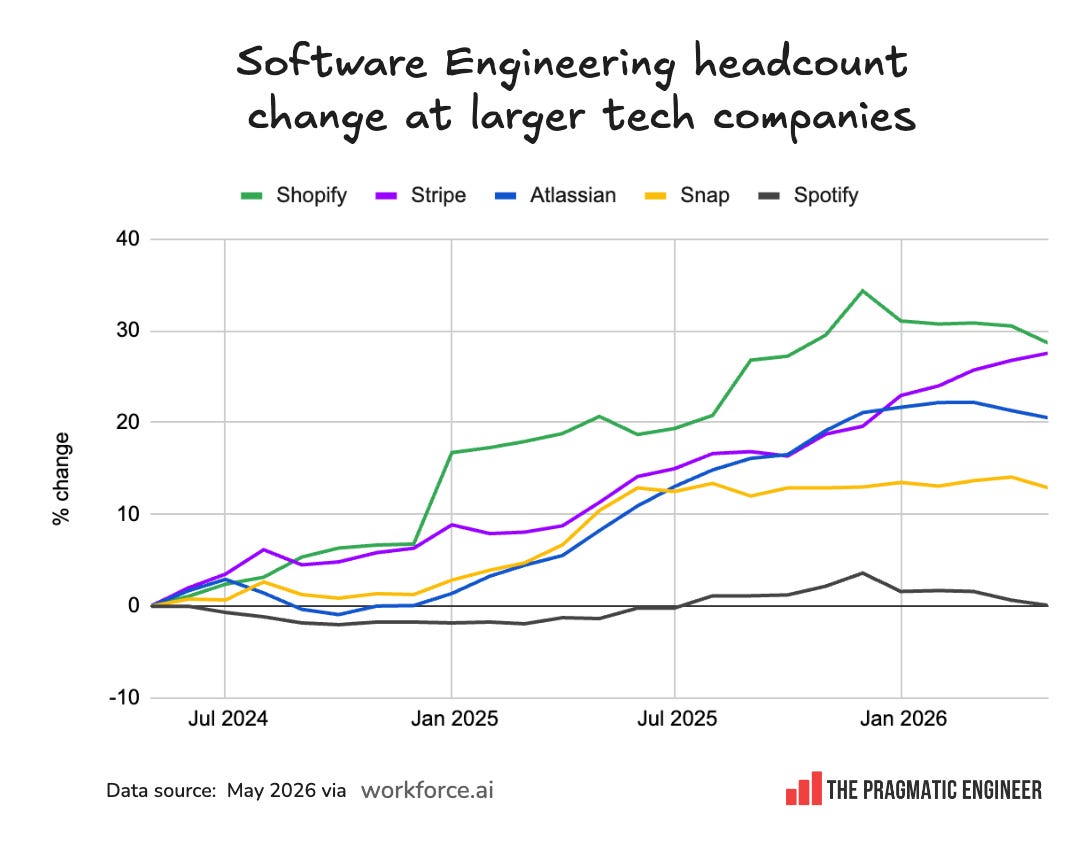
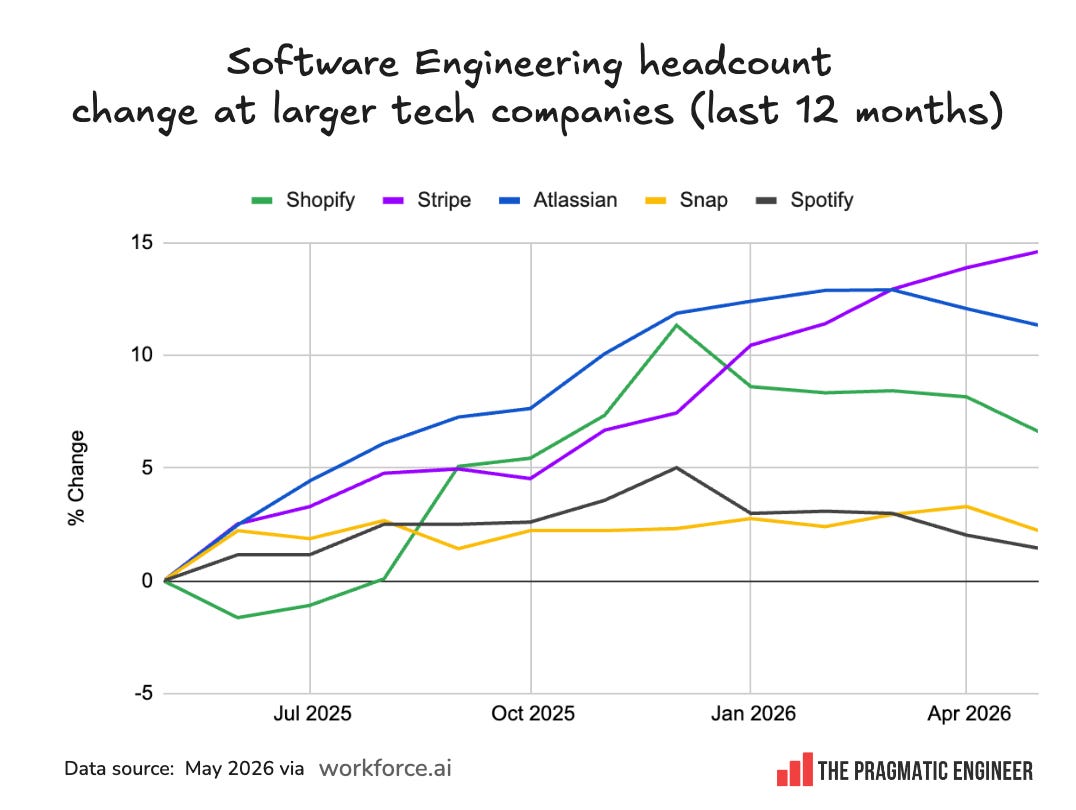
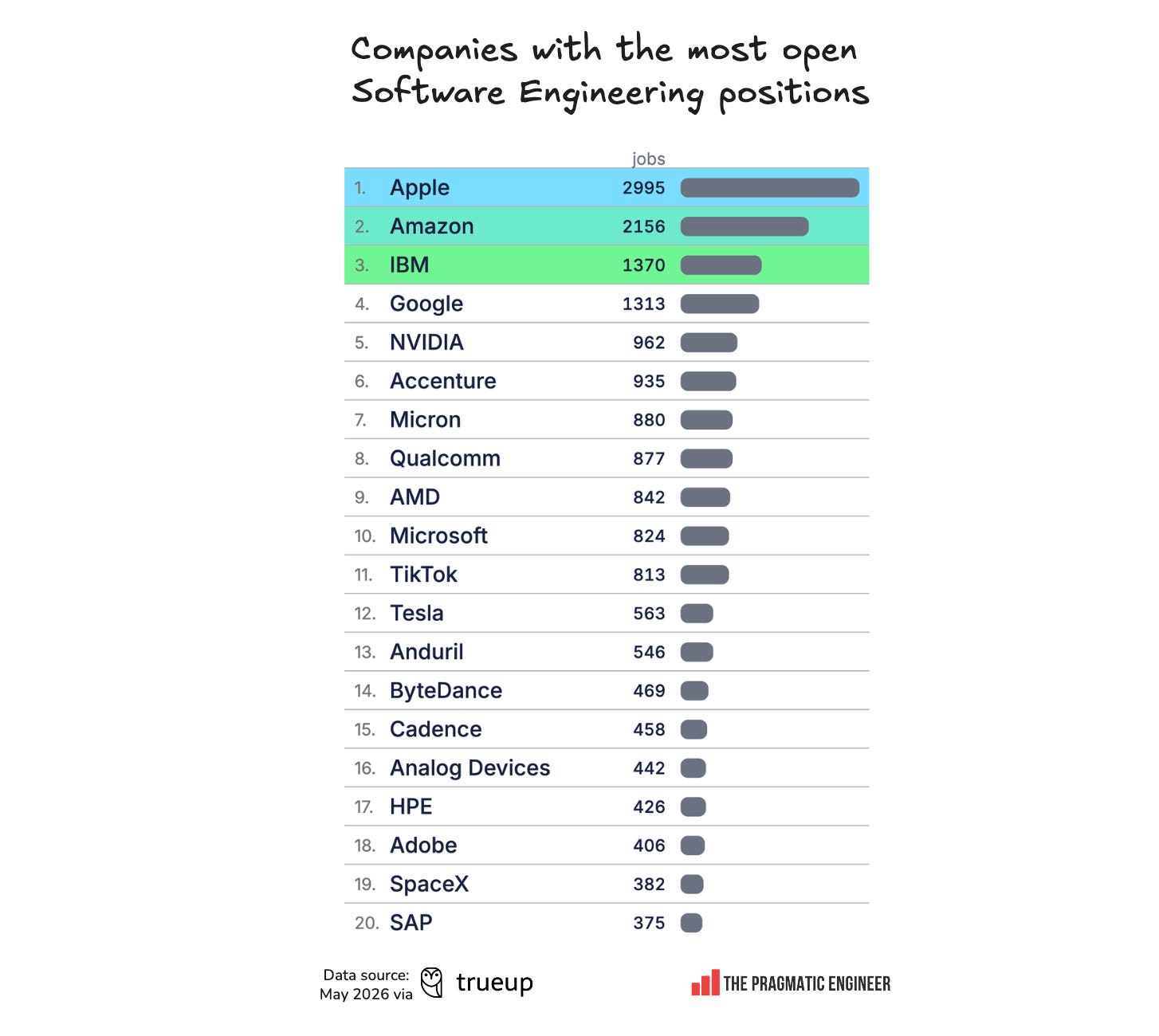
The Pulse is a series covering events, insights, and trends within Big Tech and startups. Notice an interesting event or trend? Hit reply and share it with me.
Today, we cover:
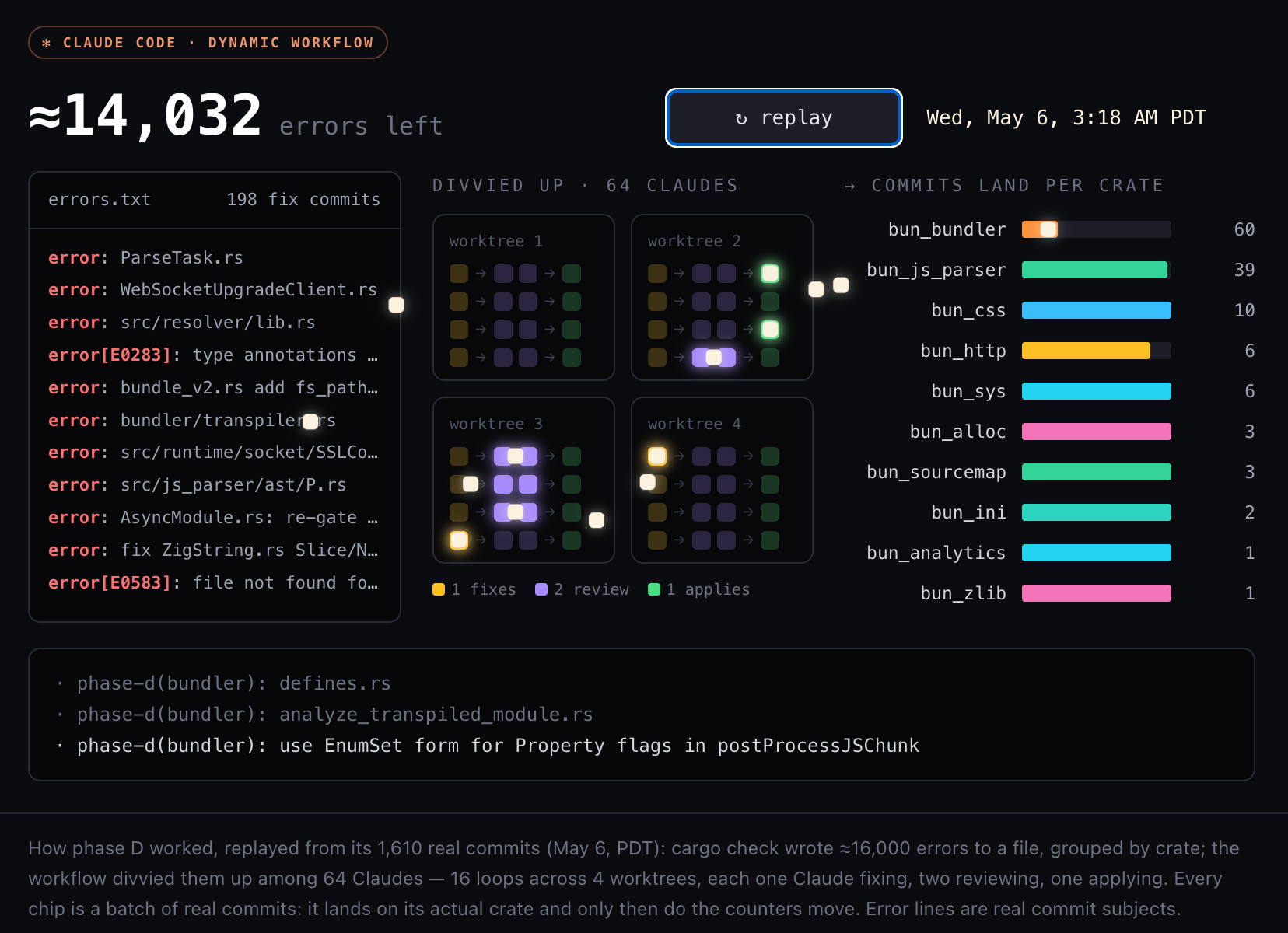
Bun’s Rust rewrite with Fable: what can we learn? To a sceptic, spending $165K to migrate Bun from Zig to Rust sounds very expensive. But to a realist, shortening a 1-2 year migration down to 11 days opens amazing new opportunities for devs. However, a thoroughly-tested project is required to pull it off.
Anthropic’s Fable, OpenAI’s GPT-5.6 Sol, Cursor’s Grok 4.5, Meta’s Muse. Coding LLM wars heat up: Fable is back, OpenAI releases a comparable GPT-5.6 Sol, Cursor offers cheap & very capable Grok 4.5, and Meta is back with its first truly competitive coding model since Llama 3. But how did Gemini slip out of the top-ranked AI coding models?
North Korean hackers keep trying to infiltrate full-remote companies. The founder of a Canadian digital consultancy caught a North Korean dev red-handed, using an AI filter. These events are now so common that it’s hard to trust remote interviewees are who they claim.
Industry Pulse. Meta’s key logging exposed sensitive data, massive cuts at Xbox, Meta could not buy enough AI capacity from Google, Qualcomm acquires Modular, and memory price hikes hit Apple products.
1. Bun’s Rust rewrite with Fable: what can we learn?
Last week in San Francisco, I met Jarred Sumner, creator of JavaScript runtime, Bun, and was keen to learn more about the rewrite of Bun from Zig to Rust. But at the time, Jarred didn’t want to say too much, as the tool used for the migration, Fable, was out of action due to the US government imposing export controls.
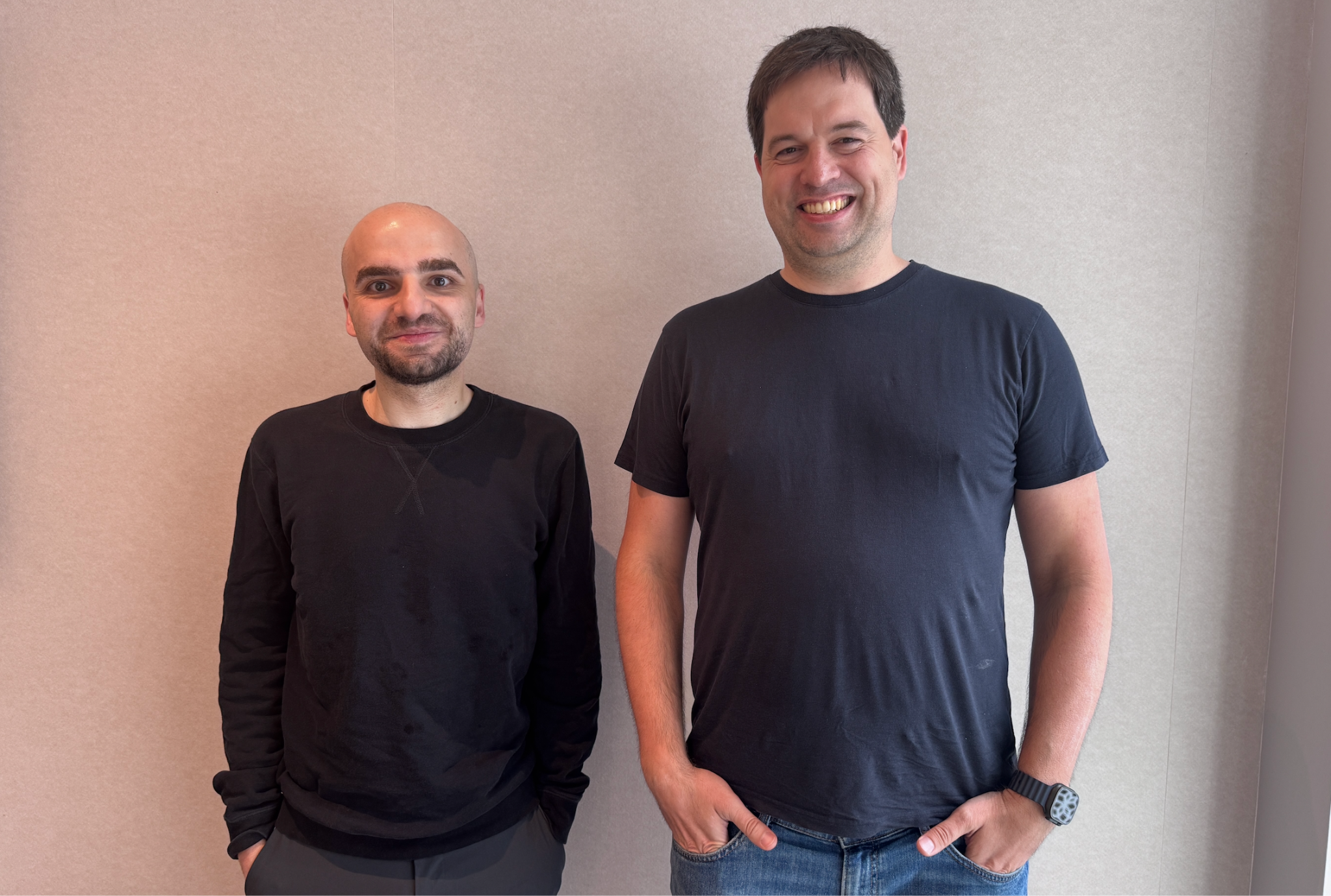
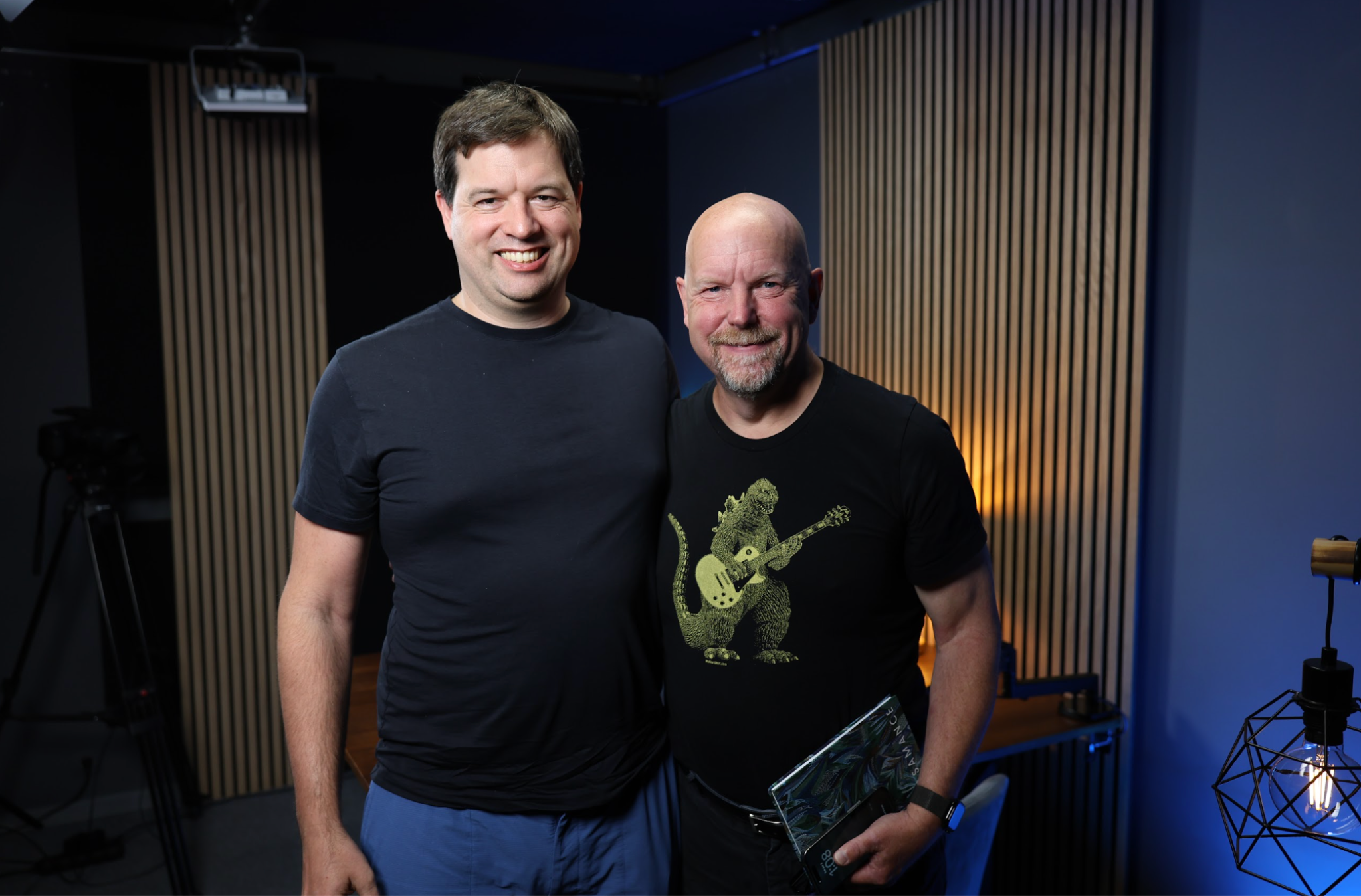
Jarred and I at Anthropic’s HQ, last week
Fortunately, the situation is now resolved and Fable is available globally, and Jarred has published a detailed post about the project. Before we get into the migration, some context:
Listen and watch now on YouTube, Spotify, and Apple. See the episode transcript at the top of this page, and timestamps for the episode at the bottom.
Brought to you by our presenting partner, Antithesis.
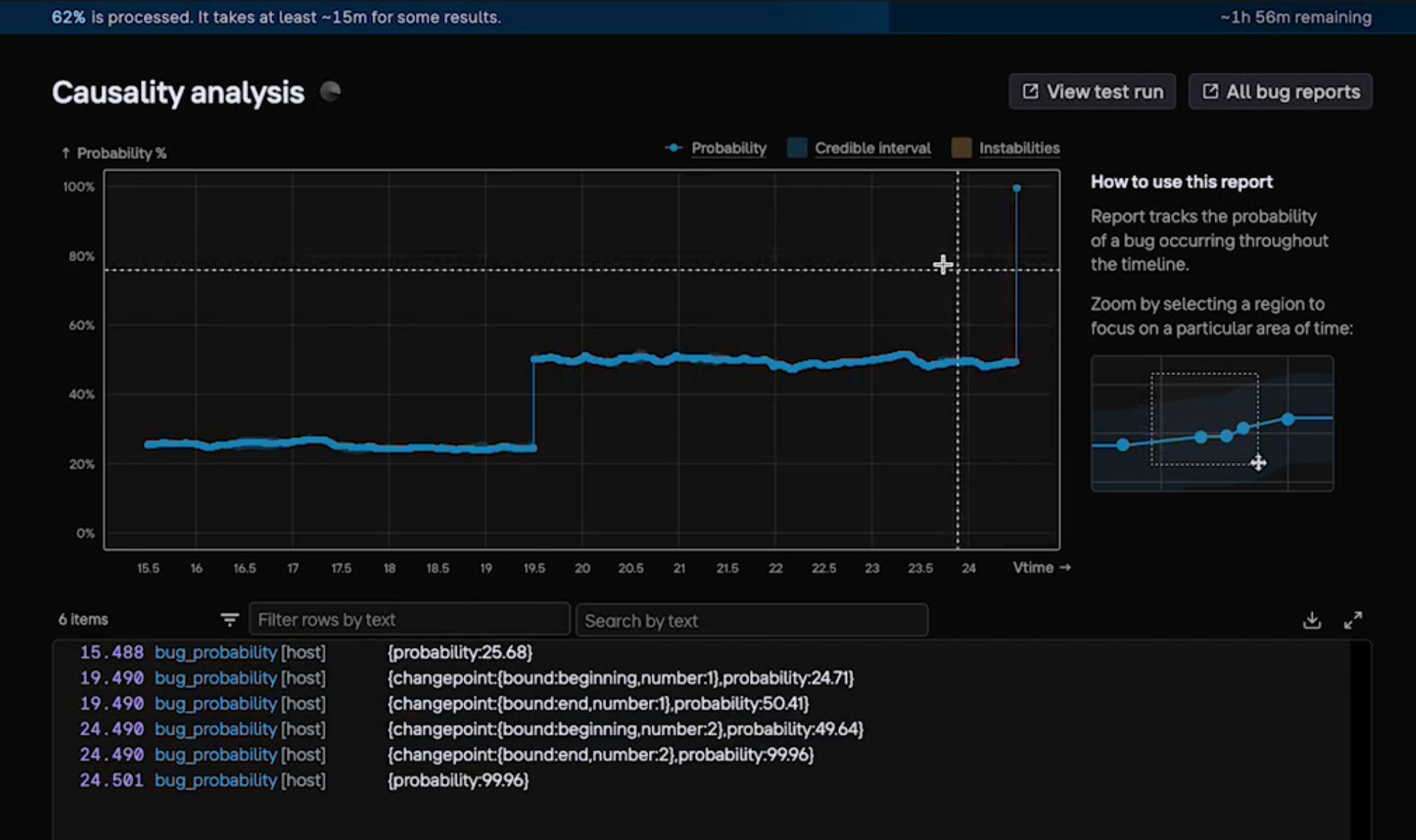
Verify your system’s correctness by running your whole system in a hostile simulation and finding bugs. I’ve been using Antithesis myself, and I’m impressed with their innovation in building new kinds of debugging tools. Like this:
Bug probability analysis in Antithesis’ fully deterministic, simulated environment. When probability spikes, it’s a good place on the timeline to “rewind” and check logs to find what triggers bugs.
In this special “ask me anything” episode of Pragmatic Engineer podcast, I am in the hot seat facing questions sent in by subscribers that are read out by guest Volodymyr Giginiak, CTO and cofounder of Wordsmith AI, a legal tech startup (note: I’m an investor).
I tackle your questions on the software industry, AI, hiring, engineering organizations, career growth, the business model of the Pragmatic Engineer, and more. We also discuss where software engineering is headed, and I offer advice on some specific situations. Thanks to everyone who sent questions!
Three stories & observations
Story #1: Without the COVID-19 pandemic, The Pragmatic Engineer might not exist. Prior to the global health crisis in 2020, I had no plans to get serious about writing: I enjoyed blogging on The Pragmatic Engineer blog, but intended to remain an engineering manager or software engineer for the foreseeable future.
But then, COVID-19 happened and Uber made layoffs, which led to a quarter of my team being let go, while the rest of us were disbanded into other teams. It was a tough time, and I decided it was a good moment to exit and finish writing a book I had been working on, ‘The Software Engineer’s Guidebook’. After that project was complete, I planned to try and start a VC-funded startup and build something around platform engineering; possibly a system for tracking RFCs at mid-sized and larger companies.
I gave myself around eight months to finish the book, but when that deadline elapsed, it still wasn’t ready. I did write three other books (‘The Tech Resume Inside-Out’, ‘Building Mobile Apps at Scale’, and ‘Growing as a Mobile Engineer’) and still wasn’t convinced by any startup idea. But I did discover that I like to write!
Story #2: I was on track to publish a damning exposé, until one message from an engineer changed my mind.
During the first year of The Pragmatic Engineer, I wrote about conditions for engineers at the Dutch neobank Bunq, based on accounts from disgruntled employees. I had a final draft ready, which I sent to the company to provide a right of reply ahead of publication. Then I received a message.
It was sent by an engineer originally from the Middle East. They told me they had really wanted to break into the European tech industry, but that no company would sponsor their visa, except Bunq. Yes, the company was a tough place to work at as a dev – and this engineer subsequently left for another opportunity – but they appreciated Bunq for taking a chance on them that enabled them to move to Amsterdam and learn how to build fintech with a small team. This engineer now works at Meta and attributes their success to the break Bunq provided.
Based on that interaction, I opted not to publish the article, and it also led me to adopt a new editorial policy that I have followed since: I write about what works inside companies, instead of focusing on what seems to be broken.
Story #3: Being called a “nobody” by a CEO led to my sole investigative piece, which uncovered some pretty interesting details. After I briefly noted Pollen’s poorly-handled layoffs, CEO Callum-Negus Fancey dismissed my report during a company all-hands, and compared The Pragmatic Engineer unfavorably to the BBC as just some minor publication with an agenda against Pollen (why I would have an anti-Pollen bias isn’t clear to me!) To be honest, I took it personally when I heard a recording of this sent to me by employees there, and so started digging around.
I discovered unpaid salaries, silently cancelled health insurance in the US, and the CTO deliberately triggering a $3.2M double charge to customers and never publishing a postmortem, despite engineers requesting one.
It was certainly something, and I published the findings in the article Inside Pollen’s Collapse: “$200M Raised” but Staff Unpaid - Exclusive. To ensure the CEO saw the report on a platform he deemed worthy, I also contributed to the BBC’s documentary: Crashed: $800M Festival Fail, aired in the UK during prime time. By doing all this, I also learned that investigative journalism is just not for me.
Opinion #1: I believe LeetCode-style interviews will stay because they self-select tolerance of corporate nonsense. The existence of data structures and algorithm (DSA) interviews is a bit of a head scratcher because these skills are rarely used at work. However, a candidate who’s willing to grind for weeks or months to prepare for an interview which bears little resemblance to the job, is likely to be someone who understands that sometimes it’s necessary to do pointless work.
This suggests they’ll probably have a much better time in Big Tech than someone who refuses to engage with meaningless tasks. It’s one reason I’ve observed for companies retaining LeetCode-style interviews. Of course, AI solves the puzzles with ease these days, and I expect larger companies to move back to in-person interviewing – all while keeping DSA interview questions.
Opinion #2: MCP became industry standard partly because Anthropic wasn’t a threat – but it couldn’t pull this off today. When MCP launched in November 2024, Anthropic wasn’t yet considered the leading AI lab. GPT-4o was seen as the top-performing multimodal model, followed by Claude 3.5 Sonnet and Gemini 1.5 Pro. At that point, Claude 3.5 Sonnet was seen as the best coding model, but it wasn’t understood how advantageous being good at coding would be for AI in general.
Therefore, OpenAI, Google, Microsoft, and other players could adopt MCP without fear of lock-in, as it came from a promising, but not a dominant lab. When Google launched its Agent2Agent protocol a few months later, no major lab adopted it due to concerns about Google’s dominant position. Today, Anthropic is the leading frontier lab and I reckon this would discourage adoption if MCP was launched in the present climate, for the same reason as nobody adopted the Agent2Agent protocol.
My answer to subscribers with questions about how to create standards is that I see them as emerging somewhat coincidentally, following a technically strong approach and with the right external conditions in place, which are impossible to entirely predict or control.
Opinion #3: My hot AI take: AI doesn’t make work easier, and be mindful of skill atrophy. If you’re using AI and life seems to be getting a lot easier, it raises the question: are you trying hard enough? Personally, using AI forces me to think just as hard, or even harder than before. I choose to use zero AI in my writing for the Pragmatic Engineer, and Grammarly is turned off as well. This is because I don’t want my writing skill to degrade, and would like to keep improving. On the other hand, with coding, I do use AI and accept my hand-coding ability will unavoidably degrade. My tip is to be mindful of the tradeoffs inherent in AI, and to keep using those skills which you value and want to keep sharp, even when AI tools are available.
The Pragmatic Engineer deepdives relevant for this episode
What is the tech jobs market like for job seekers and hiring managers today? It’s a broad question for which one answer is that it’s a land of contrasts and confusion, and also some crossed wires. Experienced engineers and managers feel ghosted by employers and recruiters, who in turn have given up on inbound applications because their inboxes are full of AI slop, sometimes from bogus candidates. It’s rosier for those with specific skillsets, who are in strong demand – and personal networks help more than ever to land the right job.
For this final part of our series on the tech hiring market during the first half of 2026, I spoke with more than 50 hiring managers, software engineers, and engineering leaders. Thank you to everyone who contributed!
For more on this topic, check out our analysis of what the data says about the market in Part 1 and Part 2 of this mini-series.
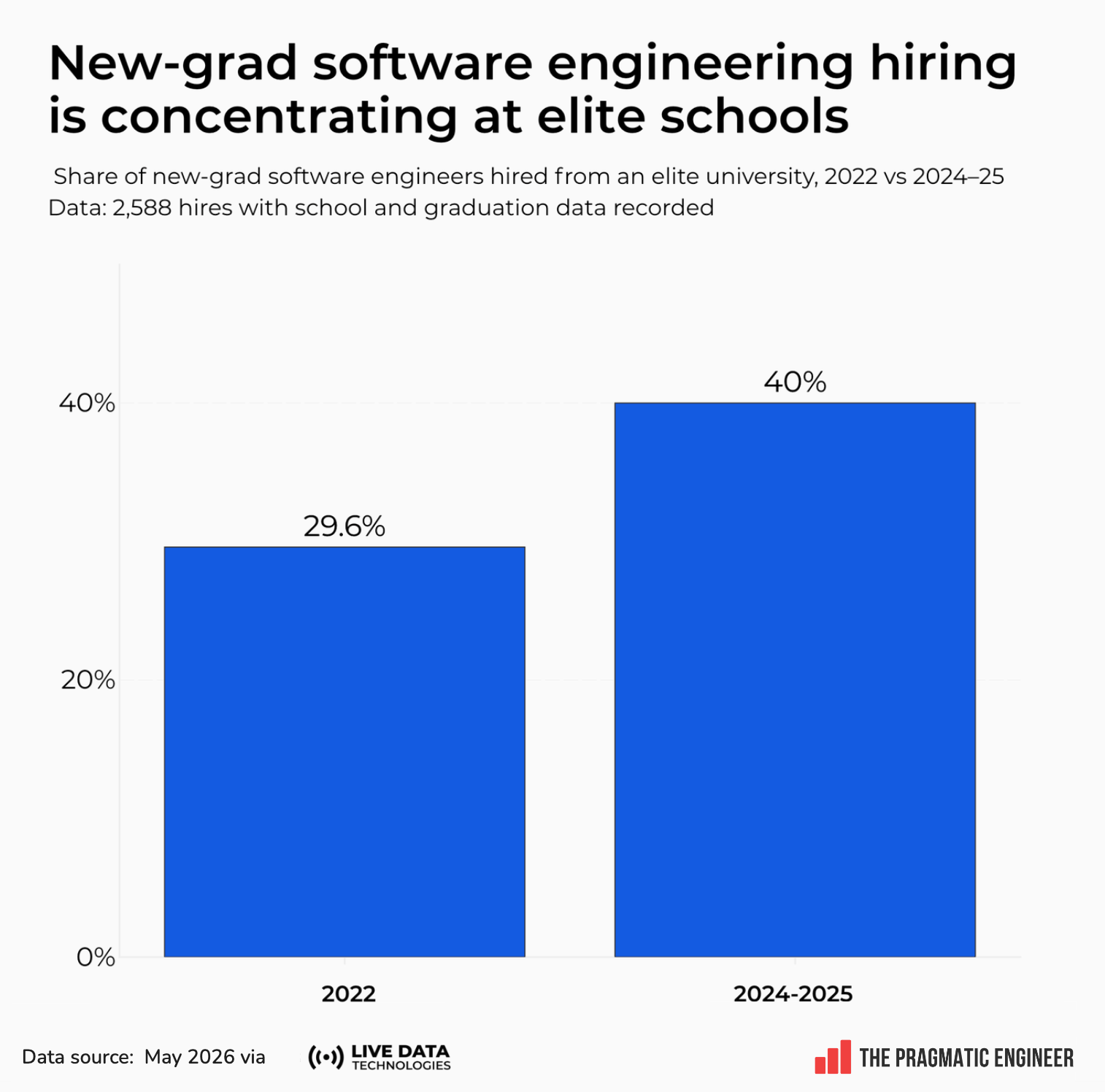
Overall, an appropriate description of the employment market as many folks experience it right now would be “weird”. This is a characteristic that’s not easy to see in the data, but is clear from talking to people and hearing their anecdotal, personal accounts of job hunting this year. I think the data in the first two articles of this series failed to capture just how unusual things are.So, in today’s issue, we attempt to shed some light on the weirdness, covering:
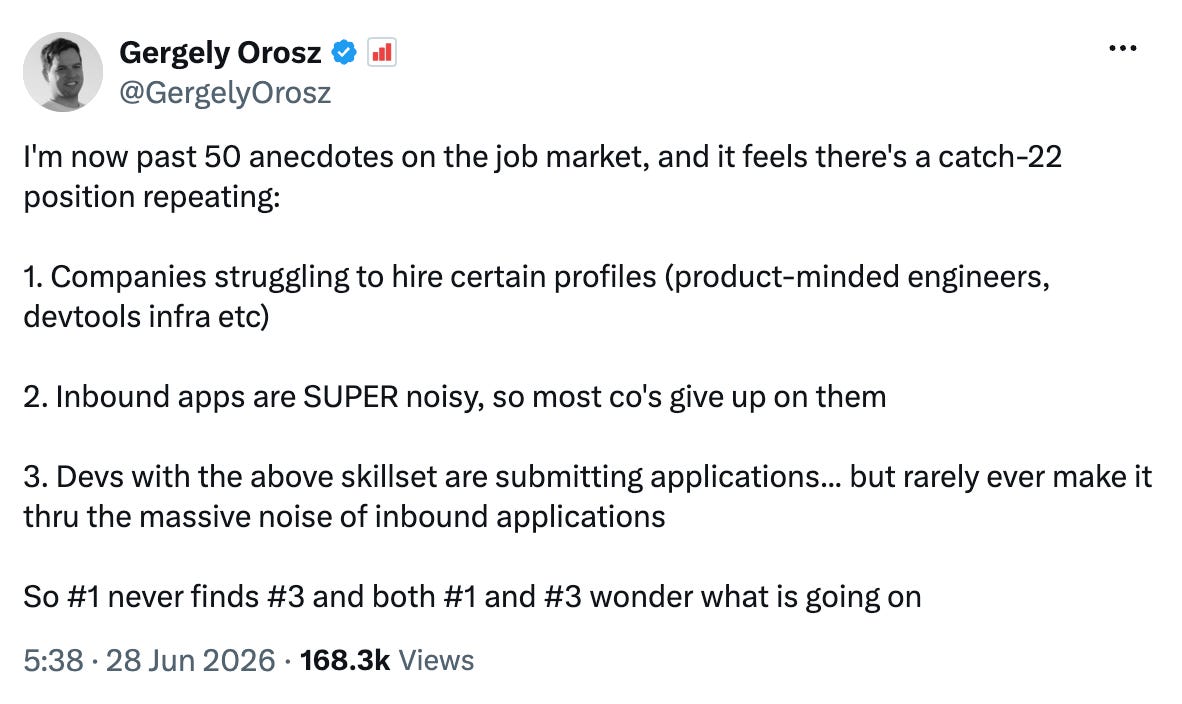
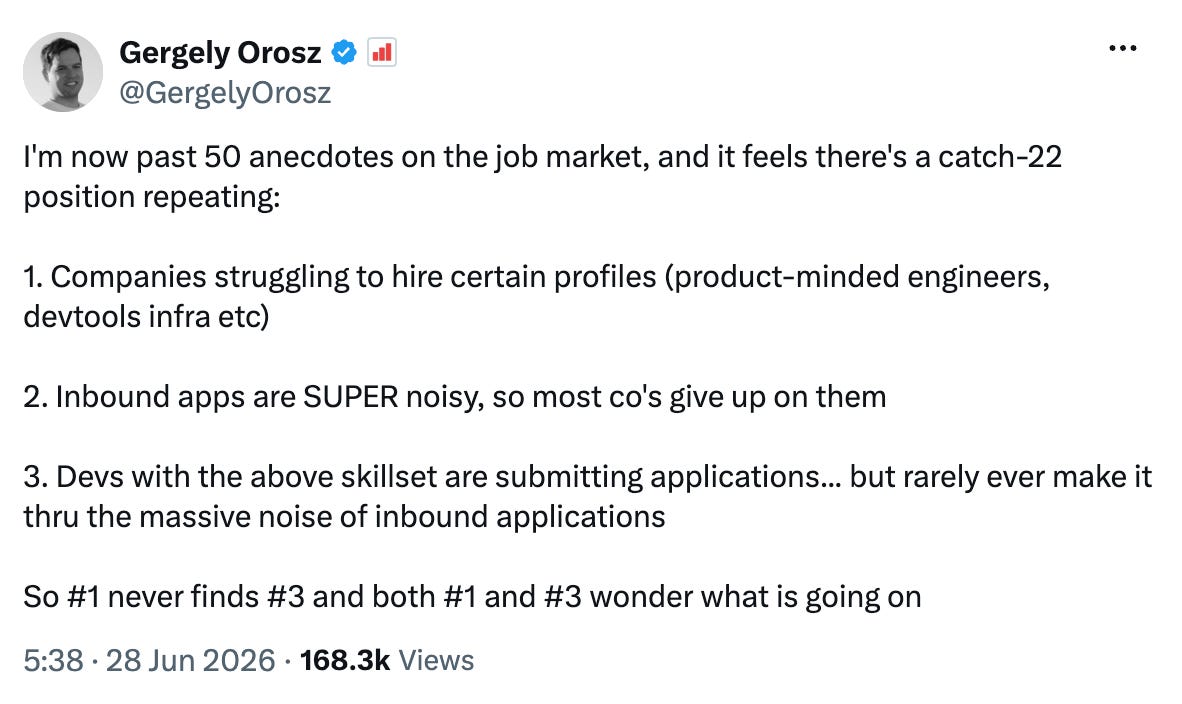
“Catch-22:” nobody finds each other. Hiring managers struggle to find experienced folks, who barely get any replies when applying for jobs. How’s that work?
No trust. Is AI to blame? AI-enhanced resumes read as incredible, but hiring managers often face disappointment. Some places don’t bother reading inbound applications as a result.
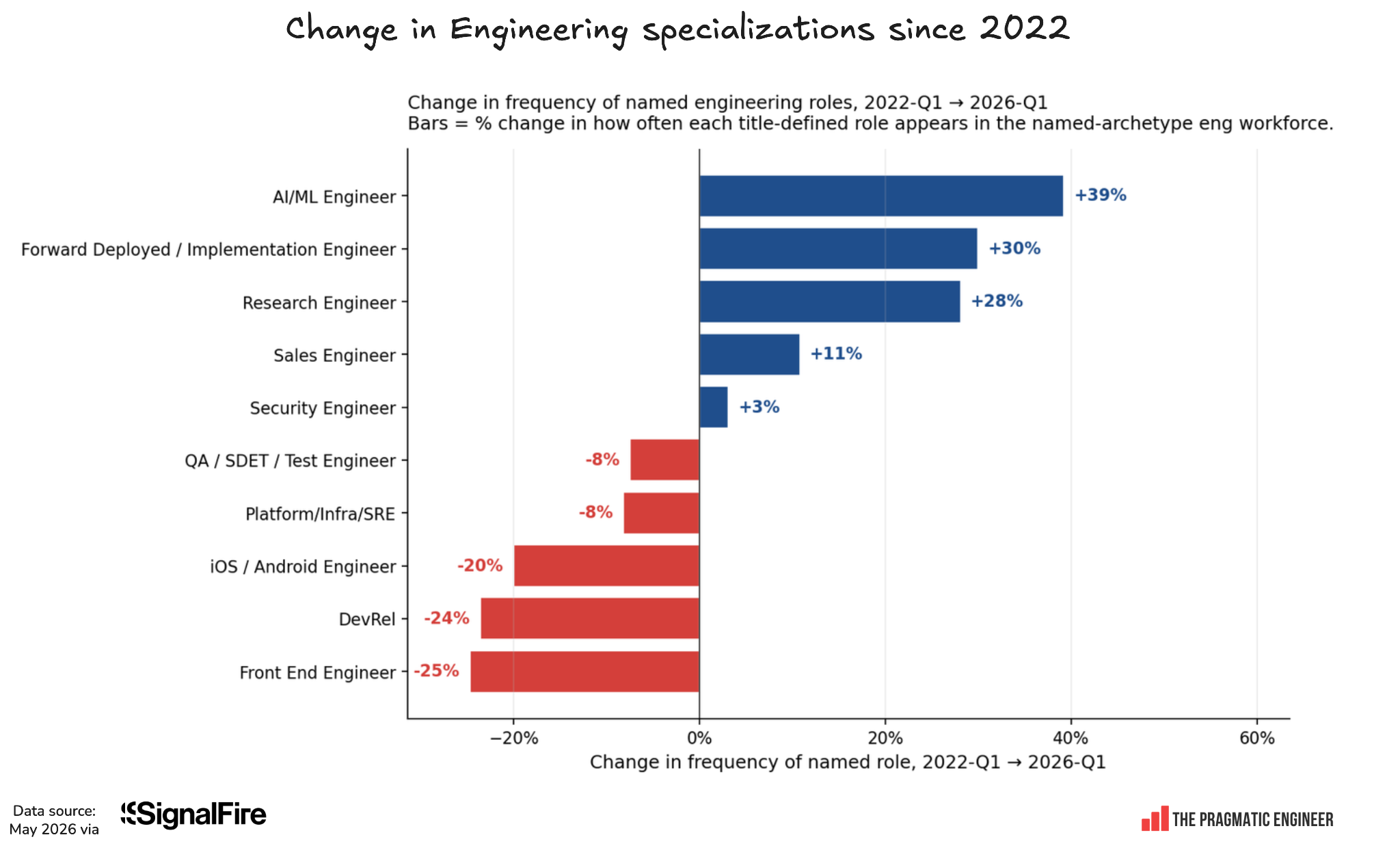
Hot market for some, but tough for most. For those in AI Engineering, ML, or FDE, the market is incredible. For everyone else, it’s much less great.
Higher hiring bar & lower compensation – but not for everyone. Many candidates are unhappy with offers that are the lowest in years. This doesn’t apply to AI Engineering positions or at AI businesses, however.
Engineering leader recruitment: also weird for senior ICs. Senior engineering leaders are struggling to find opportunities, or may turn them down in favor of fractional roles or to work on their own startup.
US market trends. Folks experiencing the “best market ever” are likely in the US, where a talent shortage is a bigger complaint than it is elsewhere.
Trends in the UK, EU, and rest of the world. “Ghosting” is more commonplace than in the US, “fake applicants” a bigger issue, remote roles are going extinct, and more.
Interview preparation signups: what do they indicate?
Where engineers go after Big Tech
1. “Catch-22:” nobody finds each other
The phrase “Catch 22” refers to a paradoxical problem, whose solution is blocked by the problem itself. The term originated in a famous World War II novel of the same name, and it also describes pretty accurately what I see in today’s tech job market. Hiring managers are saying that highly-skilled talent (typically senior+ engineers) is not available to be recruited, at the same time as experienced, proven professionals find their applications ignored by employers.
What seems paradoxical here is how both can be true. It’s as if recruiters and potential candidates aren’t hearing each other. Of course, there’s some nuance:
“We get about 1,000 applications a day on inbound and maybe two of them are even relevant to the posting.
I mostly no longer look at inbound seriously because it’s so c***. I’d almost certainly miss a great inbound submission if it came in.
All of our recent hires have been via network and us reaching out to folk on LinkedIn. Biggest hurdle we have to outreach is thin LinkedIn profiles and little other online presence.”
From the other hiring managers we talked with, more themes emerged:
More inbounds than ever & also more noise
“I’ve never seen so many inbounds and strong resumes. I’m hiring for lots of roles; for one software engineering position in Seattle, we have had 800 resumes inbound over a three-month period. I’ve never seen anything like this! These resumes are not low-quality either: they are people who have worked at MSFT, AWS, other large tech companies, and have solid skills.” – Head of Engineering, Series B startup, Seattle, US
“It’s difficult to find good candidates among all the noise. Have had two open senior engineer positions for months, and the only good interviews or offers we’ve extended were in network.” – Engineering Manager, late-stage startup, US
“A glut of vastly underqualified people completely drowning your hiring pipeline. This is what I’m seeing, and it’s making inbound a useless channel.” – Engineering Director, Big Tech, US
“From what I hear from recruiters, every job posted has 1,000+ applicants, and 98% of them are considered unqualified.” – fullstack engineer, Middle East
“We are a small company and gave up on inbound hiring. We got too many AI applications. Much lower signal-to-noise compared to past experience.” – Director of Engineering, Canada
Experienced engineers struggle to get interviews
“Even when you’re good, it feels like there’s a LOT of noise to cut through to get noticed. I’m quietly looking for a new role in devtools, and fit that ‘product engineer’ profile perfectly. I feel like the demand for great people is higher than ever, but I can’t figure out where on that bar I fall.” – Tech lead, seed-stage startup, US “As an experienced engineer & successful-ish founder I have yet to get to a phone screening in this job market. There is clearly something amiss, just a wall of noise preventing any signal from getting through.” – Software engineer + founder, 8 years experience, US
A staff engineer at a late-stage startup in the US summed things up:
“It feels like everyone who has a good job is holding onto it for dear life, and THOSE are the people we want to hire.”
“Tale of two cities:” in demand or not
A director of engineering at a Big Tech in the US, identifies two distinct groups in the market:
“If you are at the top of your game, have AI experience, and are senior enough, you can write your own ticket. If not, then the job market is tough! This job market is like the tale of these two very different cities.”
Observations from some job seekers echo this: demand feels strong for “AI-adjacent” engineers (those building AI systems), especially in the US. Standout engineers with a strong network are still in demand, and we covered the story of one such person in “How to be a 10x engineer” – interview with a standout dev. For everyone else, it’s a struggle to get an interview!
Referrals: more important than ever?
Several experienced engineers currently on the job market say they only get interviews when they personally know someone at a company:
“Larger companies have to have some serious AI going on to sift through resumes because they are being bombarded. It really is the case that you don’t get your resume seen unless you know people who can vouch for you.” – Technical Program Manager, Big Tech, US
“Referrals are a lifeline. It’s impossible to get interviews for Staff or Principal Eng positions by cold applying. The only interviews I am getting from a cold-apply are Senior-level roles.” – Principal Engineer, 10 YOE, US
From a couple of hiring managers:
“The only interviews or offers we’ve extended were to devs already in our network.” – Software architect at a mid-sized company, US
“I filled an engineering manager position in record time thanks to a person in my network looking for this job. If it would not have been for my network I would probably have been looking for someone for a couple of months.” – VP of Engineering, private equity-funded company, Germany
2. No trust. Is AI to blame?
Hiring managers repeatedly tell us they no longer trust what they read in resumes, and that some candidates even turn out to be fake.
Polished CVs, weak candidates
A common gripe among hiring managers is that resumes are highly optimized by AI, but candidates turn out not to have the experience they claim:
“CVs are high-quality, but the people behind them are not. Almost every resume looks impressive. However, the quality of the conversations does not match it at all.
One recent example: I interviewed a senior candidate who had spent five years at a US-based cloud consulting company, most recently as an architect. I asked which architectural principles or patterns he had used in his projects. His answer was: “Daily standup, sprint planning, and retrospective.” I clarified that I meant from a tech perspective, not process perspective. He confidently replied: “Yes, daily standup, sprint planning, and retrospective.” – Engineering manager, large company, Berlin, Germany
“Ten years ago, we would have appreciated resumes tailored to a role that was posted, now it’s just lazily thrown together with AI.” – Engineering Manager, mid-sized company, Canada
AI-keyword stuffing is rampant, according to one head of engineering in the UK:
“Lots of people are rebranding themselves as senior AI Engineers and demanding much higher salaries. Their resumes now have lots of AI-related keywords mentioned, like RAG, evals, inference… but when digging deeper there is little substance. Many of them are seeking a senior level salary (£90k–£140k) when they are barely showcasing mid-level skills.”
Cover letters are as good as dead, several hiring managers tell us. The reason is that they’re always AI-generated, boring to read, and pointless. More than 18 months ago, we reported on how cover letters were being made redundant by AI in How GenAI is reshaping tech hiring.
An engineering manager at a UK e-commerce agency summarizes what’s happening:
“’Claude; write me a CV that matches this job spec, then auto send’. This seems like the name of the game for most applicants.”
Fake candidates
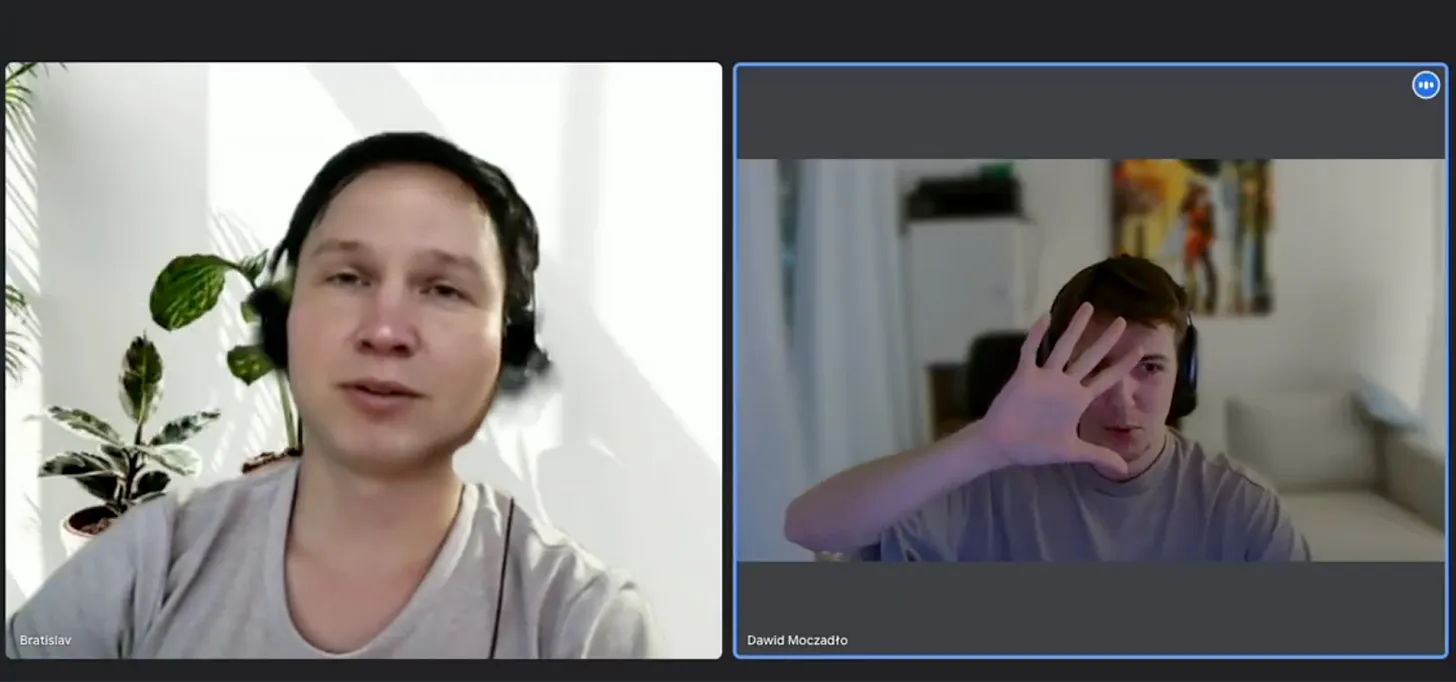
Does anything encapsulate the challenges of today’s job market for recruiters more succinctly than candidates who do not exist, even when they appear to be sitting in an interview? A year ago, we covered an “AI faker” applicant caught by a security startup, who was potentially a state agent from North Korea.
Catching an imposter: candidate (left) refuses to place their hand in front of their face because it would blow their AI cover. (right) The interviewer illustrates the request. More in our deepdive
Such incidents are becoming more common at US, UK and EU companies which hire for remote roles:
“There are a lot more fake candidates applying, leveraging AI for not just resumes, but also interviews. In extreme cases, the interviews are being outsourced so that a different person shows up for the interview. It feels a bit like playing captcha with them during interviews.” – Senior EM, private-equity backed company, Bay Area, US
“The second person we interviewed was clearly a North Korean scammer, writing questions into an LLM, reading the response, easily tripped up, and other interviews were background noise in the room.” – Staff Engineer, UK
“Many applicants that looked a good fit turned out to be someone else in the Asia Pacific region doing interviews with an AI in the background. It’s easy to spot because of the ‘lag’ in a naturally flowing conversation.” – head of engineering, mid-sized company, Germany
Cheating in remote interviews by using AI is also commonplace. A software engineer based in Finland told us:
“A couple of times we saw an applicant who was using AI to answer the questions, and this was sooo weird. I honestly didn’t know how to react, so we decided to cut the interview short. We then shared a note with the recruiters on how to spot this.”
3. Hot market for some, but tough for most
The market appears sharply bifurcated: amazing for AI and a few specialist roles, and a major struggle for everyone else.Some accounts from folks benefitting in the current conditions:
“The market is really good as an (AI) engineer with the right experience. I’m not actively looking but get 2–3 messages a day. When I was hiring for AI engineers at my last AI startup, the market for these folks was terrible. It’s very hard to find good talent, and people that were great on paper did poorly in interviews.” – AI Engineer, 5 YOE, New York, US
“It seems like demand for senior positions is still there, but only if your profile really matches what the company needs. For example, I’ve been working on different data pipelines for a while, and finding such a position is relatively simple. However, breaking into anything else is not! Every startup wants to hire only people experienced in that particular thing they need.” – Software Engineer, 13 YOE, Big Tech, UK
Here’s what two job seekers who are struggling at present say:
“I sent my handcrafted resume to 30–40 positions, and heard back from zero. Eventually, I got an interview after a recruiter reached out via LinkedIn; I don’t know how I would’ve found anything, if it was not for this!” – Software engineer, 5 YOE, Amsterdam, Netherlands
“As a developer without a specific “specialization,” I’m struggling to get any interviews. I’ve spent a few years as frontend, then another few as backend, and most recently working on DevEx. In this market, I just don’t get any callbacks for interviews, not even a first round interview.” – Software engineer, 6 YOE, London, UK
Anecdotal evidence from job seekers suggests that being in these fields means the market is as good as it gets, right now:
“It’s the greatest job market I’ve ever seen. I’m an L5 former FDE, now SWE, who has worked on LLM apps for ~2 years. The inbound top of the funnel is bonkers, and I find myself saying “no” to places that I would have once killed to work at.” – AI Engineer at an AI decacorn, San Francisco, US
“I have seen huge interest in FDEs and AI Engineers as an engineer who’s been interviewing.” – Software Engineer, 5 YOE, New York, US
“It’s not hard to get interviews as an ML/AI engineer. The technical bar is about the same as late 2022. If anything, onsites seem to be of fewer rounds for the same level. Companies seem to move fast to get candidates onsite.” – ML engineer, ex-Meta, Bay Area, US
An engineer at Apple is surprised by the demand for their skills from AI companies:
“Got a lot of responses from cold applications for AI roles, and ended up with two offers at AI infra companies. I ended up getting a significant pay bump beyond what Apple offers for the same level!”
A software engineer at well-known company in the Bay Area, also finds the job market is good:
“I got offers for Senior SWE with Stripe and Rippling, was rejected from Snowflake… Anecdotally, the job market is better compared to 2025 for regular SWE positions in the Valley.”
EM and Staff+ profiles are near-impossible to fill
A repeat complaint from hiring managers in the US is how challenging it is to recruit solid engineering managers and Staff+ engineers:
“It’s extremely difficult to hire EMs and Staff+ engineers. It’s much easier to hire folks with less than 10 years of experience. This is despite us offering 90th percentile comp via Pave, and having a hybrid and good culture.” – Fractional VP of Engineering, Series B, New York, US
“My team has been looking for a new engineering manager for three months and we barely had any good applicants. It’s a super weird dynamic right now.” – Senior Infrastructure Engineer, Series D Fintech, company with offices in the US and EU
“The most desirable candidates right now are EM or staff-level folks who can keep up with uncertainty in the business. We are having trouble hiring folks who roll with the constant change that is now very typical at startups.” – CTO at a San Francisco-based startup
“Specialist” profiles are hard to recruit
A few examples:
Distributed systems engineers: “We can’t find enough qualified distributed systems engineers, cloud infra etc. I have 20 reqs [open positions] right now.” – Recruiter at a hyperscaler, US
Product engineers: “‘Product engineer’ has been a hard profile to find. It is also hard to find someone with a decent design eye who can also build full stack. The hardest thing to hire for has been taste + trust… I’d rather hire someone who is ‘behind’ on AI, but has great taste/judgment than someone with complex agent setups and prompt libraries.” – Tech Lead, seed-stage startup, Los Angeles, US
Senior engineers, in general: “As a hiring manager trying to hire seniors right now, it has felt pretty difficult. Most applicants are totally unqualified, and the qualified ones do poorly in an interview.” – Engineering manager, robotics company, Canada
Silence for many
One in five respondents detail how difficult it has been to get responses from recruiters:
“Things are looking bleak. Now, applications are going into a void. Recruiters aren’t reaching out immediately as before. Of 10 or so applications sent out, I’ve gotten one interview scheduled that was then rescinded because it looks like the team was laid off.” – Frontend engineer, 10+ YOE, Southeast US
“The job market has been a desert. I’ve gotten back into applying, job agencies seem to have few roles they’re looking to fill. The companies I have applied to myself, never reply.” – Software Engineer, 8 YOE, Southern California
“Recruiters are ghosting me! Every time when I respond to recruiter reachouts, they ALL ghosted me after a few messages and have similar stories from friends.” – Software Engineer, 7 YOE, ex-Meta, Switzerland
“So far, I have a hard time even getting past the hiring manager and I’m rejected before I can do the proper technical assessment.” – Software Engineer, 7 YOE, Helsinki, Finland
Even folks at Big Tech face a lack of response. Here’s a Technical Program Manager currently at Meta who used to be very in-demand:
“I put a few feelers out when Meta announced layoffs, and it’s just radio silence. I don’t want to sound cocky, but with my resume, you at least get a chat with a recruiter, usually right away. But Google and Anthropic just ghosted me.”
4. Higher hiring bar & lower compensation – but not for everyone
In a “normal” market, when the hiring bar goes up, so does compensation. But we heard anecdotes about the hiring bar going up, with the compensation on offer trending down!
Listen and watch now on YouTube, Spotify, and Apple. See the episode transcript at the top of this page, and timestamps for the episode at the bottom.
Brought to You by
• Antithesis. If you’re using agents to code, the problem isn’t writing the code but making sure that nothing broke. Antithesis runs your whole system in a hostile environment and identifies hard-to-find bugs before users hit them in production. Teams like Jane Street, Fly.io, and the etcd community use agents safely and ship better code, faster, with Antithesis. Learn more.
• WorkOS – make your app and agents Enterprise Ready, with SSO, SCIM, RBAC, and more. Get started. • turbopuffer. A vector and full-text search engine built on object storage. It’s fast, cheap, and extremely scalable. It’s never been better to try it out: last week, they dropped their base price from $64 per month to $16 per month. Give it a spin now.
In this episode
Few have made as big an impact on software engineering as this week’s guest on the Pragmatic Engineer podcast, Kent Beck. He created Extreme Programming, pioneered test-driven development (TDD), co-created JUnit, and is one of the authors of the famous ‘Agile Manifesto’. But these days, he’s re-examining many ideas for the age of AI, and says we’re failing to accumulate trust during this new era at the same high rate as new code is being accumulated.
Today’s episode is the previously untold story of Kent’s remarkable career and how he became the industry legend he is today. We start with Kent’s journey from discovering Smalltalk in the early days of personal computing, to helping define modern software engineering practices. We explore the origins of TDD, design patterns, Extreme Programming, and Agile – along with some lessons learned at Apple and Facebook.
Kent explains why he believes software engineering is about far more than writing code, why no one yet knows exactly how engineers should work alongside AI agents, and how his “explore, expand, extract” framework can help engineers navigate major technology shifts.
Key observations from Kent
Here are 12 rarely-told stories and observations from Kent:
1. Coding is only a small part of software engineering – the rest can’t be automated. Kent rebuts the claim that coding – and eventually the whole software engineering craft – will vanish. He believes coding is only part of what we do, and a small part of it, too. Through your work, you also build confidence, make connections with other people, and develop your personal understanding of the domain. This will remain important, even if we develop our skills in other areas than coding.
2. Lesser-known story: fired by Apple. Kent joined the tech giant in 1987, drawn in by Smalltalk, whose language was taking off at the time. Xerox had handed the language to a few companies to see who could run with it, and Apple was one. But Apple’s customers wanted C and Pascal compilers instead, so the Smalltalk project went nowhere. Kent joined a team building a programming language for kids, but says he was eventually fired because he was in “punk mode” and wanted to do things his own way, instead of being a team player.
3. Kent used to keep a thesaurus close at hand. When working at Tektronix in the late 1980s with Ward Cunningham (the creator of the first wiki, and a pioneer in design patterns), they built HotDraw, a graphical editor with a boxes-and-arrows model. For naming core abstractions, Beck chose “drawing object,” “drawing handle,” etc. But Ward cared intensely about nomenclature and hunted for better vocabulary, so they kept a physical thesaurus which was well thumbed. Beck recalls they became pretty obsessed about the names of things.
4. TDD wasn’t ‘invented’ so much as ‘rediscovered’ by Kent. As a kid, Kent read one of his father’s programming books from the tape-to-tape era, when an input tape like time cards was fed through a payroll program to produce an output tape, such as one with checks. The book’s advice was to take a real input tape and manually type the expected output tape before writing the program. He read this, didn’t understand it, and forgot about it.
Years later, Kent built SUnit, a small testing framework, and randomly remembered the input-tape trick, so mapped it onto SUnit. If he followed the pattern, he’d write the test before the code. He laughed out loud at this because it seemed like such a stupid idea: why write a test that’s guaranteed to fail, when the classes and methods aren’t even defined yet? But when he did, he found his anxiety about programming vanished. This is when he became a TDD convert.
5. Kent invented Extreme Programming (XP) while on the Chrysler payroll project. Kent threw away a codebase that didn’t work and restarted the project with a new methodology. He paired with others, and used his own ideas for testing. Later, he coined the new methodology’s name by deliberately picking one that he knew would be unpopular with the tech establishment of the day: “extreme programming” was born.
6. The Agile Manifesto came together in a messy way. In 2001, a loose group of folks who rejected waterfall development gathered at Snowbird, Utah, to rethink programming. Kent recalls this summit proceeded badly as everyone pushed contradictory ideas. During a break, Martin Fowler and Jim Highsmith stayed behind, and when the others returned, they found the values written on the whiteboard. Kent’s contribution was the word “daily”: “Business people and developers must work together daily throughout the project.”
7. Calling it “agile” was an error. Kent objected to the word “agile” at the time, and still does today, since nobody claims they prefer “rigid” development, and everyone says they’re “agile”, even when they’re not. He would’ve preferred a less spacious term, like with “extreme programming”: after all, it’s hard to call yourself an “extreme programmer” without actually following that methodology.
8. The Dotcom Bust hit very hard. The day before the 9/11 terror attack in 2001, Kent had eight months of consulting work booked at top rates and was finishing work on a house in rural Oregon. The next day, everything was canceled, just as big bills fell due. He burned out into depression and was left unable to program for years, in what was a “lost decade.”
9. At 50, Kent joined Facebook and realized nobody cared about testing or TDD. At Facebook, Kent found a company that barely did any form of unit testing, while running a massive, stable, and fast-growing site. He signed up to teach a TDD class at a hackathon — he wrote the book, after all! The classes either side of his in the schedule both filled up, but the TDD class got zero signups, not even a pity one. He made the decision to forget everything he knew and to relearn software engineering as it was at Facebook. In the end, he stayed seven years.
10. Building software products has three phases: explore, expand, extract. This is Kent’s “3X” model. ‘Explore’ means trying many cheap uncorrelated experiments, ‘expand’ involves focusing on the one thing that’s working and overcoming obstacle after obstacle, while ‘extract’ is a repeatable playbook and economies of scale. How you code, hire, and organize differs across each phase.
11. Kent has always been an anxious programmer. He describes himself as chronically anxious because the more complex the code is, the more he knows it could break. This was the fuel behind testing and TDD, which are approaches designed to soothe an anxious mind.
12. Kent sees himself as a “tree shaker, not a jelly maker.” He starts things like patterns, SUnit, JUnit, TDD, XP, 3X, then pushes them until they take off, before moving on to the next thing. It’s his defining trait, and may explain his enormous output, and also why he abandoned TDD just as it peaked.
+1:The human part is the most important one in software engineering. As Kent explained:
“This is the biggest cosmic, practical joke ever. As young people, we were promised: “Okay, here’s this computer and once you’ve completely understand this computer, you’ll be fine. That’s all you need to do.”
So I set out the first part of my career just to become the best programmer that I could be because that’s what it would take to be successful. And then you realize: sorry, there’s this whole human side. Your ability to affect change in the world is gated by your ability to communicate with, to soothe, to understand other human beings. And those are exactly the skills that I thought I didn’t need to learn!
So I was promised: just understand the computer and you’ll be successful. And then someone went “just kidding, understand people!” And now I was in a position of being ten years behind.”
The Pragmatic Engineer deepdives relevant for this episode
Scheduling note: this week, I’m in San Francisco at the AI Engineer’s World Fair, so there won’t be an edition of The Pulse on Thursday. However, tomorrow (Wednesday) there will be a special podcast episode – the lengthiest, most detailed one yet – with software engineering legend, Kent Beck.
In recent days, I’ve visited the offices of OpenAI, Anthropic, and Cursor, in San Francisco. Onsite, I talked with software folks working on the model side to learn more about how their way of building software is changing. This article is based on observations from those visits, including some new developments that I reckon may be adopted industry-wide.
We cover:
Next mega-trend? Agents running in the cloud to go mainstream. OpenAI, Anthropic, and Cursor are all-in on cloud agents and expect demand for them to increase massively.
Mass adoption of coding harnesses by non-developers. At OpenAI, more than 95% of non-engineers use Codex, not ChatGPT. Is it a sign of things to come across tech?
Will the main task of engineers be to make agents more efficient? Ever more engineering work is about building environments for agents to execute more efficiently at Anthropic and Cursor.
Next trend? Companies aggressively optimize spend-per-token. AI spending by software engineers is so high that it makes sense for platform teams to slash per-token cost. A case study from Coinbase.
1. Next mega-trend? Agents running in the cloud to go mainstream
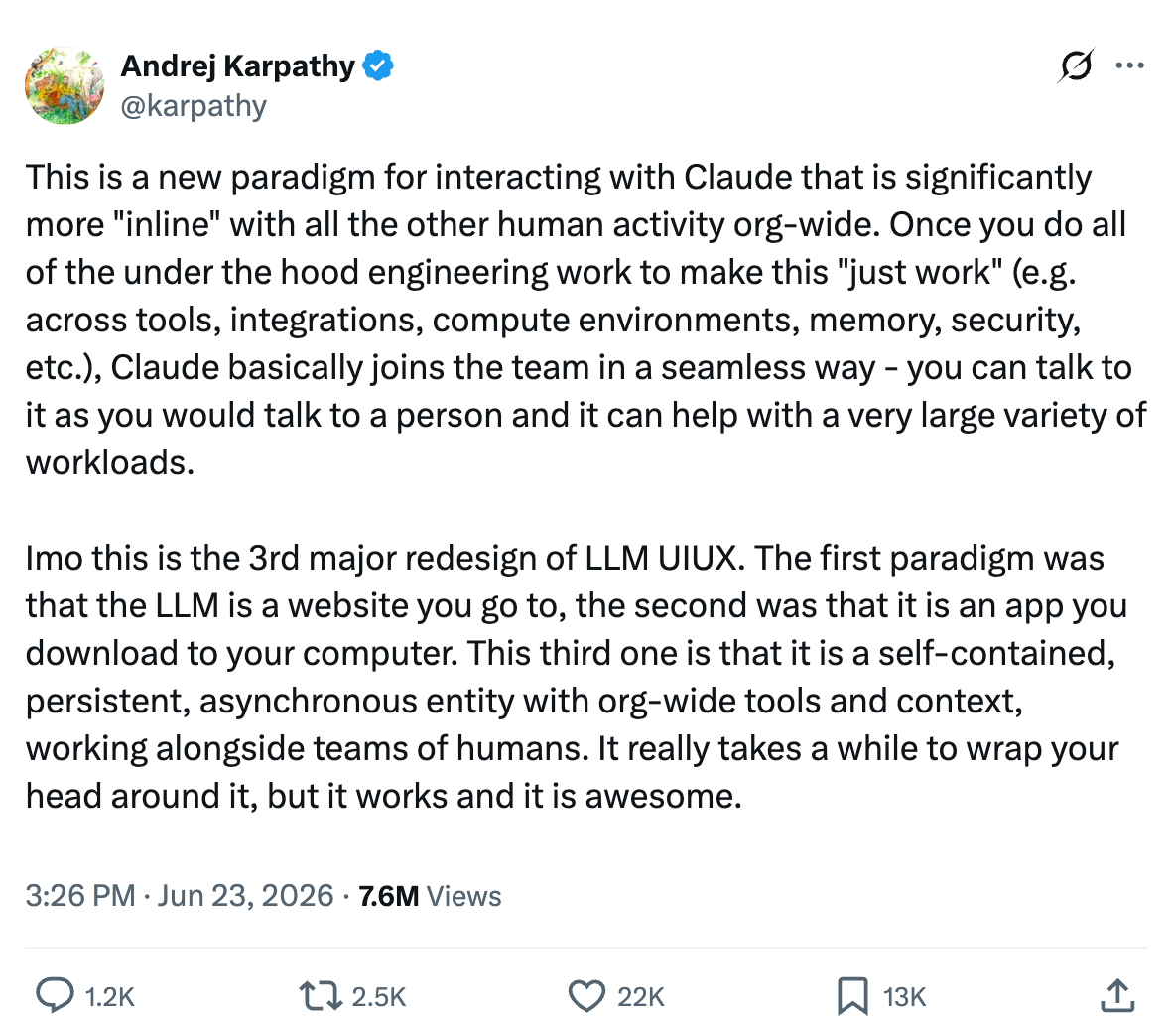
Last week, Andrej Karpathy employed the phrase “new paradigm” to describe using Claude Tag – a way to mention Claude in Slack and have it kick off tasks – to work with AI:
There was plenty of pushback against this claim on social media; after all, it’s just a Slack integration with Claude, right? I also thought this until I asked David Hershey at Anthropic’s Applied AI unit about it while visiting the company’s offices. He explained in detail what makes this particular Slack integration different from using something like Claude Code:
No additional setup. For Claude Code to work well, it should be connected to internal MCP servers, with the right skills on your local machine. Of course, at larger companies this setup is at least partially automated, but devs often need to do tweaking.
No “tool context-switching.” Just mention it in Slack! Of course, opening Claude Code is not a big effort, but it’s still more work than just typing it out in Slack, and kicking off work.
Routine work made easier. David has “Claude playing Pokémon” as his side project. Every time a new model comes out, he kicks off a run of his script on it. Previously, this took a few minutes to set up every time, and then it ran on his machine for hours. With this new Slack integration, it’s just one command.
My sense is that the excitement here is less about the Slack integration itself, and more to do with the fact that it’s easy to kick off one or more AIs that no longer run on a local machine. You can skip the setup entirely.
‘Claude Managed Agents’ is a big focus at Anthropic. While there, I met Katelyn Lesse, head of engineering for Claude Platform, who explained that Claude Managed Agents is a large, complex project which her team built over a six-month period. It’s a hosted service to execute long-running agents on various cloud providers.
Cloud agents are the “big deal”, not the Slack integration
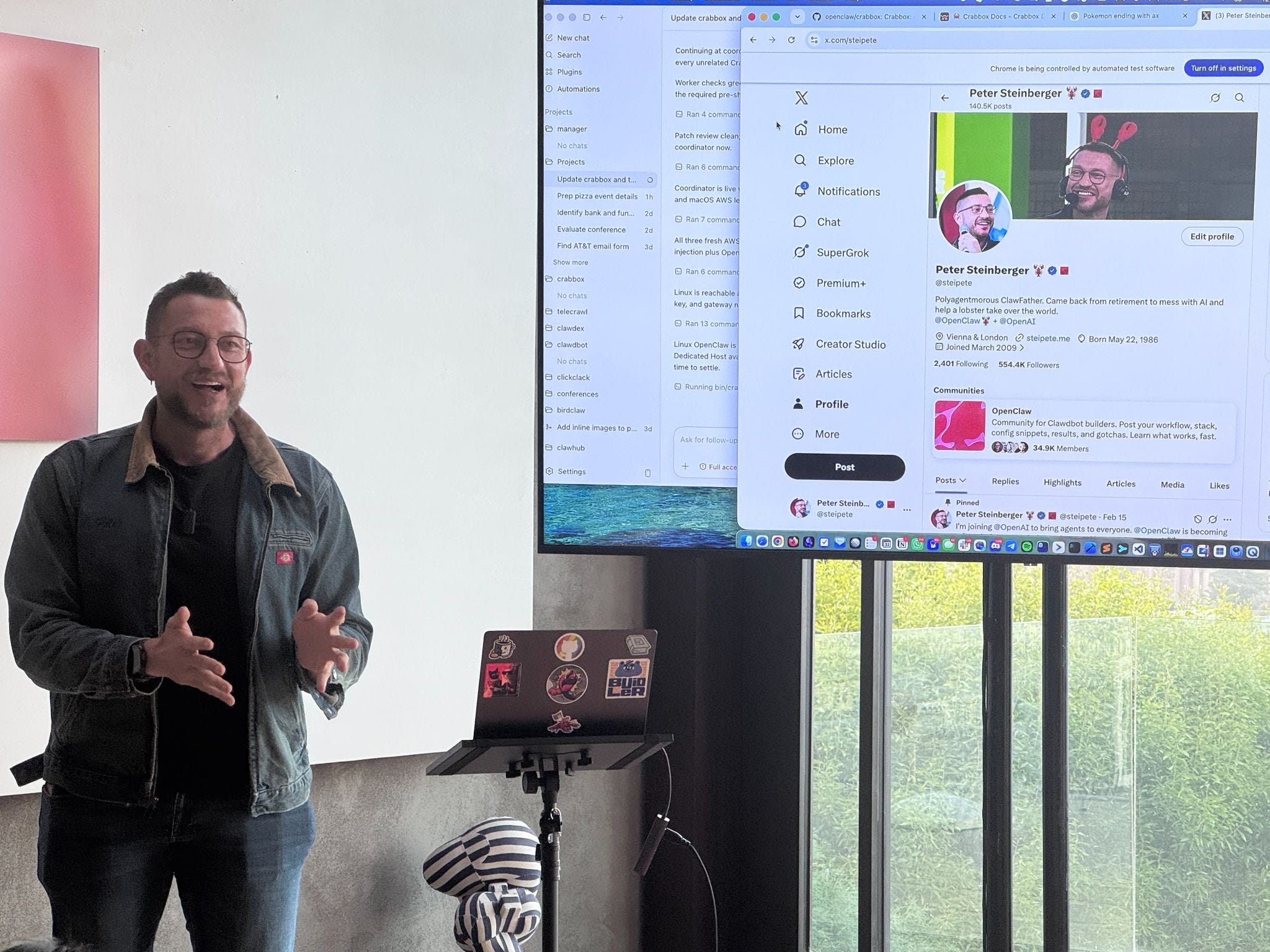
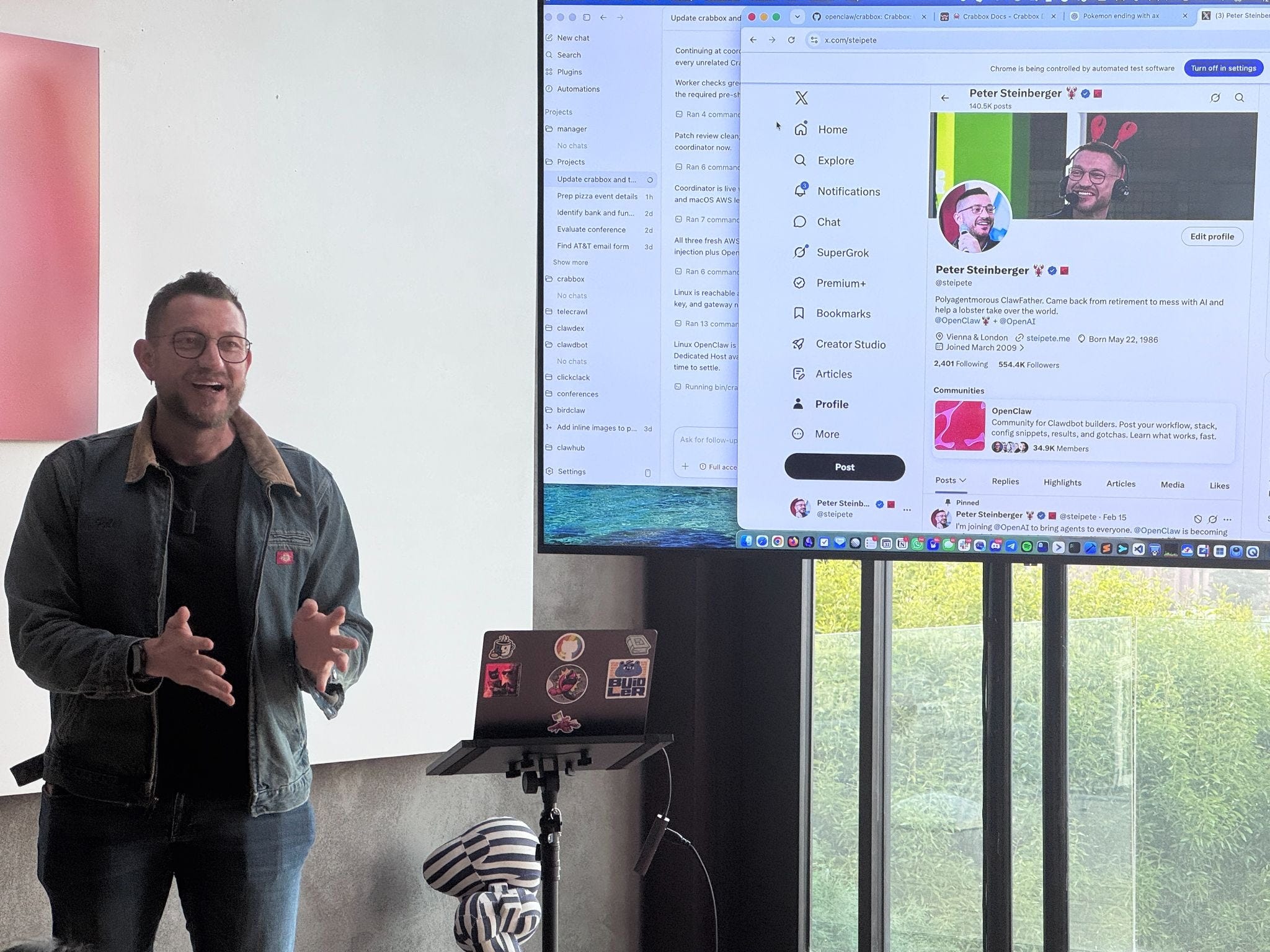
Also last week, I had the opportunity to attend a private AI builders event, where Peter Steinberger discussed his workflow.
Peter Steinberger covers how he uses AI coding agents
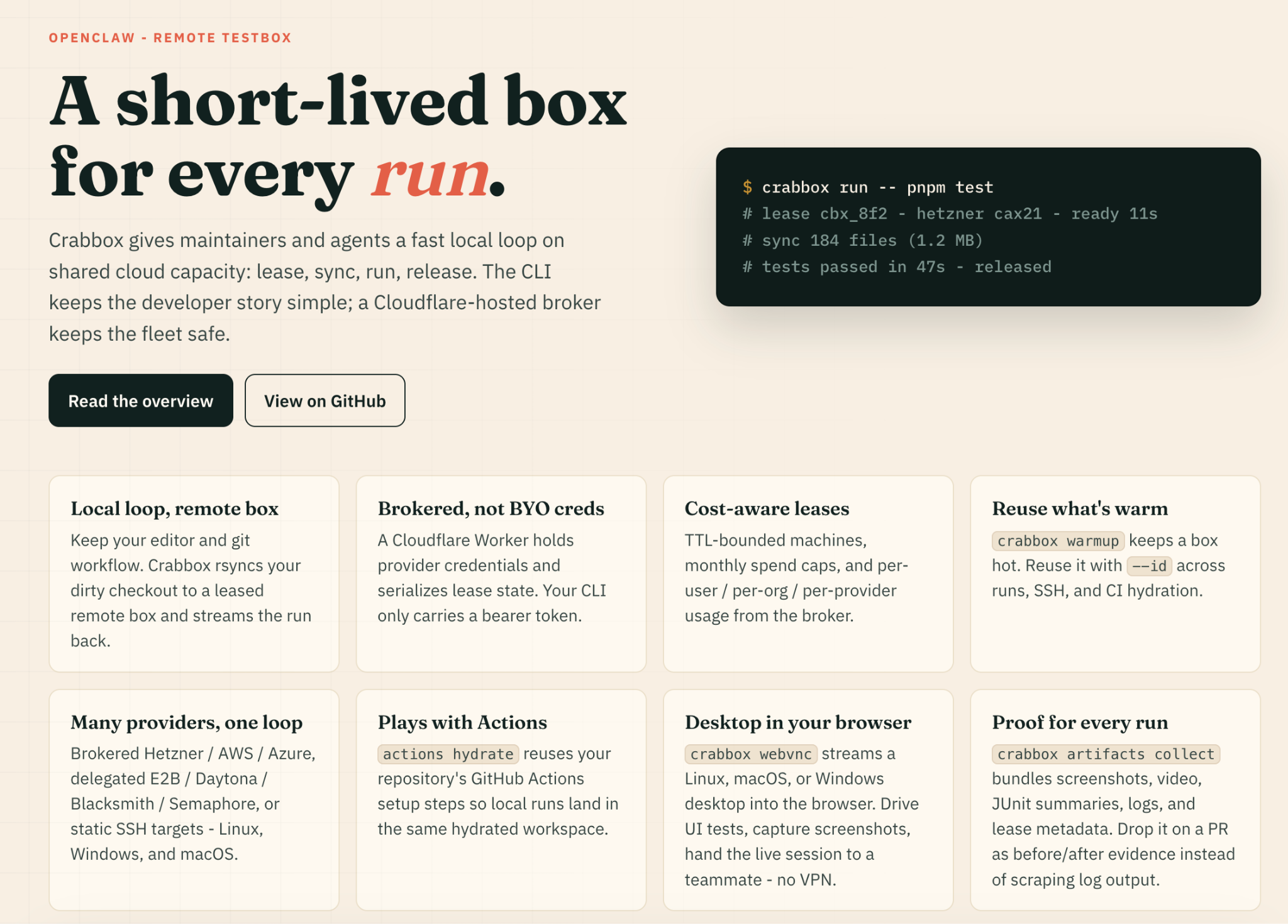
He talked about how he has gotten really tired of having several OpenClaw agents running on his local machine, which heat up the CPU and slow down his whole system. So, he built Crabbox as a way to run OpenClaw agents in the cloud:
Crabbox: remote agents for OpenClaw
Suddenly, the same solution of cloud agents has emerged in separate places – at Anthropic and with Peter’s OpenClaw – in response to issues caused by locally-running agents. I also learned that cloud agents are becoming a big deal at OpenAI and Cursor, too.
OpenAI bets big on Cloud Agents
OpenAI acquired Ona, (formerly Gitpod), the leader in cloud development environments (CDEs). Back in 2021, CDEs were built for developers to develop software faster, and they also happen to be the perfect primitive for agents to run in a sandboxed cloud environment. From the acquisition announcement by OpenAI (emphasis mine):
“As Codex becomes more capable, its most valuable work is unfolding over hours or days, rather than minutes. We believe people should be able to delegate more ambitious work without remaining tied to the machine where it began. The work should continue beyond the initial session, with Codex making it possible to stay connected and check progress, provide direction, make decisions, and review results from anywhere.
Ona will help us do that. Its technology provides secure, persistent environments where agents can access the tools, systems, and context they need to make progress over time.
By bringing Ona to OpenAI, we will expand Codex beyond work tied to a single device or active session and help more organizations deploy agents securely in production.“
At OpenAI’s offices, I asked engineers there if their focus is shifting to cloud-based agents. Their answer: it very much is. This is a fairly recent development and they’re hiring engineers for the Cloud Agents team. Here’s one job ad that’s currently live:
“We are looking for an experienced software engineer to help build and scale our cloud agent platform. You will design and operate systems for orchestrating agents at scale. You will work closely with product engineers on ChatGPT, API, and Codex to define the right abstractions and enable them to ship products quickly. Strong backend or infrastructure experience is important; experience with Python, Rust, distributed systems, cloud infrastructure, or product platforms is especially helpful.”
Cursor: running agents in the cloud is the future
At Cursor, I spent an hour with cofounder Sualeh Asif (formerly the CTO, now Chief Product Officer). Cursor released Cloud Agents at the end of last year, and is starting to focus a lot more on this area. Sualeh revealed some interesting details about working with cloud agents:
Agents in the cloud don’t have a way to “complain.” With running an agent locally, when it gets warnings or errors, it surfaces them to a human in its response, who instructs it to do X or Y. However, there’s no such loop for a long-running task on the cloud! Cursor came up with the idea for the model “confess” in regular interviews, and the “confessions” are shared with the infra team to improve the agents’ environment.
Long-running agents have their own challenges. What happens when a node terminates, midway through; how do you move agent execution from one node to the other? There are new, nontrivial engineering challenges the team needs to solve.
Only yesterday, (Monday, 29 June), Cursor launched its iOS app that enables the building of software from anywhere.
Building software on a smartphone needs cloud agents. Source: Cursor
This product is built on top of cloud agents to allow for long-running tasks, the company said:
“Cloud agents run in isolated virtual machines with full development environments to test, verify, and demo work. Since they operate asynchronously with their own tools and resources, cloud agents can run for longer and iterate toward merge-ready PRs without intervention.
To take advantage of these capabilities, send a local plan to a cloud agent or move active agents to the cloud to keep running. You can move the cloud session back to your computer to test changes locally before merging”.
Why are cloud agents suddenly a thing?
It figures that running AI agents in the cloud is practical: there’s less setup involved, several can run in parallel, and the cloud is a better, more convenient place for long-running agents than a personal laptop is; i.e., having to keep the lid open even when walking around the office.
But why is this happening now? My hypothesis is that a mix of factors are at play:
Coding models got ‘good enough’. Before Opus 4.5 / GPT-5.4, AI models could not really code autonomously, so running them for long tasks was pointless!
Infra for AI coding agents has matured. Ways of giving more context to agents have improved: things like MCP and skills became mainstream and better understood.
The context window is bigger. Today’s models have context windows of up to 1 million tokens, meaning that more complex instructions, code, and context can be passed in. It’s hard to have agents run for a longer time without access to a large context window.
Cloud providers have much more GPU capacity. Every cloud provider has been building GPU clusters in the last few years, and now there’s enough that these AI agents can make use of this infra.
2. Mass adoption of coding harnesses by non-developers?
At OpenAI, I also met Andrew Ambrosino, who was the first engineer on the Codex team. Our time together got off to an ideal start, with Andrew saying he needed to show me something incredible:
Listen and watch now on YouTube, Spotify, and Apple. See the episode transcript at the top of this page, and timestamps for the episode at the bottom.
Brought to You by
• Antithesis – If you’re using agents to code, the problem isn’t writing the code but making sure it didn’t break anything. Antithesis runs your whole system in a hostile environment and identifies hard-to-find bugs before users hit them in production. With Antithesis, teams like Jane Street, Fly.io, and the etcd community use agents safely and ship better code, faster. Learn more.
• Sentry – application monitoring software built by developers, for developers. Sentry’s Seer AI agent is growing on me, as a way to debug errors faster. Same with Sentry’s MCP server. Check out Sentry.
• Google Cloud Run – a fully managed platform that runs your code directly on top of Google’s scalable infrastructure. Run frontend and backend services, batch jobs, host LLMs, and agents without managing infrastructure. Oh, it has automatic zonal failover out of the box – something that Coinbase could have used a few weeks back! Get started.
In this episode
Navdeep Singh – oftentimes better known as NeetCode – is the creator of NeetCode.io, one of the most popular coding interview preparation platforms and YouTube channels for software engineers. Before building NeetCode full-time, he worked as a software engineer at Amazon and Google.
In this episode of The Pragmatic Engineer, I sit down with Navi to discuss his path from Amazon and Google to building his own startup, why he left Amazon after just two months, what he learned at Google, and the decision to leave a stable engineering career to bet on himself. We also discuss what coding interview preparation teaches beyond passing interviews, the value of going deep on difficult problems, and why systems thinking and domain expertise remain essential engineering skills in the age of AI.
Throughout the conversation, NeetCode makes the case that learning hard things is one of the single best investments an engineer can make, helping build the judgment and expertise that remain valuable no matter how the tools change.
Key observations from Navi
Here are 10 interesting takeaways from our chat:
1. Companies have no real method for evaluating engineers – and likely never did. Navi believes the leetcode-style interview process has persisted because it scales well at large tech companies that need to train hundreds or thousands of interviewers, not because it predicts job performance well.
2. The CAP theorem’s “two-out-of-three” framing is widely taught, but technically shaky.Navi believes this theory of distributed data systems is incomplete, and says he felt validated when researcher and author Martin Kleppmann criticized it. It’s a reminder to think independently and not accept theories without understanding them.
3. Amazon’s intense culture left Navi reluctant to ask questions – which paradoxically, helped at Google. In Navi’s first job, he got used to working alone and not seeking help when needed, and continued this working style at Google. His manager there interpreted that behavior as independence, and as a result, he won rapid promotion from L3 to L4 (mid-level engineering role).
4. The NeetCode YouTube channel took off after he said he’d have to post less. Before viewers knew Navi had got a software engineering job at Google, his audience was small. But it turned out that announcing he’d have to post less for this reason boosted his channel! Suddenly, lots of people wanted to know how he’d landed the role.
5. Cheating tools are helping to resurrect in-person, whiteboard interviews at Google. Navi notes Google has restarted onsite coding interviews because it’s the only way interviewers can be sure that candidates aren’t using AI-powered cheating tools which make data structure and algorithms (DSA) interviews easy to pass.
6. Navi finds AI most valuable as a tech debt and refactoring assistant. He’s using AI to clean up years’ worth of low-quality code on NeetCode’s backend, which also validates the decision to take shortcuts in the knowledge they can be corrected later.
7. ‘Effort’ is becoming the differentiator as AI makes everything else cheap.Navi says how you can prompt almost anything, but the capacity to be engaged with and care about your work, and to defend decisions you make, cannot be prompted by an AI tool. These depend on personal qualities like effort and dedication.
8. Announcements of the death of coding are exaggerated. Despite dramatic improvements in the performance of AI models, Navi does not foresee the majority of engineers being laid off. In fact, he sees the opposite: devs are busier than ever.
9. Humans are likely to remain better at weighing up tradeoffs than LLMs are. It’s a fact that LLMs have become a lot better at coding, but Navi doubts they will be much help in decisions involving judgments about tradeoffs.
10. When hiring for NeetCode, personality traits and motivation matter more than coding skill. Navi’s best recent hire is still an undergrad with little coding experience, but does exceptionally well thanks to possessing high agency. Navi says: “even if they have no idea how to start it, by a week later, they’ll have learned everything about it.”
The Pragmatic Engineer deepdives relevant for this episode
Scheduling note: there will be no edition of The Pulse on Thursday as I’m in San Francisco for the next week and a half, visiting AI labs and startups, and attending the AI Engineer World Fair from next Monday. For the podcast and Tuesday articles, it’s business as usual.
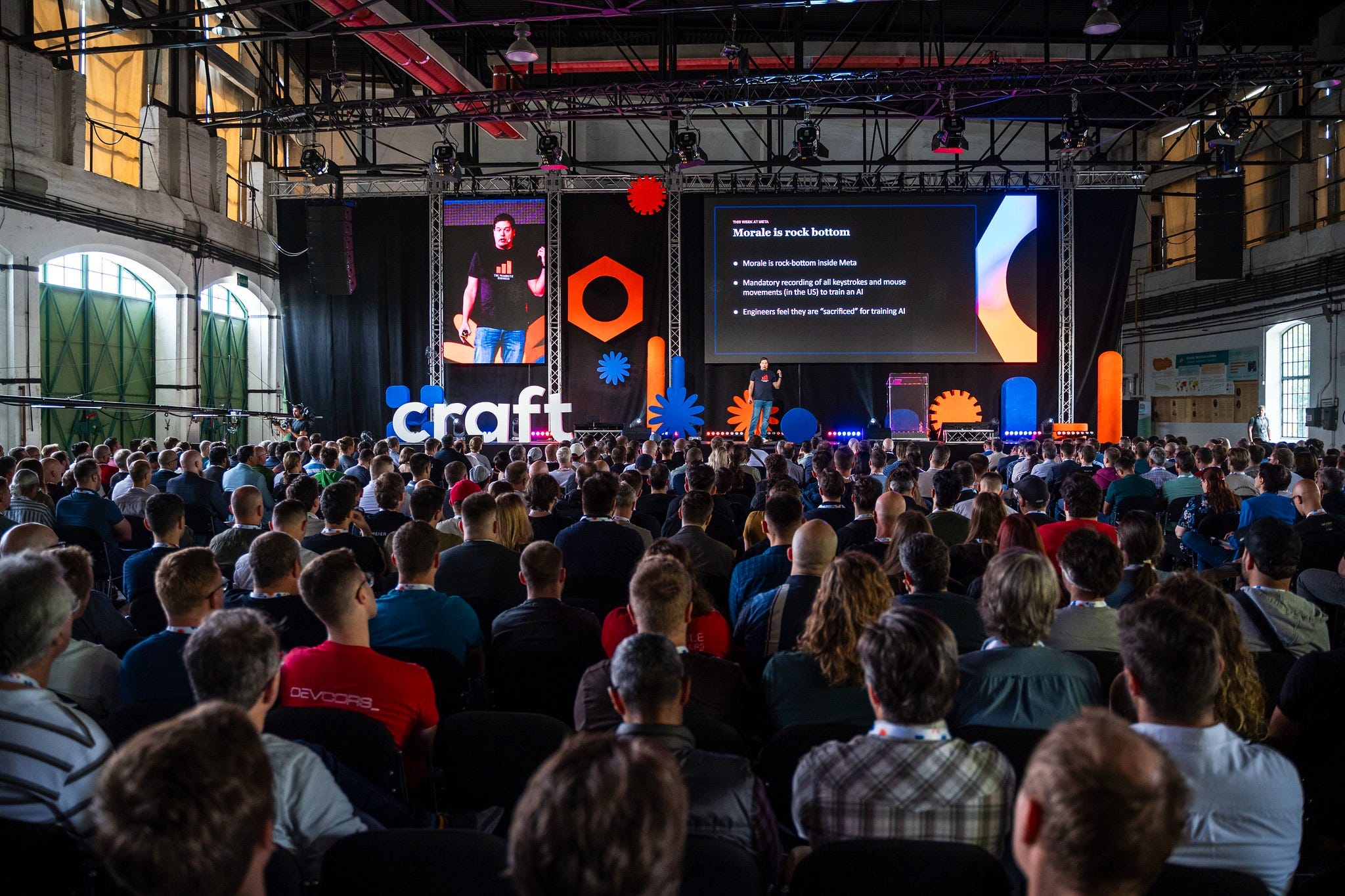
Three weeks ago, at Craft Conference, in Budapest, Hungary, I opened the event with a keynote titled ‘Slow Down to Speed Up’.
As with most of my talks, it came together in stages, including with some input from full subscribers to the Pragmatic Engineer, with whom I shared my thinking in advance, in ‘Ideas: slow down to speed up when working with AI agents’. Thank you for all the comments!
As fate would have it, just two days beforehand, social media giant Meta appositely provided a real-world case study for my talk, with its most embarrassing outage of all time: users could simply ask the Meta AI to change the email of any account, and the bot happily complied – even if the account belonged to someone else entirely – including a former US president. It was a timely example to kick off the talk with. Check out the full keynote that’s available to view on YouTube:
In this article, I summarize the key parts of my Craft Conference keynote in detail, and some responses received at the event. Full subscribers also have access to the slides, here, and at the foot of this article.
We cover:
Meta: “AI psychosis” in effect? Meta has been destroying its engineering org, and an obsessive focus on AI seems to be one reason for it. For more on this question, check out this deep dive.
Everything’s changed in six months. From around November last year, things changed with a more capable generation of AI agents like Opus 4.5 and GPT-5.4.
How are tech companies changing how they work? Anthropic, OpenAI, Google, Uber, startups, and traditional companies.
Trends. Individual productivity is up, but team productivity’s flat, tokenmaxxing and tooling adoption, vanishing middle management, CEOs and CTOs back to coding, and more.
Trends across software. Falling software quality, GitHub’s constant reliability woes, AI slop overwhelming devs who care about quality, and more.
Advice for software engineers and engineering leaders. Suggestions to help future-proof a career.
Feedback. “It’s happening here too!” is a common theme, and relief for some that it’s not unique to their own workplace.
1. Meta: “AI psychosis” in effect?
I thought it was a made-up story when I read that Meta had enabled account takeovers via a “zero auth” policy; i.e., simply asking the Meta AI bot was sufficient to change any account’s email address. After all, shipping such a regression would fly in the face of security measures, code reviews, automated testing, and metrics. Plus, the company has dedicated Integrity teams whose mission statement is to ensure something like this never happens… And yet, this bug shipped.
It went undetected by anyone at Meta, and high-profile accounts like that of former US president, Barack Obama, were taken over as a result. Instagram’s dedicated Integrity team seems to have discovered the embarrassing issue via the news.
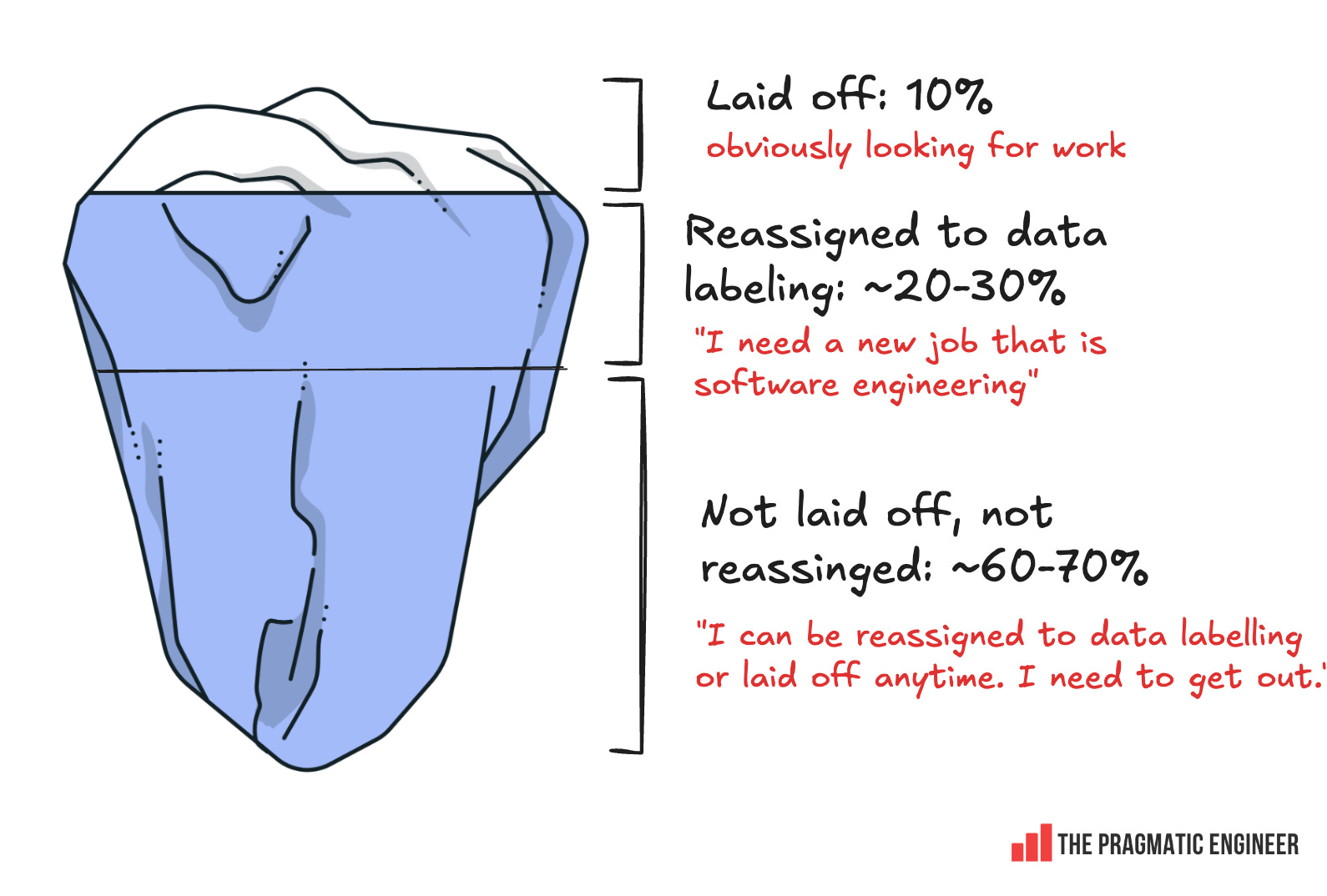
As mentioned, it was two days before the Craft keynote, so there was enough time to ask around at Instagram and Meta. Engineers at the company there told me this disaster was caused by AI-generated, AI-reviewed code, along with layoffs, and by forced reassignments from Integrity teams and elsewhere onto AI labeling and related duties.
Talking Meta at Craft Conference
The problem at Meta seems to be that leadership is aggressively pushing AI, while withdrawing resources and headcount from areas responsible for security, quality, and reliability. Since last week’s deepdive into what’s been happening behind the scenes was published, I’ve learned further details:
Instagram’s design team suffered a 44% cut in headcount during layoffs
The Developer Documentation and Support team had a full 95% headcount reduction during layoffs
Data labeling at the ADO group goes beyond “just” labeling; there are many AI training tasks to do. But these are repetitive, unless you get really creative.
Based on everything I heard from talking with Meta folks, AI-induced behavior was indeed at the heart of this outage. AI-generated, AI-reviewed code, and security teams being gutted, were also factors in the beyond-embarrassing incident. As reported in last week’s deepdive:
Instagram’s Trust and Safety Team lost around 50% of its staff to data labeling and layoffs. Some of the most senior folks were drafted onto AI training tasks.
AI-generated changes with zero human input, with just an additional AI code review, have been very common in recent months across the codebase. The change that caused this outage looked like one of these
Normally, the Trust and Safety team would be on top of monitoring and alerting of security breaches, but it is currently in full disarray due to rapid, internal disorganization”.
If major changes like data labeling assignments and staff tracking are undone, then perhaps things at Meta could return to normal. But so far, the most being done is that leadership has boosted budgets for snacks, travel, and events. Hardly the change needed to restore morale and the former culture!
The comparison to the Lumon corporation in the hit show, Severance, was duly made:
Meta’s worst-ever outage can be interpreted as a warning about what happens when there’s so much focus on AI that the basic health of a company’s main – money-spinning – products is neglected. Instagram, WhatsApp, and Facebook generate the bulk of revenue for Meta, but the company is reallocating more engineers to training the coding model, and aggressively cutting the headcounts of vital orgs to do so – up to the point of not having oncall coverage for key services, and security teams being too stretched to do their jobs.
Am I missing some insight about why it’s more important to build a state-of-the-art, likely-closed AI model that’s good at coding, than it is to keep operating revenue-generating businesses with stable infra?
2. Everything’s changed in six months
Independent, experienced software engineers with zero affiliation to AI labs have been saying for a few months that how we do software engineering has been transformed.
David Heinemeier Hansson (DHH), creator of Ruby on Rails in January:
”Just [in] summer 2025, I spoke with Lex Fridman about not letting AI write any code directly, but it turns out part of this resistance was simply based on the models not being good enough at the time! I spent more time rewriting what it wrote, than if I’d done it from scratch. That has now flipped.”
Simon Willison, creator of Django, in May pinpointed the start of the change to late last year:
“The models released in November 2025 elevated agents to being genuinely useful. We’ve had six months to get used to that idea now; it’s no wonder companies are beginning to spend real money on this technology.”
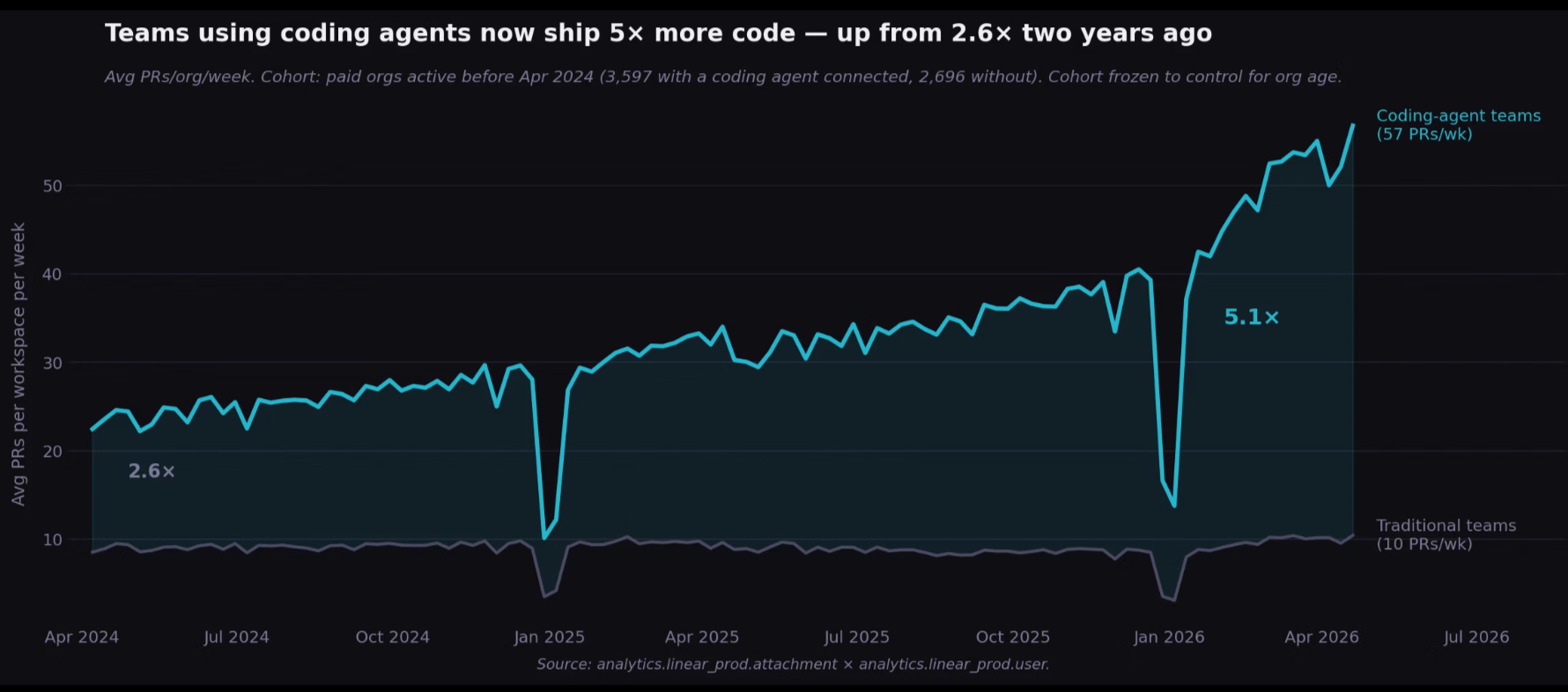
Teams using agents now ship 5x as many pull requests as two years ago. Here’s data from Linear:
Comparing numbers of pull requests for teams that use AI agents with Linear, vs those that don’t. Source: Linear
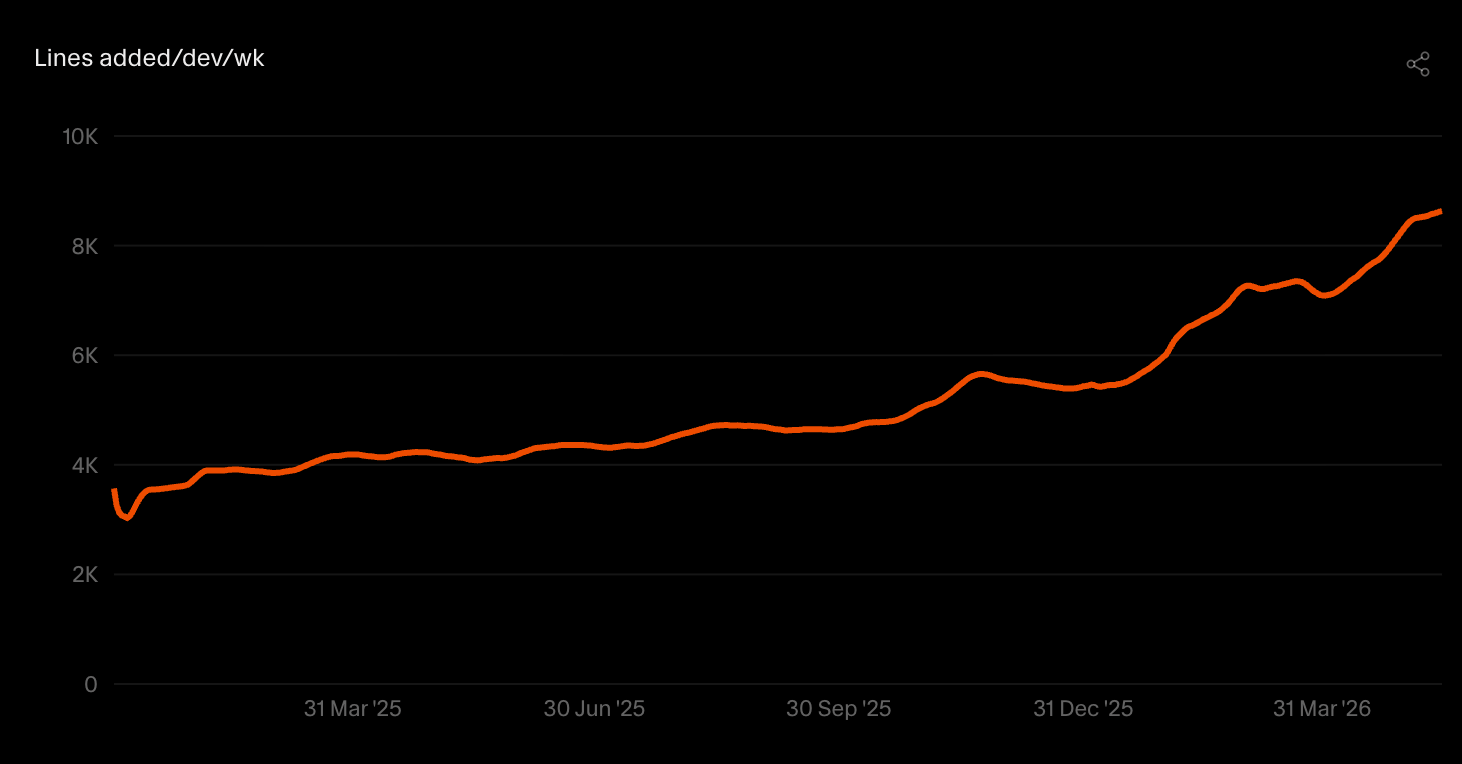
Devs using AI harnesses are producing 2.5x as much code versus 18 months ago. Data from Cursor shows that their users, on average, went from adding 3,500 lines of code in January 2025 to 8,600 today:
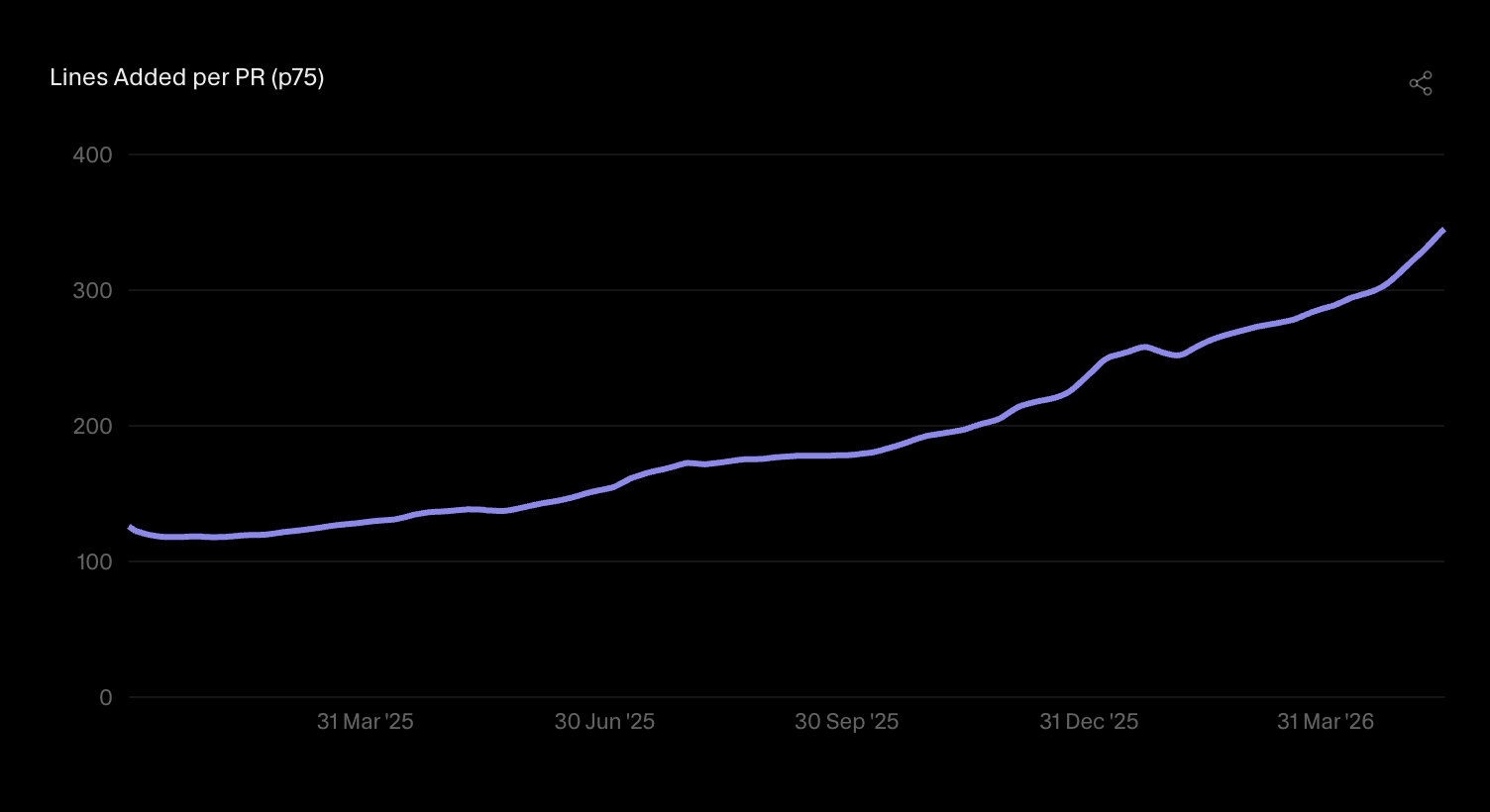
The size of pull requests is up 3x versus 18 months ago. Also from Cursor:
Line goes up: more lines per PR than ever, today. Source: Cursor
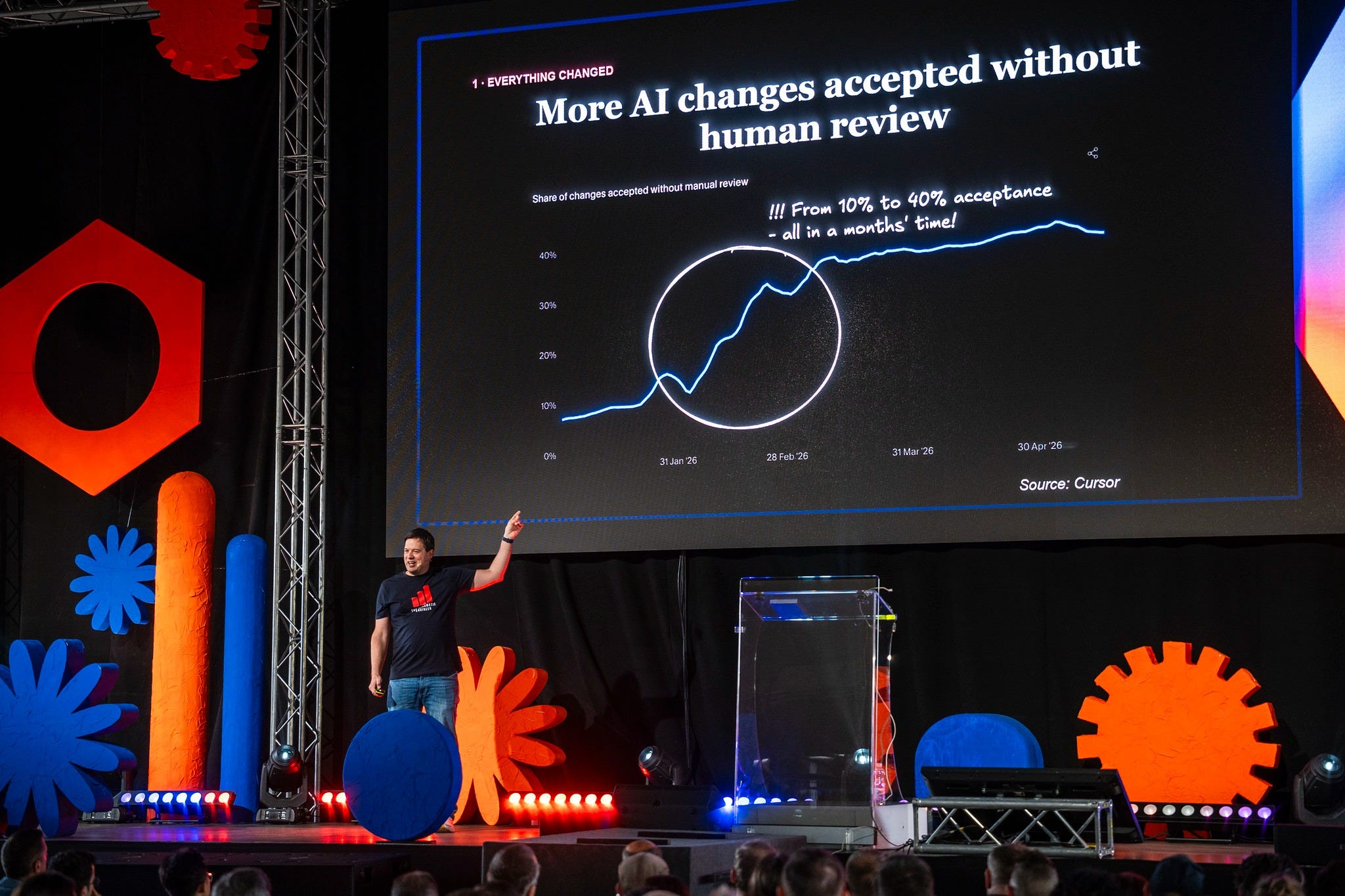
More AI changes are accepted without human review. Data from Cursor shows a big jump in changes being accepted without human review from around February this year, when Opus 4.7 and GPT 5.5 launched:
Less human input than ever, as outlined at the Craft Conference. Source: Cursor
We’re seeing a lot more code generated, and less of it than ever being reviewed by devs. In the relatively short time since AI agents became really good last November, there are more pull requests generated by devs, those pull requests are getting better, and code reviews are harder to keep up with. And so, reviews are less stringent and more changes are shipped to production sans human review! As per my discussions with Meta engineers, these kinds of AI-generated, AI-reviewed pull requests [at Meta, they’re called diffs] are what caused the most recent, embarrassing outage at Instagram.
He personally runs ~5x agents parallel, and ships 20–30 PRs/day
Product requirement documents (PRDs) are dead & prototypes have replaced them inside Anthropic
~100% of Claude Code was generated by Claude in March
~70-90% of code inside Anthropic was generated by Claude
Claude Cowork – another billion-dollar product in terms of revenue potential – was built in just 10 days
Since then, Boris has shared that his workflow has changed to setting up loops to run agents.
OpenAI: moving much faster with AI agents. OpenAI’s Codex team was on the main stage at The Pragmatic Summit in February. Tibo Sottiaux (head of engineering, Codex, OpenAI) shared interesting details on how software development is done in the Codex team:
There’s a “fix this” button integrated into the internal OpenAI mobile app. It makes one-shot fixes to bug reports, which devs review and can merge
AI code review for all code changes. With a tiered approach, some changes can be merged with just AI review, and more important ones need an extra human review
Most devs run several agents in parallel, often walking around with their laptop lids open, so the machine doesn’t enter sleep mode and suspend agents
Code isn’t really written by hand anymore on the Codex team, and is also less common on other teams too
“Taste” is becoming a core skill for working at the company
Codex improves itself: it runs its own test suite, runs improvement tasks overnight, and during team meetings it takes actions on topics discussed
Google: AI widespread. Gemini is not as capable at coding as Claude or Codex, as acknowledged by Google’s CEO, but it’s widely used companywide. The less capable coding model could be hurting AI adoption compared to other companies.
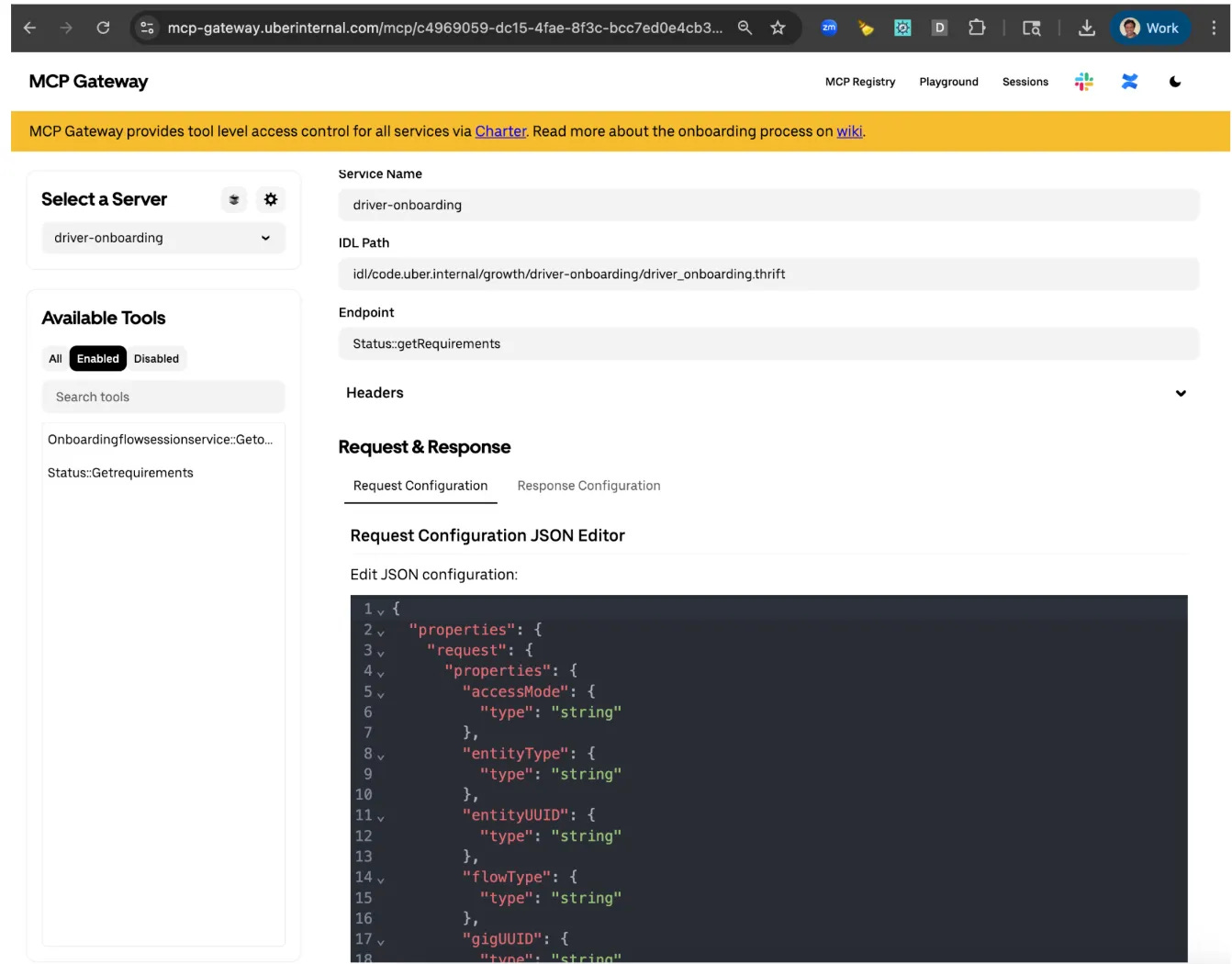
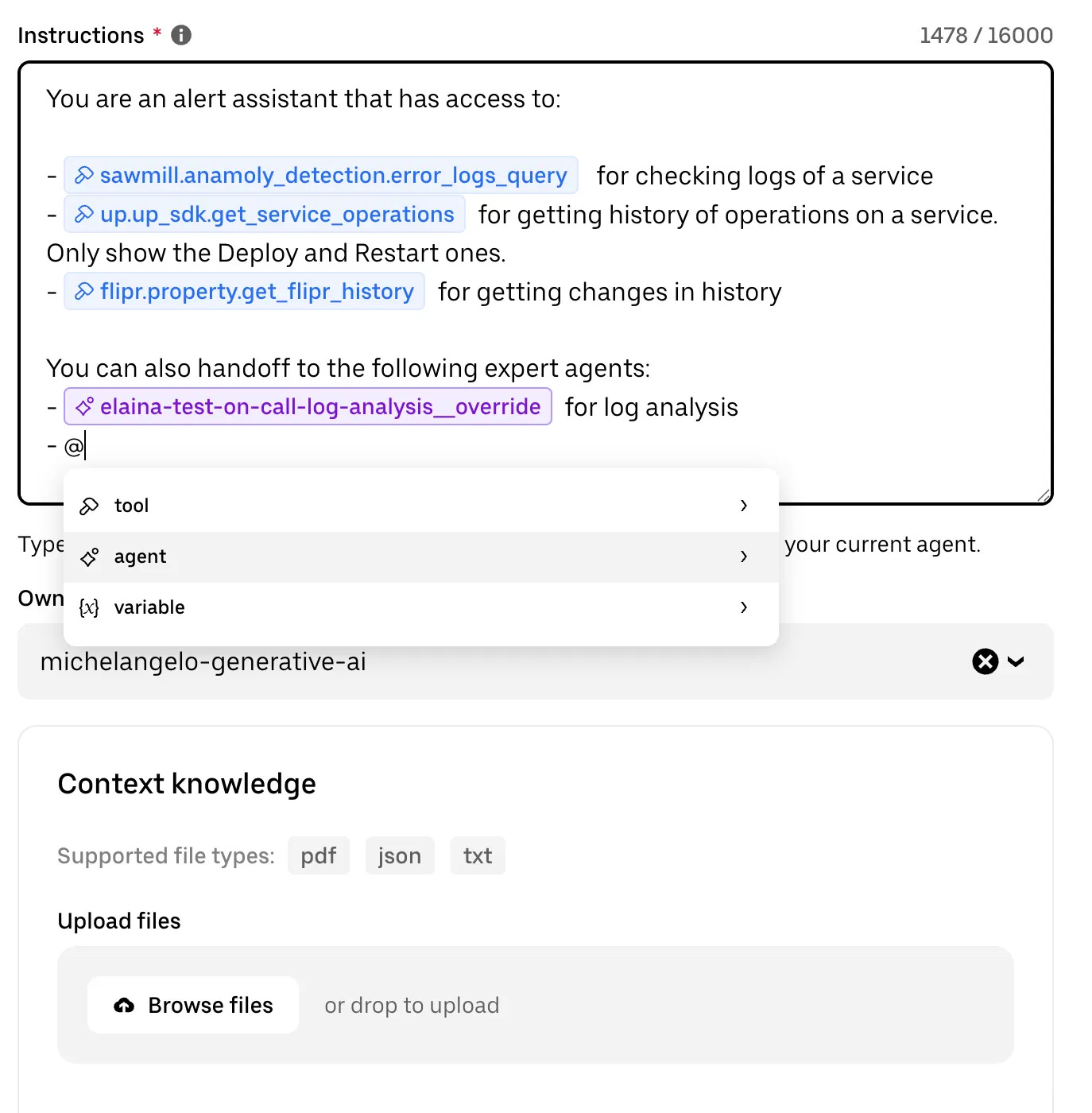
Uber’s Agent Builder: a no-code experience to build agents
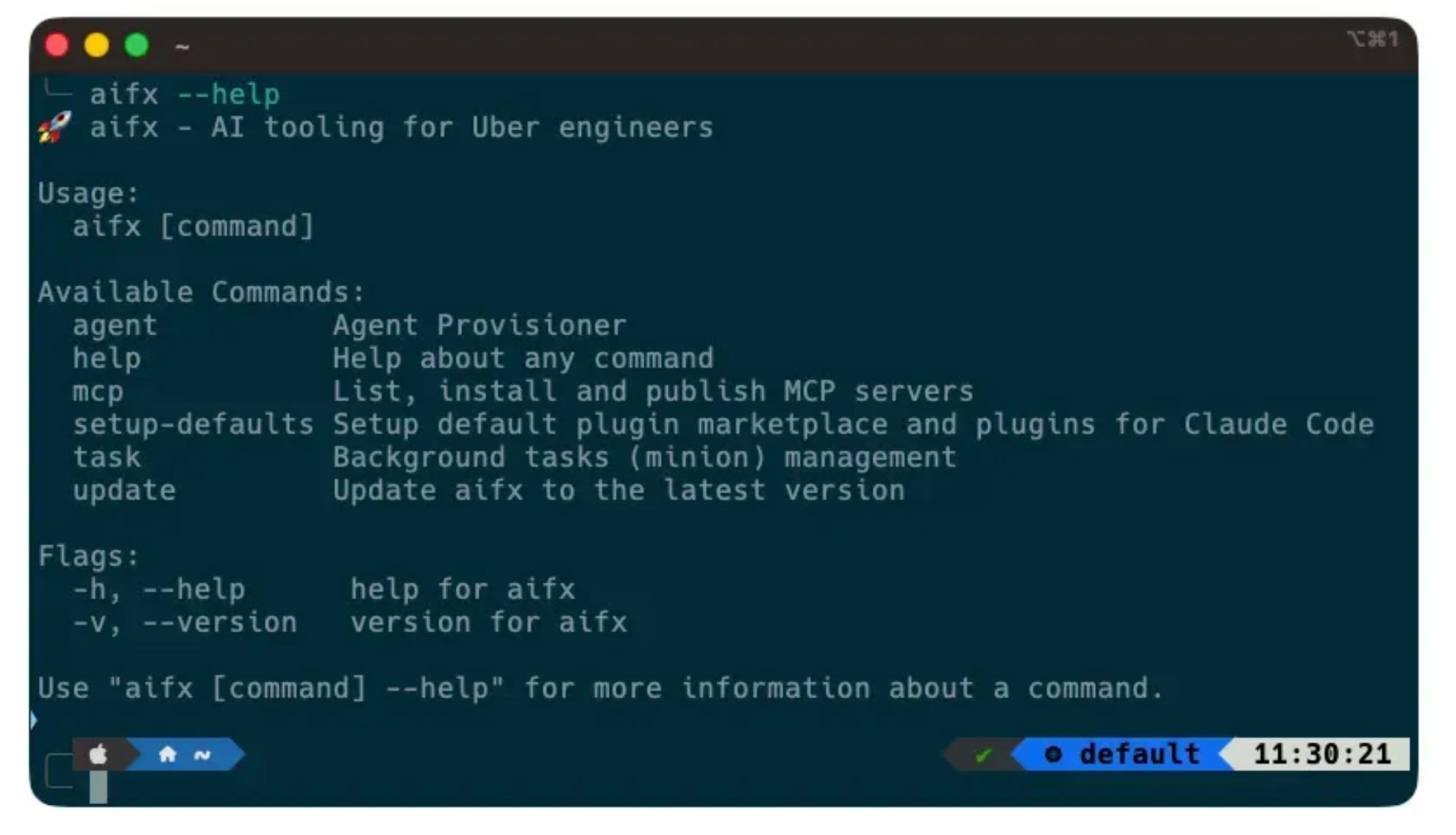
The AIFX command line interface:
Uber’s AIFX command line tool
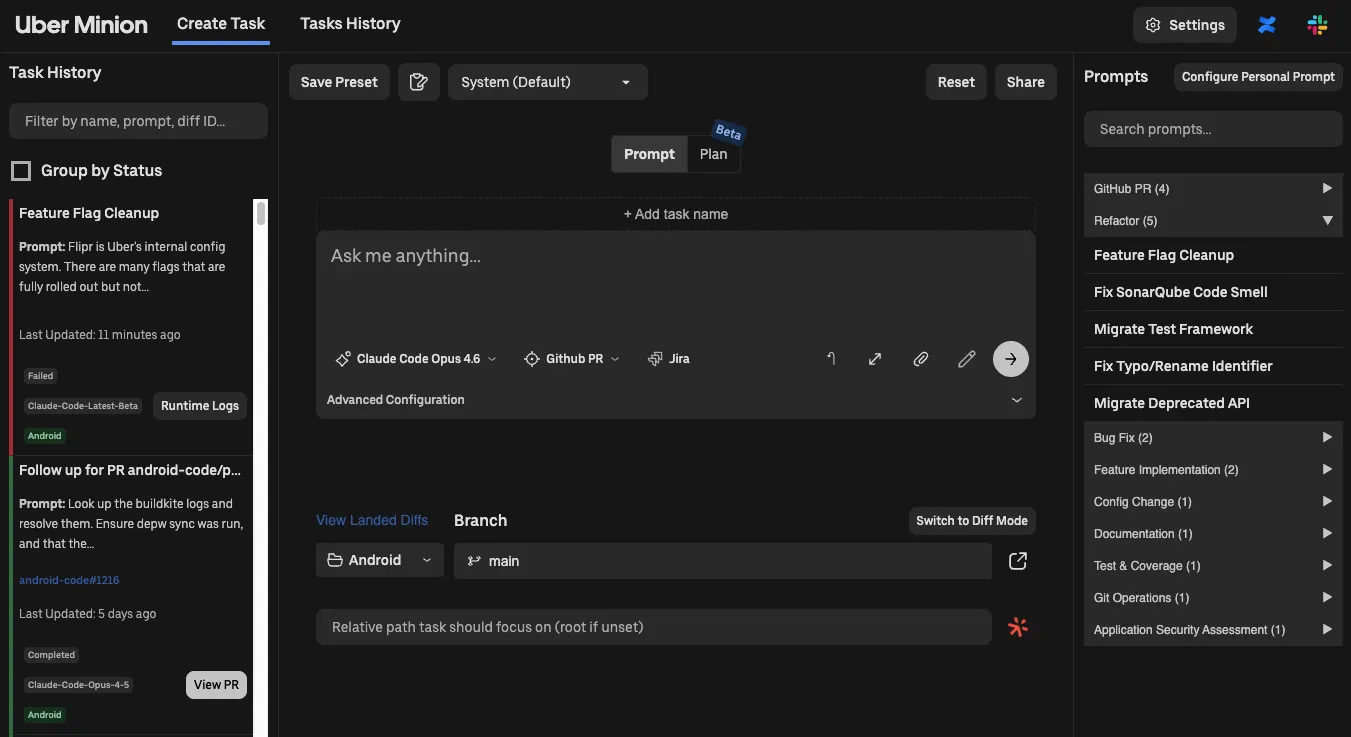
Minion: background agents
Uber’s Minion system: web interface’s appearance
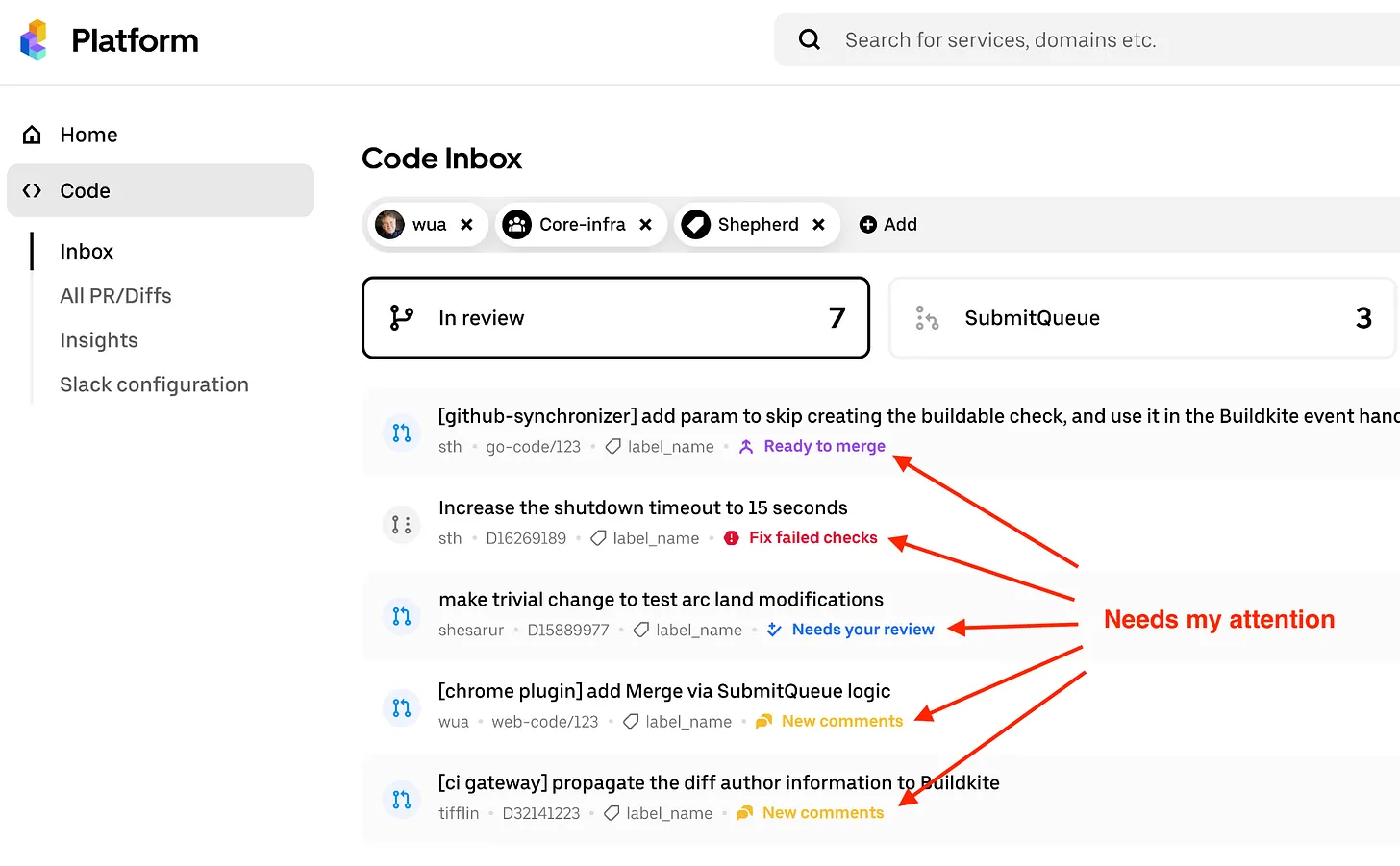
Code Inbox:
Uber’s Code Inbox
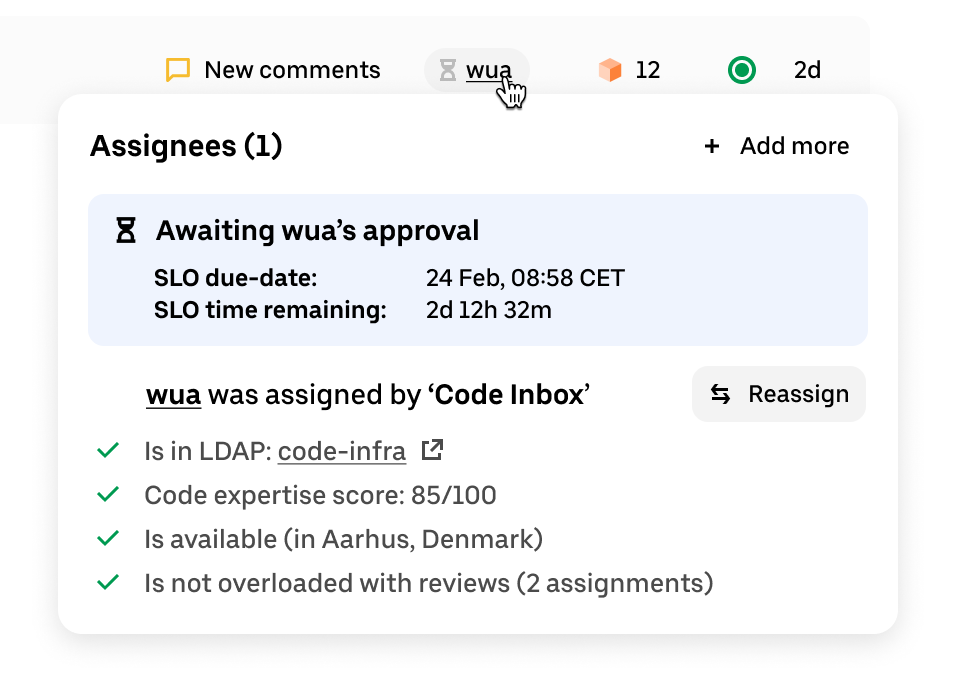
Smart Assignments as a neat feature of Code Inbox:
Smart assignment settings for Code Inbox
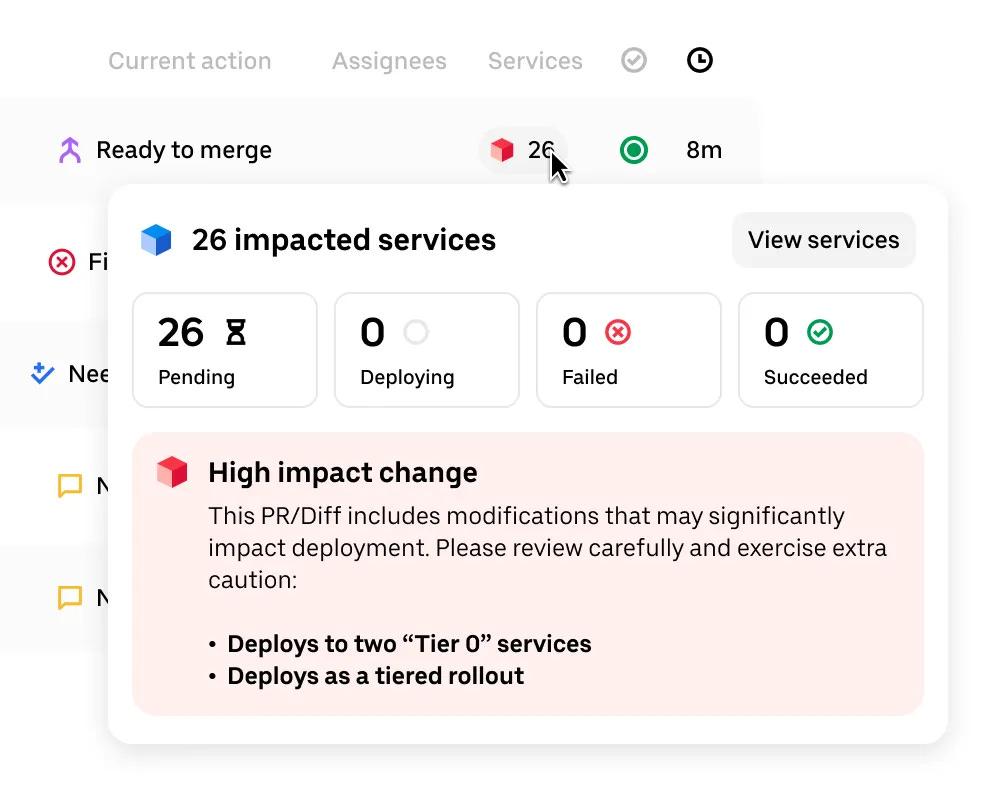
Risk Profiles: another smart feature inside Code Inbox:
Code Inbox estimates the riskiness of a code change, and brings attention to it
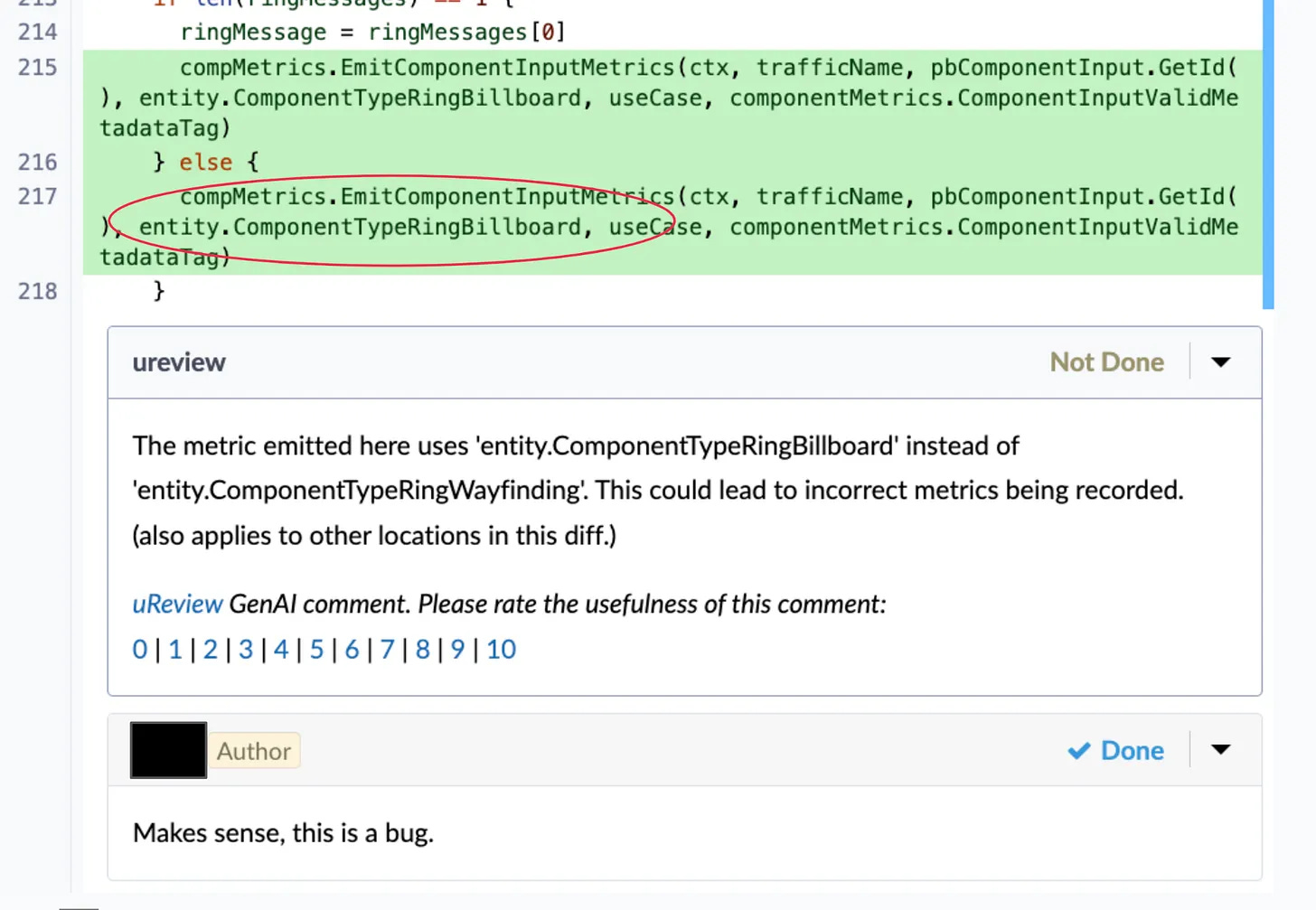
uReview, Uber’s AI code review tool:
AI’s comments can be rated by usefulness
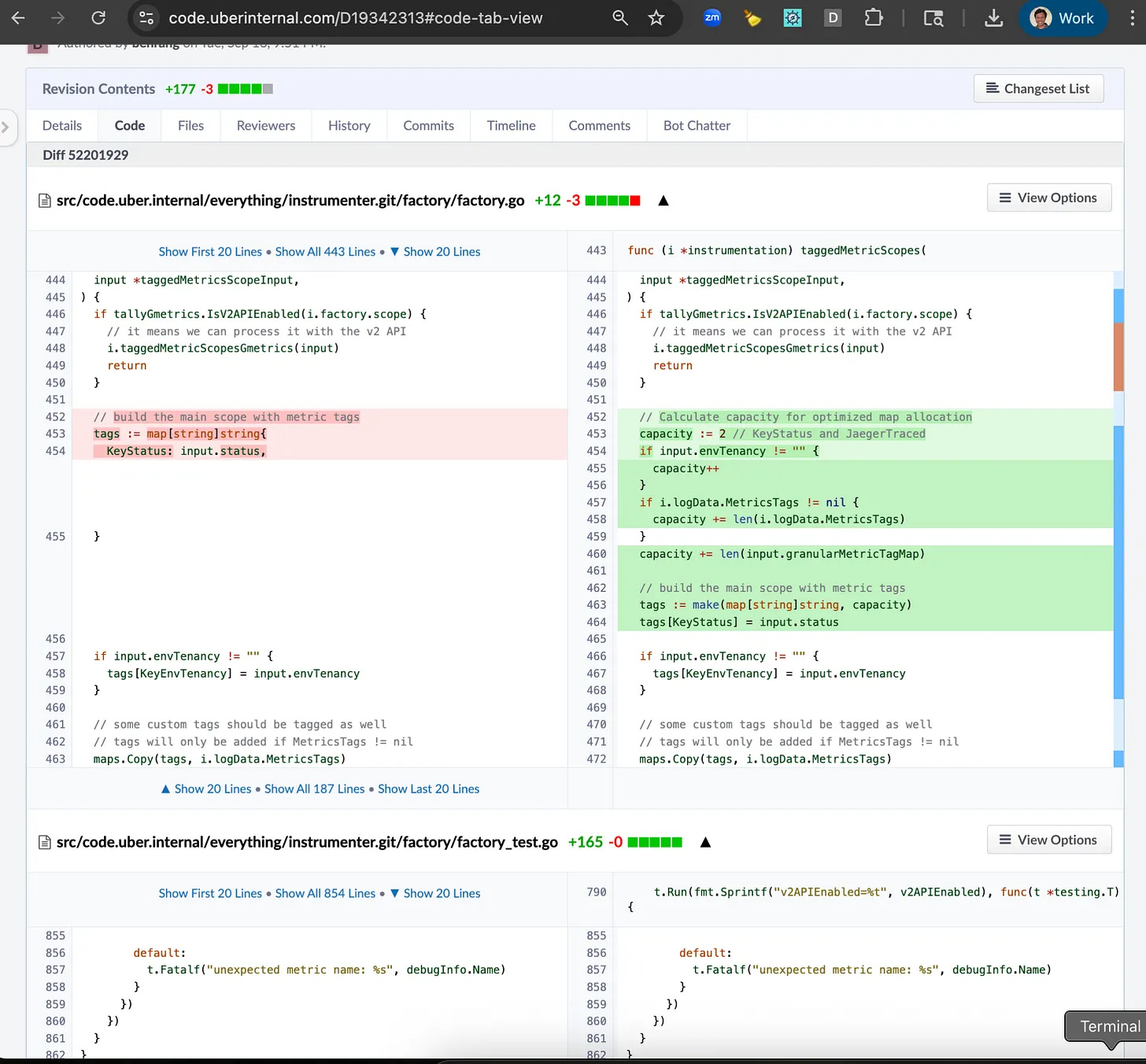
Autocover and Shepherd for large-scale migrations:
Shepherd generates a pull request using a Minion AI agent. Part 2 of the diff (pull request) generated, with code changes
Uber is a good case for learning how much of internal developer infra needs to be rebuilt in order to work well with AI agents. Uber built all the tools above because they needed new, better ways to integrate AI agents into the developer workflow, but couldn’t find anything that worked up to requirements. I’d also point out how much time and effort Uber invested in making code review more efficient. Devs are, indeed, getting overloaded with AI code reviews and Uber’s Code Inbox tries to separate the important pieces of code to review from unimportant ones.
Startups are jumping into using AI agents, although their integrations are more basic. In preparation for the keynote, I talked with several startups about their AI usage. Harnesses like Claude Code, Codex, Cursor, OpenCode and others are popular, and I also noticed most startups are heavily integrating AI agents into Slack, so devs can kick off bugfixes or small feature requests straight from the chat tool.
I observed startups being the most likely to experiment with new AI dev tools; from code review, all the way to AI incident management tools.
“Traditional” companies are also heavily investing in AI dev tools. At the recent Pragmatic Summit in San Francisco, Laura Tacho shared interesting details:
In February, 18,000 Cisco developers used Codex for complex migrations, code review, and refactoring. This was very early – Codex was just starting to gain industry-wide adoption!
JP Morgan Chase built a multi-agent framework for annotation, using multiple specialized agents to label customer interaction data, and judge agents to aggregate and rank results. These are pretty advanced use cases!
In general, “traditional” companies do not seem to be lagging behind in using, paying for, and adopting AI agents and AI developer tools.
4. Industry trends
There are trends I’ve observed around the adoption of AI dev tools:
The Pulse is a series covering events, insights, and trends within Big Tech and startups. Notice an interesting event or trend? Hit reply and share it with me.
Today, we cover:
Meta follow-up. A follow-up on Tuesday’s deepdive into Meta’s ongoing demolition of its own engineering org. Non-engineering teams lost more than 10% of their staff, while Integrity teams were already stretched before the cuts and reallocation.
Big implications of the US banning Anthropic’s new model, Fable. The US government wants only US citizens to be able to use Fable. That could make China more influential as other countries and non-US companies look to capable open models – most of which come from China.
SpaceX, Cursor, Continue. Elon Musk became a trillionaire with SpaceX’s IPO, while SpaceX acquired Cursor, and Cursor acquired Continue. SpaceX looks like it wants to go head-on against Anthropic and OpenAI.
Industry Pulse. Gemini lead quits for OpenAI, Epic Games’ new open source version control system, Microsoft considers dropping OpenAI for DeepSeek, research confirms LLMs amplify existing expertise, and more.
1. Meta follow-up
Tuesday’s article about Meta destroying its engineering culture made quite the splash in terms of comments and debate online. From inside Meta, there was positive feedback on the accuracy of the deepdive into the situation, and there were also a few helpful clarifications and new information which I’m happy to publish here:
Listen and watch now on YouTube, Spotify, and Apple. See the episode transcript at the top of this page, and timestamps for the episode at the bottom.
Brought to You by
• Antithesis – if you're using agents to code, the problem isn't writing the code but making sure it didn't break anything. Antithesis goes beyond code review and runs your whole system in faster than real-time and identifies hard to find bugs before your users hit them in production. Antithesis enables teams like Jane Street, Fly.io, and the etcd community to use agents safely and ship better code, faster. Learn more
• WorkOS – make your app and agents Enterprise Ready, with SSO, SCIM, RBAC, and more. Get started.
• turbopuffer – a vector and full-text search engine built on object storage. It’s fast, cheap, and extremely scalable. The teams building the smartest AI products out there — Cursor, Notion, Cognition, Anthropic — they all run on turbopuffer.
In this episode
Robert Erez is a principal engineer at Octopus Deploy, and a longtime expert in CI/CD, deployment systems, and software delivery. Rob and I were also once colleagues on the Skype web team, working on large-scale deployments and release processes.
In this episode of ThePragmatic Engineer, I sit down with Rob to discuss how teams deploy software safely and efficiently at scale. We cover Kubernetes, GitOps, platform engineering, progressive delivery, feature flags, cloud development environments, and the growing role of AI in CI/CD workflows. We also get into the tradeoffs in different deployment approaches, why self-hosted software still matters for some organizations, and the recent evolution of software delivery practices.
Key observations on deployments and CI/CD from the conversation with Rob
Here are 10 interesting takeaways from our chat:
1. Roll forward, never backwards. When a system has state – which typically means it uses databases – then doing a rollback can leave the code talking to a schema that’s no longer in sync. Rob’s advice is to not treat a failure in v2 as a trip back to v1, but rather as a push to v3 with the fix in it.
2. GitOps isn’t actually about Git. None of the four pillars of GitOps – 1) declarative, 2) versioned and immutable, 3) pulled, not pushed, 4) continuously reconciled – require Git, although Git can work under these constraints. Yet, the term ‘GitOps’ has made the industry dogmatic about cramming everything into a repo – even things like secrets that absolutely shouldn’t be there!
3. Continuous deployment can be overkill; continuous delivery is more practical. Shipping every single change to prod (continuous deployment) is not as necessary as many people think, Rob says, and there’s often more value in continuous delivery, where changes flow through testing and the deployment process itself is validated. With continuous delivery, you can decide whether to push to production automatically, or click a button once a week.
4. Feature toggles are a better safety net than rollbacks. When something breaks in production, reaching for a toggle to switch a feature off enables you to “stop the bleeding” and then calmly diagnose an issue. Rolling back a feature flag is less nerve-jangling than scrambling to force a redeployment in the middle of the night!
5. One problem with feature flags is that they’re addictive. On the other hand, the ease with which feature flags are added can create a hygiene crisis if they’re continuously added, but not removed. Treat feature-toggle cleanups like a form of gardening and “weed” rolled-out toggles from the codebase.
6. A Git repo can be a bottleneck at scale. Rob mentions that some companies run thousands of independent Kubernetes clusters that pull state from a Git repository. But such clusters can get throttled by the repo, forcing them into workarounds. Pull-based GitOps doesn’t scale infinitely for free.
7. A sizable number of major institutions remain on-prem – and this won’t change. Banks, other financial bodies, and governments, demand full control over their hardware, upgrades, and downtime. That’s why Rob expects this segment won’t move to cloud-based SaaS.
8. Platform teams work at larger companies. These teams earn their keep in big organizations with multiple teams and projects because they offer ways of bringing sanity and focus.
9. There’s a trend of ephemeral environments replacing test/staging environments. Companies used to have a few testers fighting over a handful of static test environments, but today, it’s trivial to spin up a full environment, per-feature branch, pre-merge. This is an “ephemeral” environment for evaluating that things work, which is then torn down once something is merged. It helps speed up the feedback process.
10. AI shifts the CI/CD calculus from speed to risk. Today, shaving ten minutes off the CI build-time matters because a long-running build blocks human devs. But this time saving will be insignificant when an AI agent writes most of the code and “babysits” a slow pipeline without context switching. Then, the new priority will be to reduce the risk of an AI agent shipping a bug to production, so it will make much more sense to run extra, more thorough, tests – and also even slower ones.
The Pragmatic Engineer deepdives relevant for this episode
Hi – this is Gergely with a free issue of the Pragmatic Engineer Newsletter. In every issue, I cover challenges at Big Tech and startups through the lens of senior engineers and engineering leaders. Subscribe to get deepdives like this in your inbox, weekly:
For two decades, Meta had a unique, high-performance engineering org; right up until around April of this year. For the first 20 years of the company’s existence, it had a “move-fast-and-break-things” culture, and in the early 2020s this shifted to a “move-fast-with-stable-infra” one. Engineers I know at the company were empowered to do good work, focus on impact, and to balance business interests with solid engineering.
But in the past few weeks, all that has changed, as if the leadership has been following detailed blueprints on how to demolish a proven, successful engineering culture in the most ruthlessly efficient way possible.
For the past few weeks, I’ve been sharing how bad things are inside the social media company for engineers in one of Silicon Valley’s most prestigious workplaces. In this article, we walk through what’s happened, and ask what’s going through the minds of leadership who are reducing software engineering there from the profit center that it was between 2004 until very recently, to the disdained cost center that it has become in just a few weeks.
We cover:
Meta’s pre-AI engineering culture
Investing in AI and pressing engineers to always use it
Core engineering folks feel treated like trash
Most embarrassing-ever outage
Internal mess
Self-inflicted wounds
Is “AI psychosis” just a Meta issue?
1. Meta’s pre-AI engineering culture
I’d split Meta’s engineering culture into two eras: “move fast and break things”, and then “move fast with stable infra.”
“Move fast and break things”
In the 2010s, Facebook’s unconventional engineering culture had grown somewhat legendary in the tech industry, as the company went against conventional best practices and succeeded massively.
In 2012, when Facebook hit the billion-users landmark, the company produced a small physical book about its culture which was placed on employees’ desks. Presented with retro propaganda design, it was dubbed the “little red book”, co-opting the name of a famous volume of the thoughts of Chairman Mao, (1964).
At around 70 pages long, Facebook’s version codified its engineering culture: speed, fearlessness, taking ownership, and thinking outside of the box.
Back then, mantras in Facebook’s little red book were also in print across campus, and included:
Move Fast and Break Things
Done is Better Than Perfect
Fail Harder
What Would You Do If You Weren’t Afraid?
Every Day Feels Like a Week
The Wright Brothers Did Not Have Pilot Licenses
The Foolish Wait
Fortune Favors the Bold
There was genuine focus on building good products. Also from the book:
More from Facebook’s Little Red Book
“Move fast with stable infra” culture
In 2022, I did what is one of the longest deepdives we’ve published on the topic of Meta’s engineering culture. By then, things had evolved, and much of any former recklessness was gone, replaced by the principle of moving fast, but with stable infra. Here’s how I described Meta’s engineering culture then:
“The culture is incredibly engineering-centric: much more than most of Big Tech. This might come from Mark Zuckerberg being an engineer himself, or because much of the innovation in the early days of Facebook came from engineers.
Focus on individual impact. Impact has been the bread and butter of the focus at Facebook. This is very true since the early days, and the focus on generating impact remains.
One detail in common with most Big Tech firms is that both the engineering culture and general culture focus so much on individual impact. This results in some people focusing on short-term, measurable wins and assuming that teamwork and split wins between groups might be less rewarded.
The lack of rigid processes. Facebook seems to have the least amount of processes or standardization across all of Big Tech. Don’t even try to compare it to Amazon’s engineering culture and the countless formal processes there. But even compared to companies like Google, Microsoft or Uber, Facebook’s processes are much looser. Most of this comes from the engineering-centric nature of the company and engineers disliking processes.
Surprisingly little emphasis on testing, documentation or code comments. You’ll find shockingly little automated testing and documentation at Facebook, compared to the rest of Big Tech. Inline code comments are also very rare.
A founder-engineer driven company. Facebook is one of the few Big Tech firms whose founder is an engineer, and still is the CEO. Netflix is the other one where founder and co-CEO Reed Hastings was also a software engineer before starting the company. Amazon was the other example of this until recently, but it’s not the case at Google or Apple. There are good examples of smaller companies like Cloudflare, but they’re all younger than Facebook.
Bootcamp. A unique onboarding process, unlike what any other Big Tech firms offer. We cover this more in the Bootcamp & onboarding section.”
Engineers whom I knew inside the company are capable, motivated, and product-minded, and their work was appreciated. CEO, Mark Zuckerberg, was influential: he personally coded the first version of Facebook, had stayed close to engineering, and valued software engineers very much. Engineers there felt they were working inside a profit center.
2. Investing in AI and pressing engineers to always use it
Meta has been the only company among the big five of Apple, Microsoft, Amazon, Google, and itself not to own a hardware platform or operating system. Apple has the iPhone, iPad and Macs, Google has Android, ChromeOS and Pixel phones, Microsoft has Windows, and Amazon has the Kindle.
Stepping back, it looks as though the Mark Zuckerberg of today has resolved not to miss a platform opportunity, after the company failed to build its own mobile OS or mobile phone during the 2010s.
This is one reason for investing so much in virtual reality (VR) with Oculus, and in augmented reality with the Meta Glasses. Facebook changed its name to Meta in 2021, back when it looked like VR – and the metaverse – could be massive. Billions was spent on ensuring Meta would be the market leader in this space. But once again, VR didn’t go mainstream; since the end of the pandemic, popular interest in the segment has died down considerably.
When it became clear that AI would become a mega-trend in 2022, Zuckerberg didn’t miss it: he assembled the internal FAIR group (Fundamental AI Research team) as well as a GenAI product organization and released a series of open-weight AI models:
Llama 1: released in Feb 2023, three months after ChatGPT, built by FAIR
Llama 2: in June 2023, built by the GenAI product organization (as well as all subsequent Llama models)
Llama 3: in April 2024. This model was Meta’s most competitive LLM of all, and gained momentum in adoption across the industry
In June that year, Meta acquired a 49% stake in Scale AI to reboot its AI efforts for a whopping $14.8B, and brought in Scale AI’s CEO, Alexandr Wang to take over Meta’s AI strategy. The acquisition of Chinese startup Manus AI for $2B is currently in question after China blocked the deal from being completed.
Based on the investment made into Scale AI and Wang, it’s pretty clear that Meta – and Zuckerberg – is determined to build a state-of-the-art LLM that can be competitive with the latest versions of Claude and ChatGPT. But Meta has to start pretty much from scratch, and it’s up to Alexandr Wang to deliver.
Scale AI brings in a very specific kind of expertise to Meta, as one of the best in the industry in:
Training data and labeling: Scale started, and is still best known, as a provider of high-quality labeled datasets for machine learning and AI training, including code, text, image, video, etc.
RLHF and fine-tuning: A RLHF (reinforcement learning from human feedback) flow which Scale runs, where people give feedback for foundation models, as a “human in the loop” data engine that many leading AI labs use to create better LLMs.
Wang seems to have a very broad reign to do what he has been an expert in: creating training data, doing data labeling and RLHF. This is being pulled off with the labor of Meta’s engineering workforce, and by surveilling it.
Problem #1: Tracking keystrokes and mouse clicks, with no option to opt out. In late April, Meta told engineers they were being enrolled into a system that tracks every keystroke and click, to produce training data for Meta’s new AI. There’s no way to opt out.
Needless to say, this is invasive and raises privacy questions: If you log into your personal bank account, does the tool track you? What about when you’re writing a personal email, or responding to a personal call? Meta held no consultation and there are no workarounds; just a top-down decision being pushed through.
This month, Reuters reported that people’s concerns there are finally being heard:
“Meta is dialing back elements of its plan to collect employee mouse movements, keystrokes and other actions for use as AI training data, it said in an internal memo on Tuesday, following weeks of angry pushback from staffers.
New controls will allow employees to pause the data collection for up to 30 minutes at a time and request exemptions from the initiative, according to the memo, authored by Stephane Kasriel, a vice president in Meta’s AI model-building Superintelligence Labs unit.”
From talking with current Meta engineers, I understand the logging system has not been rolled out in the UK due to data protection regulation.
Problem #2: 30-50% of engineers on core teams have been forcefully reassigned to data labeling and RLHF, upsetting folks even more.Also starting in late April, product engineering teams received a mandate from above, whereby 30-50% of engineers were to leave the team and join the ADO org (Agent Data Optimisation).
“Forceful” reassignment is very relevant here because of Meta’s traditional engineering culture. Between its founding in 2004 and until last year, Meta gave engineers autonomy to choose where they work and what they work on. This was structural to how the company worked:
Engineers were not hired for a specific team (save for at the Staff+, levels, in some cases). They were hired to the company
During a 6-week bootcamp, new hires got familiar with Meta’s engineering culture and chose a team
Team matching meant talking with multiple teams who had headcount, doing small work with them, and finding a match
Internal transfers were easy, and often initiated by engineers
Team selection via bootcamp started to die down in around 2024, but any Meta engineer with at least two years’ tenure knows that previously they chose what to work on, and of course, could pick the most impactful thing to work on. And then, out of the blue, they’re assigned to a division where the impact is not clear, the work is menial, and doing it too long will surely hurt their career prospects.
“Data labeling” is more involved work, even though a bit repetitive. There are labeling tasks, where you create a website, then look at it and decide if it looks good or not, and give this feedback: this is the “typical” data labeling. But this is the less frequent type of work. But then there are more involved AI training tasks, which looks like this:
Come up with a task that the AI should do
Then write the tests that confirm the result
Package all of this up into a Docker container, using Harbor framework
Then read the code that the AI writes - often doing this based on feedback from several models, and give it feedback
This work is not easy to do — and you can see why you need good software engineers to do it! — but it gets repetitive really quickly. Most engineers who I talked to said that they found it hard to do this work motivated day-in, day-out. Then again, I did talk with an engineer inside the org who said that by varying the technologies they use, and challenging themselves, they found this work motivating and interesting! This engineer expects there to be more software engineering work coming up, after the phase of training passes. There’s a lesson here: when life gives you lemons, you can either complain about it, or you can make lemonade, like this dev has done so.
This training work is secretive across the AI industry, and vendors are offering $100+ per hour for devs to do this type of work. There are rumors across the industry that OpenAI and Anthropic spends more on these training environments (to make the models great at coding) than the model training run itself!
Infrastructure and security teams were hit especially hard by reassignments. I talked with several engineers in infra orgs, who had 30-50% of their teams drafted into the ADO org. And in some cases, it was the best engineers who left.
One engineer told me that the whole situation feels like the movie, The Hunger Games, when tributes are randomly selected and then removed from their environment, to something completely different. Except, at Meta, many more folks are being affected, with between three and five from a 10-person team going from building products used by hundreds of millions, to giving human feedback on AI-generated GitHub repos, over and over. So, a wider impact than in the Hunger Games, but with less drastic consequences.
Around 6,500 people are in the ADO org, more than at OpenAI and Anthropic. Roughly four to five thousand of these are software engineers. Meta has around 25,000 engineers, meaning that one in every 5-6 software engineers may now find themselves doing data labeling full time.
As you can imagine, people are actively open to new positions, and nobody is updating their job title on LinkedIn and elsewhere to “data labeling at Meta.”
I’ve spoken with people in this role and they don’t like doing it, and feel upset about the top-down decision making. The silver lining is that they still have a job, have retained their salary, and were not part of layoffs. They still have time to leave Meta for something that pays comparably and is not a data labeling job.
3. Core engineering folks feel treated like trash
Problem #3: a month-long waiting game, stoking fear across the company. On 20 April, Reuters reported that Meta planned to lay off 10% of staff in a month’s time, and Meta confirmed the news, meaning there was a period of four weeks when everyone knew that they could be unemployed very soon.
Forced reassignments to data labeling started to happen. As I covered at the time:
“Understandably, there are mixed feelings about this redeployment [to data labeling], with layoffs coming soon. On Wednesday, 20 May, Meta will announce layoffs. Perhaps those moved to do data labeling could actually be “safer” than colleagues on product teams. Of course, this is speculation, but it would be cruel if Meta cut devs reassigned to data labeling.”
Problem #4: Performance review is hyper-aggressive at Meta, so devs optimize all metrics. The internal performance review process, PSC (Performance Summary Cycle), is very stringent, compared to Google and Apple, I’ve learned. Managers inside Meta “fight” over the pay packets of their employees, which involves “knocking down” the packet of engineers on other teams, so their direct reports are ranked higher. It’s common to weaponize metrics in this process – be that business impact, the number of code reviews, number of lines of code written, pre-AI (see our Coding Machine archetype podcast on this.)
Quotas are handed down to managers for the splits of the workforce to be put in each ‘bucket’, and the internal politics gets heated as managers try to get their reports into higher buckets.
After a few years, engineers at Meta learn that the best way to not get a bad PSC rating is to have all metrics – impact, code committed, and other numbers – higher than their peers’ are. Learn more about the internal politics of performance calibrations.
Problem #5: tokens are measured as part of perf, so devs aggressively optimize for it. When layoffs were confirmed, engineers also learned that managers shall inspect token count during perf reviews. This raised worries that those with low token counts might be marked as underperformers and dismissed.
So, what is the natural reaction to this as an engineer at Meta? They started using AI tools for the sake of generating more tokens. This happened while Meta had an internal token leaderboard, encouraging tokenmaxxing. As I wrote on 16 April:
“As per The Information, Meta employees used a total of 60.2 trillion AI tokens (!!) in 30 days. If this was charged at Anthropic’s API prices, it would cost $900M. Of course, Meta is likely purchasing tokens at a discount, but that could still come in at $100M+ – in large part from senseless “tokenmaxxing”.”
The biggest problem: people stop caring about real work and focus on performative work. Let’s check the four ingredients that Meta’s leadership has decided to introduce to their workplace:
Tracking the keyboards and mouse clicks of all engineers, where legally possible
Reassign a good chunk of engineers to fulltime data labeling
Let staff know that 10% of them will be laid off
Have a culture where devs optimize for any and all metrics measured during PSC
Measure token usage as part of PSC
Shake this mix up well, and what do you get? Two things:
Everyone overuses AI to boost their personal stats. An engineering workforce that pretends to work with as much AI, and as little human input, as possible. It’s a strange incentive where an outage caused by a failure to review code properly is not grounds for dismissal, but writing code by hand – instead of having an AI agent write it – could cost you your job
Every longer-tenured engineer is seeking a new job, or at least considering it. Those who have been around at Meta longer term have seen enough. Let me describe this visually:
Why pretty much every engineer at Meta is looking for a way out, visualised
Fresh data seems to confirm that starting in May, a lot more engineers at Meta are looking for an “out.” Here’s how signups to leading Big Tech interview preparation service interviewing.io from Meta have changed over the last year and a half: we can see a massive jump in May vs the year before, as shared by founder and CEO Aliner Lerner with us:
Signups to interviewing.io’s interview prep service from Meta. Source: interviewing.io.
To its credit, Meta has given out generous retention equity packages to several engineers considered key on the remaining teams. These packages make it harder to get matching compensation elsewhere. Still, I talked to one engineer who got an equity top-up, and said that this approach helped him decide to leave as soon as possible because he feels bitter about the lack of autonomy and having no control over things.
4. Most embarrassing-ever outage
Meta’s core infra and security teams have suddenly found themselves severely understaffed. Most folks are pushing AI-generated code merged with AI-only reviews, without paying much attention to quality. After all, they’re dealing with the possibility of unemployment, while firefighting to operate a team without its best engineers whose headcount has been cut in half, all with the knowledge that AI usage could affect their own job security.
Two weeks ago, on 30 May, the most embarrassing outage in Meta’s history happened. Here’s software engineer Siddharth Sundharam’s summary (emphasis mine):
“Yesterday, a slew of Instagram accounts, including some high profile ones like the Obama White House account, seemingly got hacked.
Look, I’m no spring chicken. I’ve spent almost a decade and a half identifying vulnerabilities and exploits at unicorn scale, but this is hands down the most unserious, “almost too stupid to be true” of them all.
The Takeover Flow:
Step 01: Faking the Location & Initiating Support. All the attacker needs to kick this off is your account username. Then, they hop on a VPN or proxy close to your city so Instagram’s security algorithms don’t suspect a thing. (You can quite easily get this from your public profile or “About” section or a hundred other ways.) Once it looks like the request is coming from the correct region, they tell the Meta support AI that the account is hacked and ask it to send the verification codes to an arbitrary email address they control.
Step 02: That’s It. Really, that’s it.
The first proper zero auth password reset I’ve seen in production. There appears to be no additional check as to whether the email being given is actually something the user has used before. Once the AI sends the security code to the attacker’s email, the attacker passes it right back to complete the verification. The platform hands over a fresh password reset link, granting full ownership to the attacker.”
This is a security breach in which Meta left its extra-secure, reinforced front door unlocked, so that anyone could come in, and there was no alarm to notify anybody when it happened! It seemed Meta only noticed when users started reporting it on social media!
From talking with folks inside Meta, I’ve learned that AI was at the heart of this outage. AI-generated, AI-reviewed code, and security teams being gutted were together the cause of this beyond-embarrassing incident. I poked around, and here’s what I gathered:
Instagram’s Trust and Safety Team lost around 50% of its staff to data labeling and layoffs. Some of the most senior folks were drafted onto AI training tasks.
AI-generated changes that saw no human input, just another AI code review, were very common during the last two months, across the codebase. The change that caused this outage looked like one of these
Normally, the Trust and Safety team would be on top of monitoring and alerting of security breaches, but it is currently in full disarray due to rapid, internal disorganization.
Meta’s Chief Security Officer resigned the very next day. The outage was resolved on Monday, 1 June, and an investigation started as part of the SEV process. On Tuesday, Meta’s Chief Information and Security Officer (CISO), Guy Rosen, announced his departure.
Coincidence? I suspect not: the CISO might have stepped down if they warned against the Security org being gutted but were then ignored, and so no longer trusts leadership. I also imagine the CISO didn’t have the idea to move a good half of Instagram’s security team over to data labeling.
As a note, the previously worst outage was all Meta services going down for seven hours in 2021, due to a DNS / BGP configuration issue. It was a bad outage, but Meta handled the follow up well, in my opinion. After that 2021 outage, Meta shared a postmortem and apology. It has not done so for the latest Instagram account takeover outage.
5. Internal mess
Wired shares more details on just how bad the situation is inside Meta, right now:
“Someone interrupted a livestreamed, employee-only presentation at Meta earlier this week with an expletive-filled outburst about “being the company’s bitch,” according to a recording heard by WIRED. The individual then asked the people leading the call to write to a specific Meta AI executive and “tell him that he’s a piece of shit.”
The incident, which took place on a call open to thousands of employees, reflects growing frustration inside the company’s Applied AI team, which was formed in March to support the work of AI researchers at Meta Superintelligence Labs. Three current employees tell WIRED there is widespread dissatisfaction with how Meta assembled the unit of about 6,500 engineers and product managers and the drudgework they allege they have been assigned to improve AI models.
“It’s literally the gulag,” one of the employees claims. “You have zero purpose in life all of a sudden, you barely interact with anyone, you just have these tasks every week.”
There’s more: Meta’s Chief Product Officer, Chris Cox, reportedly admitted to staff that Meta’s upper leadership (the folks above him, meaning the C-level at Meta) created the mess. Also from Wired:
During a meeting this week open to all employees at Instagram, Meta chief product officer Chris Cox addressed the “difficult” and “brutal” environment created by the “insanity of this company” in the past few months, according to a recording heard by WIRED. Cox applauded Instagram employees for launching features and serving around 2 billion users amid what he compared to “running a marathon in the middle of a hailstorm and then, like, your teammate gets replaced and then we’re recording you.”
“It’s like what the fuck,” he said, drawing laughs, before repeating himself. “It is like what the fuck.”
6. Self-inflicted wounds
So, is there an ultimate source of the “insanity of this company”, as CPO Chris Cox put it? Engineers whom I talked to point the finger at two individuals: Mark Zuckerberg and Alexandr Wang. Zuckerberg has full control over the business, and has made the decisions to reallocate a good part of engineering folks to data labeling, to roll out tracking software, and to lay off 10% of staff when Meta achieved record revenue and profits. As the CEO, the buck clearly stops with him.
But it’s hard to unsee that – outside of layoffs – everything that Meta is doing is taken from the Scale AI playbook, and that surely comes from Wang:
Mandatory keystroke and mouse tracking to generate training data
Forced data labeling with 4,500+ engineers is to generate high-quality RLHF, surely for Meta’s under-construction coding LLM
Taking away the best engineers from the heart of the business is surely signed off by Mark Zuckerberg, believing that it is more important for Meta to train a coding AI than it is to operate its core business like Instagram, Facebook or Messenger reliably. Oh, did I mention that on Saturday (12 June) Facebook and Instagram had another SEV0, that is, a full-on outage?
Before all this happened, Meta was on track to overtake Google as the world’s #1 ads business by the end of the year. But for some reason, Mark Zuckerberg decided that building a coding LLM is more important.
Meta’s leadership is now trying to undo all the damage they have done. Wired reports that Meta CTO, Andrew Bosworth, admitted to staff that the AI reorg was atrocious and committed to better communication in the future.
To me, it looks obvious that Zuckerberg doesn’t care how engineers feel about the massive changes, and that Bosworth likely ignored the chaos, all while engineers know for a fact that the next AI model matters more than they do to the business. Bosworth also said that employees will have access to AI coaching tools. Very considerate, given the situation!
Based on all I’ve learned, Meta’s engineering culture is dead because leadership has made it clear that engineering at the company is a cost center.
Nice while it lasted
Needless to say, I hope my assessment is way off, but I’ve seen nothing yet from Mark Zuckerberg and Alexandr Wang – the two executives creating this current mess – to suggest it is. There may be a short time period where, if major changes like data labeling assignments and staff tracking are undone, then things at Meta could return to normal. The longer the current conditions persist, the more tenured engineers will surely leave.
7. Is “AI psychosis” just a Meta issue?
It’s tragic to see a technical founder at Meta so focused on AI that he neglects the engineers who built the heart of his company. But is Meta a one-off exception?
Mitchell Hashimoto (creator of Ghostty, founder of HashiCorp) says he is seeing similar behavior by other founders (emphasis mine:)
“I strongly believe there are entire companies right now under heavy “AI psychosis” and it’s impossible to have rational conversations about it with them. I can’t name any specific people because they include personal friends I deeply respect, but I worry about how this plays out.
I lived through the great MTBF vs MTTR (mean-time-between-failure vs. mean-time-to-recovery) reckoning of infrastructure during the transition to cloud and cloud automation. All those arguments are rearing their ugly heads again but now it’s... the whole software development industry (maybe the whole world, really).
It’s frightening, because ‘psychosis folks’ operate under an almost absolute “MTTR is all you need” mentality: “it’s fine to ship bugs because the agents will fix them so quickly and at a scale humans can’t do!” We learned in infrastructure that MTTR is great but you can’t yeet resilient systems entirely.
The main issue is I don’t even know how to bring this up to people I know personally, because bringing this topic up leads to immediate dismissals like “no no, it has full test coverage”, or “bug reports are going down” or something, which just don’t paint the whole picture.
We already learned this lesson once in infrastructure: you can automate yourself into a very resilient catastrophe machine. Systems can appear healthy by local metrics while globally becoming incomprehensible. Bug reports can go down while latent risk explodes. Test coverage can rise while semantic understanding falls. Changes happen so fast that nobody notices the underlying architecture decaying.
I worry.”
The takeover outage at Instagram was exactly like this: the engineering team dropped the quality bar for AI-generated and AI-reviewed code, probably expecting that they could recover quickly from failures. And they did indeed recover… after the damage was done, high-profile Instagram accounts were hacked, and the system was compromised, all very publicly.
Mitchell highlights the specific concern of founders over-estimating the capabilities of AI, and consequently casting aside sensible safeguards when shipping code to production.
Takeaways
Most of us probably have something to learn from the disastrous events at Meta caused by hyper-focus on AI to the exclusion of people who are the lifeblood of that company.In some good news, I’m hearing that in the UK, some of the 10% layoffs have suddenly been cancelled: at the end of the mandatory consultation period, several infra and security teams are learning that no engineers on their team will be let go, as originally expected.
Meta has a booming business, and is already a beneficiary of AI via increased ads revenue. Meanwhile, my Facebook feed is filled with fake, AI-generated videos, with hundreds of comments from bots and people who seemingly don’t realize it’s AI. It all seems like just more content for Meta to show ads next to.
And yet, despite business booming, Meta’s leadership has gone on a crusade to inflict the most damage possible on its engineering org. Apparently, they’re now learning that most of it was pointless.
If you’re in a leadership position and feeling the temptation to make drastic org changes for AI-related reasons, take a deep breath and see where it left Meta. Meanwhile, If you’re an engineer at a company whose leadership is over-indexing on AI, consider forwarding this article as additional context.
If you’re hiring standout engineers who are extremely hands-on with AI, then it’s never been easier to get talent from Meta, than right now. Every engineer I know at the company is an extremely early adopter of AI, and knows how to build products and AI infra. These folks have soured on the company and its leadership. Meta’s loss of talent will be the gain of other startups and the rest of Big Tech; it’s one benefit of AI that’s probably a bit unexpected – not least of all by Meta!
It seems like the old mantra of “move fast and break things” has now extended to Meta’s engineering org itself, with the company’s rush to over-invest in AI, so it will avoid missing the latest mega-trend in the tech industry.
The Pulse is a series covering events, insights, and trends within Big Tech and startups. Notice an interesting event or trend? Hit reply and share it with me.
Today, we cover:
Anthropic alienates customers with Fable’s data retention and nerf policies. Anthropic’s latest mode, Fable, stores customer prompts and data for 30+ days and performs worse if Anthropic thinks devs’ usage could potentially pose a commercial threat. The launch is an urgent reminder to have an off-ramp from Claude if you want to be able to vote with your feet.
New trend: smart model routing. Are there any ‘intelligent’ router solutions out there which select the right model for the right task? I looked into it, and there are a few options. More suggestions welcome!
Reliability fail: No automated zone failover for Coinbase’s global trading service. Back in 2016, Uber had a cross-region failover for its core business. Ten years later, Coinbase does not, so it’s little wonder the platform suffered an embarrassing 10-hour outage. The big mess is a head scratcher.
Industry pulse. Anthropic and OpenAI file for IPOs, open source project quits GitHub after maintainer banned without appeal, Opendoor “reshores” jobs from India to the US with AI-native engineers, and more.
Are LLMs eroding software engineering skills? A software engineer admits they feel increasingly useless due to how capable LLMs are, in an article that has resonated with lots of folks. My sense is that we give too much credit to LLMs, while underestimating our own capabilities and understanding.
1. Anthropic’s new model release is a reminder to have an off-ramp plan from Claude
What’s going on in today’s job market? We try to answer that big question in this second part of our deepdive into the tech employment market, following Part 1 on the tech jobs market in 2026, published two weeks ago.
First of all, a big thank you to partner teams for sharing exclusive details for this deepdive:
Interviewing.io: anonymous mock interviews with engineers from top companies. Thanks to founder and CEO, Aline Lerner.
Workforce.ai, built by Live Data Technologies, which monitors 1M+ job changes and 300M+ employment validations monthly, across companies, roles, levels, functions, industries, and locations. Special thanks to Alex Hamilton for his input.
SignalFire: a VC firm with a standout data analysis team. Ordinarily, their data is used to give their portfolio companies a major commercial advantage, but they made an exception to share some for this article. Special thanks to Asher Bantock.
TrueUp: a platform that scans every open job in Big Tech, top startups, and scaleups, typically paying in the top two tiers of the trimodal software engineering compensation model. Thanks, Amit Taylor.
Today, we cover:
Top AI labs are now more attractive than Big Tech. Anthropic is most in demand among job candidates for interview preparation services. Along with OpenAI, it’s almost certainly the place with the most competition for jobs in tech.
Harder for new grads & interns to get hired. Data shows that intern intakes have fallen, even as software engineering recruitment recovers. Large tech companies take on half as many interns as before, and candidates’ work and educational backgrounds matter more than ever.
Mobile and frontend demand drops, AI & FDE surges. Frontend engineer titles are disappearing fastest across the industry, followed by native iOS and Android ones.
AI engineering comp > software engineering comp. AI engineers are more in demand than software engineers, and get higher compensation offers, especially with equity. At the 80th percentile in the US, $300K+ base salaries are the norm now for senior engineers.
Management’s “great flattening” continues. There are fewer engineering managers for each engineer across the industry, and fewer VP of engineering and director of engineering posts at Big Tech.
Big Tech seniority & tenure keep rising. Since the end of zero interest rates in 2023, it’s as if there’s fewer ways to tempt Big Tech workers to switch jobs, so they remain in situ.
Interview preparation signups: what do they indicate? Companies doing mass layoffs tend to see the biggest surge in devs signing up to practice interviews. A list of the top 20 companies from where engineers are preparing to interview elsewhere.
Where engineers go after Big Tech. From Amazon, they go pretty much everywhere. From Google, Apple & Meta, it’s mostly to AI labs. Microsoft is where the most ex-workers become their own bosses by working for themselves next.
AI engineering job openings have increased 60% in the past year at top companies, while software engineering openings grew by 7% in the same places. We also found that Big Tech is significantly growing AI engineering headcount:
AI engineering headcount growth at Big Tech. We look into Microsoft’s spike in Part 1. Source: Workforce.ai
Anthropic: most in demand
New data suggests that the two biggest AI labs are attracting the most candidates to apply for their AI engineering roles, which is pretty predictable.
Interviewing.io is a job interview preparation service which offers coaching for clients who are getting ready for interviews at specific companies. Based on the number of mentions by clients, Anthropic is the one most candidates are preparing for with paid coaching, and it’s not even close:
Most popular employers in coaching prep. Source: interviewing.io
It’s also notable that OpenAI (16% of candidates) gets around the same share as Google (17%) and other large tech companies (17%). Combined, Anthropic and OpenAI account for 51% of all interviewing.io coaching requests. For context, interviewing.io only added coaching for frontier labs this year!
Weekly coaching demand for Anthropic vs OpenAI. Source: interviewing.io
There are a few potential causes of the surge of interest in Anthropic:
OpenAI replaces Anthropic as AI supplier for the US’s novel ‘Department of War’. In early March, the US Government controversially declared Anthropic a “supply chain risk”, and appointed OpenAI as its AI supplier, after Anthropic raised concerns about the future use of AI in mass surveillance and fully autonomous weapons. This raised suspicions that OpenAI agreed to cross ‘red lines’.
Anthropic’s market dominance continues. Claude Code is the most popular developer tool, as found by our AI tooling survey in February. It seems little has changed.
Anthropic’s value exceeds OpenAI’s. In March, Anthropic raised a $65B funding round at a $965B valuation, making it more valuable than OpenAI for the first time.
Anthropic files to go public first. Last week, Anthropic filed to go public, beating OpenAI which has done so a week later.
Anthropic also recruited the most in-demand AI researcher, Andrej Karpathy, in May. My sense is that between the two labs, Anthropic has more momentum for the time being, and has perhaps acquired a ‘halo effect’ with its seemingly principled stance. It’s not surprising that it’s attracting more candidates.
Where are AI labs hiring from?
We looked into the sources of recruits to the three most in-demand AI labs: Anthropic, OpenAI, and Google DeepMind. Here’s what we found:
Where top AI labs recruit from, and where folks go next. Source: workforce.ai
Where Anthropic hires from, in order of popularity:
Google (often Google DeepMind)
Meta
Stripe
Microsoft
Amazon (AWS)
Databricks
OpenAI:
Google
Meta
Apple
Stripe
Statsig (after OpenAI acquired Statsig)
Microsoft
Amazon (mostly AWS)
Databricks
Airbnb
NVIDIA
Google DeepMind:
Internal transfer
Meta
Microsoft
Amazon
Windsurf
Anthropic has the highest retention rate of all AI labs. Data from SignalFire found the 2-year retention rate (percentage of employees who stay 2 years) is:
OpenAI: 67%. This is consistent with the rest of Big Tech
Google DeepMind: 78%. Well above the rest of Big Tech
Anthropic: 80%. Standout, industry-wide!
Consistent with SignalFire’s 2025 finding, OpenAI 2-year retention was 67% (FAANG-level) versus Anthropic (80%), and DeepMind (78%).
2. Harder for graduates & interns to get hired
It’s well known that it’s getting harder to be hired as an early-career engineer, and new data underlines this.
Intern intakes down since 2022
Live Data Technologies looked at software engineer vs engineering intern hiring trends at 30-80 US-based tech companies, pinned to 2019 hiring numbers (100% being that year’s total number of hires). The spread is wide because Live Data Technologies selects the top few dozen companies that meet their criteria for a “large public tech company” in their database.
The findings:
Intern hiring is falling, but not software engineering recruitment. Source: Live Data Technologies
Zooming into intern hiring, here’s a visualization of it as a percentage of all appointments:
Tech companies are hiring fewer interns. Source: Live Data Technologies
Alex Hamilton, analyst at Live Data Technologies, says:
“We’ve seen overall software engineering hiring start to come back since the 2023 tough market. However, intern intake just kept falling alongside it, which isn’t what you’d normally expect.
Historically, intern programmes have tended to bounce back pretty quickly once companies start hiring again. That hasn’t happened this time, and 2024 and 2025 are the first years in the series where the two lines are moving in opposite directions.
Where you do see companies holding intern intake steady or growing it, it’s almost always a reflection of where they are as a business, be that earlier-stage or faster-growing companies, rather than any kind of broader market recovery”.
Graduate jobs trending down
Anecdotally, we hear new grads continue to have a hard time finding a position. Our new recruitment data on major US tech companies confirms it:
Share of new grad recruitment at 28 large US tech companies. Source: Live Data Technologies
“New grads” in this data are software engineers who graduated less than a year before getting a job as a software engineer. In 2025, just one in 10 engineering hires at larger companies were recent grads, down from nearly three in 10 in 2023.
Pedigree matters more for new grads
We looked closely at the places from where new graduate software engineers are joining US-based tech companies, and found the share of successful candidates from “elite” universities is growing:
Source: Live Data Technologies
By “elite” universities, we mean one of the top 20 US colleges for computer science, such as MIT, Stanford, Carnegie Mellon, UC Berkeley, Harvard, Caltech, Georgia Tech, and Cornell.
Obviously, the influence of these places’ reputations is not a new thing, it’s what makes them “elite” universities, after all. But with new grad hiring down across tech, even graduates from these universities can expect fewer opportunities than before.
Even so, the pedigree that comes from graduating from a well-known university, or doing an internship at a well-known company, becomes ever more significant as the job market tightens.
3. Mobile and frontend demand drops, AI & FDE surges
Here’s interesting data showing the shifting prevalence of job titles on sites like LinkedIn over time:
How engineering titles changed in the last four years. Source: SignalFire
Some takeaways:
AI engineering’s on fire. This is not surprising and is evident throughout our study.
Forward Deployed Engineers (FDE) are growing rapidly. We covered the sudden demand for FDEs in 2025, and this year we’re seeing the FDE role heat up again.
Modest increase in sales engineers: Sales engineers help close large, B2B-type, deals, and are typical at companies selling to enterprises. The rise in prevalence of this position suggests more companies are targeting enterprise-scale clients. Also, my sense is that FDEs can operate like sales engineers.
There are fewer native mobile engineers. In 2022, I observed a drop in demand for native iOS and Android engineers. Cross-platform frameworks being more capable today may contribute to fewer places investing in native applications, and a fall in demand for this discipline overall. Is the “golden age” of native mobile development over, with its standalone native iOS, native Android, and web teams for a single product?
Frontend-only engineers are disappearing. This is one of the most interesting trends in the data. I’ve observed full-stack engineers become the norm at many places, who can do both frontend and backend development. Especially with AI, there is no reason a proficient frontend engineer should not work on backend as well, so, I expect “pure” frontend engineers will be employed only in larger companies, where demand exists for things like building a design system. We cover more on this topic in the deepdive, Design systems for software engineers.
4. AI engineering comp > software engineering comp
One poorly-kept secret in tech is that although software engineering compensation is very good at Big Tech and top startups, it’s superior for AI engineering jobs at the same places – and even better at leading AI labs:
Scheduling update: this week, there will be a podcast episode on Wednesday and no The Pulse on Thursday.
I’m in Budapest, Hungary, this week, for Craft Conference, where I’ll be giving a keynote presentation alongside other speakers, including software engineering legend Kent Beck, who’s been on the podcast, Hillel Wayne, a formal methods expert and the author of ‘Logic for Programmers’, and Titus Winters, lead author of Software Engineering at Google.
The title of my keynote is “Slow down to speed up”, and I’ve been thinking about this topic a lot recently. Here are some things I’ve been seeing that I feel are relevant…
AI coding tools now used by pretty much all software engineers – that’s fast!
The Pulse is a series covering events, insights, and trends within Big Tech and startups. Notice an interesting event or trend? Hit reply and share it with me.
Today, we cover:
New trend? ROI questions for AI investments. I talked with engineering leaders at mid-sized and large companies, where spending on AI agents is being dampened via per-engineer mont…
Listen and watch now on YouTube, Spotify, and Apple. See the episode transcript at the top of this page, and timestamps for the episode at the bottom.
Brought to You by
• Antithesis – if you’re using agentic workflows, you need to be extremely clear about what you’re building and how your system should behave. Antithesis brings specification and verification together, making your agents faster, smarter, and safer. And when you’re using Antithesis, you’ll have greater clarity about your code as well. Learn more.
•WorkOS – The fastest AI-native teams have to slow down for the hard problems — WorkOS makes sure auth, for your app and your agents, is never one of them.
• turbopuffer – a search engine that companies like Cursor, Notion, and Linear use to index and retrieve every byte of context for their AI agents. It’s ridiculously scalable, built on object storage, with smart caching on NVMe SSDs so it’s very fast. It also offers many different search indexes and tools: check it out.
In this episode
OpenCode is one of the fastest-growing AI developer tools around, surging in just a few months from roughly 650,000 monthly active users to nearly 8 million, and almost 1M daily active users.
In this episode of The Pragmatic Engineer Podcast, we meet Dax Raad, co-founder of OpenCode, for a discussion about the gaps in developer tooling that led him to build OpenCode, the advantages of open source, and why taste and engineering judgment matter even more as AI becomes a core part of software development.
We also cover how OpenCode turned Anthropic’s blocking of integration with Claude Code into a massive growth lever by partnering with OpenAI and other model providers, why GPU demand is becoming a bottleneck everywhere, how come AI coding tools don’t automatically mean engineering teams move faster, and also why Dax is personally skeptical about predictions for the future of engineering and work, in general.
I found this conversation especially interesting because Dax displays a healthy skepticism toward the benefits of AI, even while building one of the most popular AI coding harnesses.
My observations from the conversation with Dax
Here are 14 of my most interesting takeaways from talking with Dax:
1. AI makes coding easier, but the hard parts of the job don’t vanish. Dax remarks that a lot of the job has become objectively easier with AI, but then follows up with a simple question: why does it feel like he is still having to think as hard as he ever did?
2. Thinking upfront beats building prototypes and seeing what sticks. This is especially true in the period before a product-market fit is found, Dax says. AI doesn’t help much in this early phase because the problem is figuring out what to build, not how fast you can build it, he says. Therefore, thinking hard about the right direction for development beats taking unfocused swings at different ideas.
3. Shipping 10x more features is a recipe for a Frankenstein-like product. It’s tempting to one-to-one prompt an agent for every user’s complaint or competitor’s feature. But the more features are jammed into a product, the worse it tends to become. Also, don’t forget that every shipped feature will need to be supported for as long as it’s part of the product!
4. No AI-native coding agent company is “winning” by being better with AI. Dax says that none of OpenCode’s competitors are crushing them, and that nobody is using AI so well that others cannot compete.
5. For OpenCode, product positioning beats speed of execution. A massive reason for OpenCode becoming the most popular open source AI coding harness is that they noticed no coding agent had successfully claimed the open source category. Dax was wondering why not, given that every market-leading dev tool across the industry is open source. So, he and the team focused on positioning and it paid off handsomely. He summarizes: “Get positioning right and the world just keeps handing you wins you didn’t expect.”
6. OpenCode’s “inverted” strategy: start with a good-enough product, then optimize. Dax admits their harness wasn’t ideal during OpenCode’s first five months, but it was still good enough. “Once we won enough market share, we went back and tried to make our harness good and smart.”
7. Most software engineers profit from AI as time gained, not increased output — unless you change incentives! Dax says the natural way for software engineers to “cash out” their AI tooling gains is with time savings, by doing the same work as before, but faster. Until compensation and motivation structures change, most teams should expect output to stay flat while engineers go home earlier. There’s nothing wrong with this, but AI vendors sell a different outcome to CFOs: increased output.
8. Motivated engineers who care about quality get buried by slop PRs from devs who don’t care. Dax has hired people from companies where they were one of the few who still cared about quality. In contrast, former colleagues just pumped out AI-generated code and focused on getting their tasks done, ignorant of the decreasing quality of code. Motivated devs feel they are drowning in garbage code and tech debt, and getting burnt out by trying to clean it up. Dax calls this an engineering leadership problem that most companies don’t notice.
9. AI code generation mutes the “guilt” of doing the wrong thing, but this builds up tech debt. Pre-AI, writing a hack felt bad, the second time it felt really bad, and by the third time you’d often just refactor in order to fix up the code. Now, the agent hides the hack, which skews devs’ judgment and results in less tech debt being cleaned up.
10. Dealing with tech debt is easier than ever, and teams should do more of it. Agents make refactoring across a codebase cheap: for example, ask an agent to implement a new pattern everywhere across the codebase. It’s very easy and cheap to clear up tech debt, today. So, do more of it!
11. AI has not really changed the thinking / doing ratio for Dax. “Pre-AI, I would spend 95% of my energy thinking about what to do and 5% on doing it. Now I spend 96% of my time thinking, and 4% on actually doing it. So, it’s like a 20% improvement [from 5% doing to 4% doing], but day to day, it feels as hard as ever.”
12. Confident predictions about AI are often forms of self-reassurance. A post went viral on X claiming that 24-29 year-old engineers will dominate in the future, which was written by – you can guess – someone in that exact age bracket. Dax says he sees this pattern a lot and frames such posts in terms of the author making themself feel better: “Someone like me has all the advantages. Someone unlike me has all the disadvantages”. Dax says he’s uninterested in predictions and just focuses on the next task, and the next day.
13. Old “enterprise” patterns are coming back in fashion for writing quality software, as agents are the new junior engineers. Dax says that things like domain-driven design and verbose design patterns went out of style over the past two decades because they’re tedious to type out. But they are actually very useful when there are junior devs on the team – or when there are agents that need strong guardrails. Dax is already using more such “old school” patterns.
14. The future-proof tech career: solid software engineering + deep industry expertise. Dax reckons engineers undervalue how easily they can become industry insiders compared to people who only focus on engineering, but never become an expert in one business area, as they go.
The Pragmatic Engineer deepdives relevant for this episode
Last year, I described the tech jobs market as “weird”, based on reports from both job seekers and hiring managers. In this deepdive, we dig into what – if anything – has changed in 2026.
A year ago, most engineers found it harder to get responses to job applications, while hiring managers found it harder to hire than before. We’ve now spent two months gathering fresh, never-before-shared data from a range of sources to find out if that paradoxical situation still exists or not.
We collected the data with software engineer Jessica Salmon – who’s joined the team as a tech industry analyst. A big thank you to partner teams who shared exclusive details for this deepdive:
TrueUp: a platform that scans every open job in Big Tech, top startups, and scaleups, typically paying in the top two tiers of the trimodal software engineering compensation model. Thanks, Amit Taylor.
Workforce.ai, built by Live Data Technologies, which monitors 1M+ job changes and 300M+ employment validations each month across companies, roles, levels, functions, industries, and locations. Special thanks to Alex Hamilton for his input.
Today, we cover:
Software engineering recruitment: trending up, mostly. More software engineering job postings in the UK and the US, and a decline in Germany and France. “Top” tech companies are hiring 20% more vs a year ago.
Big Tech and publicly-traded companies. Meta went on a monster hiring spree for the last two years until layoffs, last week. Microsoft and Amazon were flat, while Google and Apple consistently hired devs. Stripe, Shopify, and Atlassian all hired more than Big Tech.
Who’s hiring the most software engineers? Apple, Amazon, and IBM are the top 3 by number of positions listed, while Meta dropped off the top 20 with layoffs there. The fastest-growing companies seem to be in fintech, observability, and security.
AI engineering: explosive demand. Most tech companies seem to be prioritizing AI engineering recruitment over software engineers. Observability companies appear to be hiring fastest.
Who’s hiring the most AI engineers? Apple, Google, and TikTok have the most openings, and many larger tech companies have 50-100% more AI engineering job listings than a year ago.
Is AI engineering replacing software engineering hiring? The data doesn’t say, but are the basics of AI engineering becoming a baseline skill for software engineering job candidates?
TrueUp tracks open positions at top-paying companies, which are usually US-based. Among this group, recruitment of software engineers has been steadily increasing since March 2023:
“Top” startups keep hiring more devs. Source: TrueUp
US growth, but less in Canada and Europe
Let’s take a look at broader industry trends via software developer jobs listed on Indeed.com, the world’s largest job aggregator site. As a “jobs aggregator”, Indeed not only displays paid-for ads but also crawls many other career sites and lists the vacancies.
Looking at trends over the last five years, the number of software engineering jobs listed is still lower than in May 2021:
Dev job listings in the US, 2021-2026. Source: FRED / Indeed
Obviously, 2021 was the pandemic which created a commercial boom for the tech industry, so it’s not exactly an ideal comparison. Zooming into the last twelve months shows encouraging growth signs:
Dev job listings in the last five years vs the past year. Source: FRED / Indeed
Outside of the US, let’s check out software engineering vacancy trends, per Indeed:
Software engineering listings over the past 12 months by country. Source: FRED / Indeed
In this list, the US and the UK are the only two countries where vacancies are up; Canada is flat, while Germany and France have seen declines. To me, it suggests US-headquartered companies are hiring more devs, mostly in the US and some in the UK, whereas European-headquartered companies are more cautious about recruitment.
The software engineering industry still grows
Let’s ask how much the software engineer population has grown or shrunk in the last seven years. Here are some numbers from profiles, as tracked by Workforce.ai:
Net growth and shrinkage for software engineer profiles. Source: Workforce.ai
Let’s zoom into this chart:
Recruitment shifts over time. Source: Workforce.ai
There are a few interesting details:
Hiring mostly occurs between the months of March and June, andthere’s very little net growth in the second half of the year. This makes sense as tech companies set annual headcount budgets at the beginning of the year and commence hiring from then, with most hires evidently made in the following months. Hiring budgets are usually spent by mid-year.
The industry seemingly shrank in 2023. That year, it was only in Q2 that more software engineers were hired than left their jobs. It was the worst period for software engineers in two decades.
…and also in 2024 and 2025 during Q3. Mass layoffs mostly happened between August and October, the charts show.
2. Big Tech and publicly-traded companies
Big Tech: modest jobs growth – but not at Meta
Looking at the two years since May 2024, of the five largest tech companies, only Meta grew headcount aggressively:
Meta hired while Microsoft and Amazon stayed more static. Source: Workforce.ai
In that time, Meta increased its headcount by nearly 20%, so perhaps its recent 10% layoffs could be considered as not a total surprise. As for other tech giants, their software engineering headcount also changed in the last two years:
Apple: +10%
Google: +5%
Microsoft: -1.1%
Amazon: -1.3%
Visualizing this:
Mixedsoftware engineering headcount growth across Big Tech. Source: Workforce.ai
Apple and Google seem the most “stable” places when it comes to growing the software engineering function; Apple has not had mass layoffs for decades. In contrast, Meta is the most volatile place to work; hiring devs quickly and then letting them go. Elsewhere, Amazon and Microsoft are slowly employing more software folks.
Meta’s hire-then-fire rollercoaster
Meta warrants a closer look, where morale is reportedly as low as it’s ever been right now, due to layoffs of 10% of staff, while thousands of software engineers have been reassigned to manual data labeling from previous product development or infra work. From 2004 until 2022, Meta never did mass layoffs, but in the past three years there have been three sizeable redundancy rounds (at the end of 2022, early 2024, and last week), with the most rapid hiring growth of any tech giant sandwiched in between:
Meta laid folks off in bulk, then hired them fastest among Big Techs. Source: Workforce.ai
Before 2022, Meta ranked with Google as one of the most stable places to work in tech. Safe to say, the company is currently the riskiest place to be in job-security terms – even if Mark Zuckerberg has said there will be no more mass layoffs this year.
A couple of years ago, larger tech companies were hiring even more than most of Big Tech. Software engineering headcount grew in the past two years at Shopify (+36%), Stripe (+29%), Atlassian (+23%), Snap (+15%) and Spotify (+6%).
Source: Workforce.ai
But that’s changed recently. In the past year, headcount growth has slowed at Stripe (+15%), Atlassian (+11%), Shopify (+6%), Snap (+2%), and Spotify (+1%),
Source: Workforce.ai
This data does not capture Atlassian letting go of 10% of staff this month, and Snap laying off 16% in April.
Among this group, Stripe stands out as a place that keeps hiring at a higher pace than nearly all of Big Tech. Atlassian and Shopify have grown their software engineering headcount faster than Google, Microsoft, and Amazon did in the past two years.
3. Who’s hiring the most software engineers?
So, which companies are hiring the most? Let’s look at this via open positions and growth comparisons.
Companies with the most open roles
“Top” tech companies with the largest number of software engineering openings:
Businesses with the most software engineering vacancies. Source: TrueUp
Compared to last year:
Companies with the most open positions, 2025 vs 2026. Source: TrueUp
Observations:
The top three are unchanged: It’s still Apple, IBM, and Amazon
New entrants to the top 20: Accenture (consulting), Tesla, Cadence (hardware), Hewlett Packard Enterprise (HPE), and SpaceX.
Dropouts: Meta and Oracle. Last year, Oracle was #4 on the list with 1,396 open software engineering roles, but the company announced up to 30,000 layoffs in March. Also no longer leading in jobs available are Speechify, NTT Data, Meta, and DXC Technology.
Big Tech companies hiring more than last year: Apple and Google, which has +62% more engineering roles advertised than last year.
Big companies hiring less vs last year: Meta, Oracle, and TikTok all have much fewer openings listed. For Meta and Oracle, there’s little surprise given recent layoffs. TikTok was in US regulatory limbo until January, when a new TikTok USDS joint venture was established.
Hardware companies hiring more software talent: Micron, Qualcomm, and AMD all have considerably more software engineering openings than last year.
Where are the “top” software engineering jobs?
Most of these jobs are in the US, just as most companies leading in recruitment numbers are US-headquartered. Other leading locations for jobs are India, the UK, and Canada:
Numbers and locations of software engineering jobs listed by leading tech companies. Source: TrueUp
Fastest-growing: fintech and security
Then there are large companies where recruitment has been among the fastest anywhere in software engineering:
Companies which hired software engineers rapidly in the last two years
Software engineering headcount growth at some companies was significant over the past two years:
Ramp (fintech): +94%
Wiz (security): +84%
Datadog (observability): +68%
Rippling (fintech): +55%
Figma (design tooling): +41%
Netflix (streaming): +37%
Of this group, Datadog, Figma, and Netflix are publicly traded, and the largest by headcount:
Datadog: AI agents are driving demand for observability through the roof, and Datadog is the leader of the pack. There’s demand to expand their infra and offerings. AI companies are also customers: OpenAI famously – or infamously! – spent around $170M on Datadog in 2025.
Figma: the design tooling company went public in 2025 and is heavily investing in products related to AI, such as Figma AI.
Netflix: the streaming behemoth is transitioning from “just” being a video streamer to becoming a broader entertainment platform, doing live events, advertising, gaming, and more. We did a podcast with Netflix CTO, Elizabeth Stone, in 2025 about Netflix’s engineering culture.
4. AI engineering: explosive demand
AI engineering demand is only going in one direction: upwards, at a fierce tick. Last September, our previous State of the Tech Job Market report found that AI Engineering was the hottest segment in tech for job listings growth. Today, the trend seems to continue:

 Connexion